
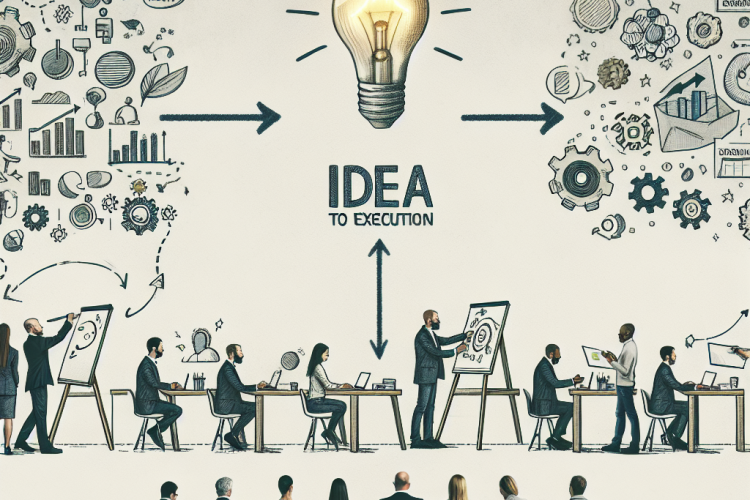
In today’s fast-paced business environment, turning an idea into a successful product relies heavily on a strategic approach to development. One crucial method that has emerged within the realm of startups and business innovation is the concept of the Minimum Viable Product (MVP). This article delves into the significance of MVPs in business development, outlining their role in validating ideas, reducing risks, and fostering quicker market entry.
Understanding MVP
An MVP is a version of a new product that includes only the essential features necessary to meet the needs of early adopters. It enables teams to gather feedback from real users while minimizing development costs and time. The essence of an MVP lies in its focus on basic functionality, allowing businesses to validate their assumptions early in the process.
Key Components of an MVP
- Core Features: Identifying the most important features that address the primary problem your product intends to solve.
- User Feedback: Integrating mechanisms for collecting feedback from users to iterate and improve the product.
- Fast Development: Ensuring that the MVP can be built and launched in a short timeframe to capture early market interest.
The Role of MVP in Business Development
The development of a product can be a daunting task filled with uncertainties. This scenario presents several challenges, including financial constraints, competition, and the need for ongoing innovation. An MVP serves as a navigational tool through these challenges by providing a clear and focused approach to product development.
1. Validating Ideas
The first step in any business venture is validating the initial idea. An MVP allows entrepreneurs to test whether their product concept resonates with a target market. This validation can be achieved through various methods, such as surveys, landing pages, or minimum functionality prototypes. By engaging potential customers early, businesses can confirm the viability of their ideas before committing significant resources to full-scale development.
2. Reducing Risks
Investing in a new product carries inherent risks, including market rejection and unanticipated costs. An MVP mitigates these risks by ensuring a smaller investment and shorter timeline. By deploying a basic version of the product, businesses can assess market demand and user engagement without the threat of a complete business failure. Failure is often an intrinsic part of innovation; however, with an MVP, businesses can take calculated risks, allowing them to learn and adapt quickly.
3. Speeds Up Time to Market
In a competitive landscape where speed can differentiate a business, MVPs enable quicker entrances into the market. The Agile development methodology, which prioritizes rapid iteration and customer feedback, complements the MVP approach. By releasing an MVP to the market, businesses can start generating revenue sooner, establish a user base more quickly, and refine their offering based on real-world data.
4. Building a Foundation for Iteration
Once an MVP has been launched, it provides valuable insights into user behavior and preferences. This information allows businesses to pivot, enhance, or expand their offerings based on actual user feedback. By adopting an iterative approach, businesses can minimize the number of assumptions made during development, leading to a product that better fits user needs and expectations.
Case Studies of Successful MVP Implementations
Several well-known companies have effectively utilized MVPs to propel their growth and innovation. Here are a few examples:
1. Dropbox
Dropbox initially launched with a simple video MVP that demonstrated its file-sharing capabilities. Instead of building a fully functional platform right away, the team created a product demonstration that generated interest and gathered early sign-ups. This approach allowed them to gauge the market’s response before scaling up their development efforts.
2. Airbnb
The founders of Airbnb started with an MVP by renting out air mattresses in their apartment to attendees of a local conference. This basic model validated their idea of providing home-sharing services and allowed them to collect user feedback and improve their offerings before expanding into a full-fledged platform.
3. Instagram
Instagram began as a simple photo-sharing application with basic filters. Initially named “Burbn,” the app focused on allowing users to check-in and share photos. After gathering user feedback, the founders recognized the appeal of photo sharing and streamlined the application into just that, which ultimately led to Instagram’s success.
Steps to Develop an Effective MVP
Creating a successful MVP involves several key steps that entrepreneurs should follow to ensure they build a product that resonates with users. Below are actionable guidelines:
1. Identify the Core Problem
Begin by identifying the primary problem your product aims to solve. Conduct thorough market research to understand your target audience and their pain points. This step is critical in ensuring that your MVP incorporates features that are truly valuable to your users.
2. Define Essential Features
Once the problem is established, prioritize the features that will address it. Limit your development scope to only the necessary features that fulfill your users’ needs. This ensures a more manageable project that can be delivered quickly.
3. Develop a Prototype
Create a prototype of your MVP using wireframes or mockups. Visual representations help stakeholders understand the product concept and facilitate early feedback, paving the way for adjustments before coding begins.
4. Build the MVP
Develop your MVP with a focus on speed and efficiency. Utilize Agile methodologies to facilitate rapid iterations and ensure feedback is implemented throughout the development process.
5. Gather Feedback
Launch the MVP to a selected group of early adopters and actively collect feedback. Implement user feedback mechanisms to gauge satisfaction and identify areas for improvement. Surveys, interviews, and analytics can all play a role in this feedback collection.
6. Analyze and Iterate
Using the feedback obtained, analyze the data to determine what enhancements or changes should be made. Iteration should be driven by user behavior and preferences rather than assumptions, allowing for a more customer-centric product evolution.
Challenges of Building an MVP
While the benefits of an MVP are substantial, challenges can arise during the development process. Understanding and addressing these challenges is crucial for success.
1. Limited Scope
One of the primary challenges in developing an MVP is the temptation to include too many features. Striking the right balance between functionality and simplicity is essential. A cluttered MVP can confuse users and dilute the core problem being solved.
2. User Engagement
Attracting early adopters to engage with the MVP can be difficult. Creating incentivized campaigns, engaging marketing strategies, or employing social media can help boost initial interest and user signup rates.
3. Feedback Quality
Gathering high-quality feedback is also a challenge. Entrepreneurs need to ensure that they ask the right questions during user engagement to derive meaningful insights that drive product improvements.
Conclusion
The journey from idea to execution is fraught with challenges for entrepreneurs. The Minimum Viable Product serves as a strategic tool that mitigates risks, validates assumptions, and accelerates time to market. Through effective implementation, businesses can learn from real users, iterate swiftly, and evolve their products to meet market demands. As demonstrated through numerous success stories, embracing the MVP approach not only aids in refining a product but also lays a robust foundation for sustainable growth and innovation. By focusing on what matters most—solving a real problem for real users—entrepreneurs can effectively navigate the complexities of business development and lead their ventures to success.



0 Comments