
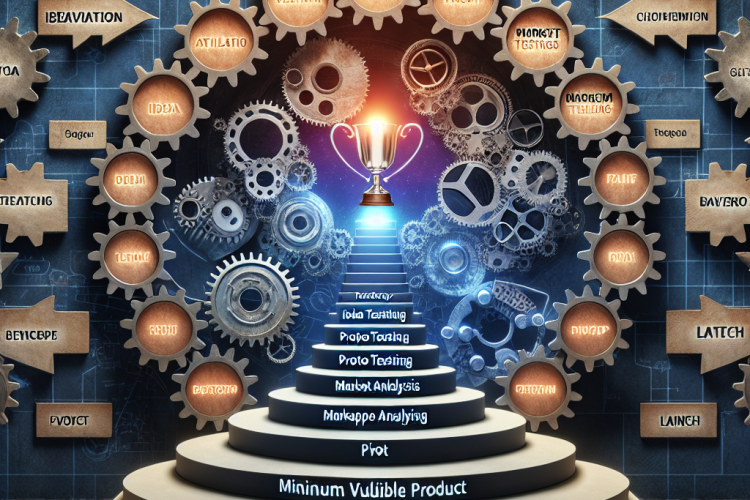
Building a Minimum Viable Product (MVP) is often seen as just a way to launch a product with the most basic features to satisfy early adopters. However, as the landscape of development evolves, it becomes imperative for entrepreneurs and product managers to explore advanced strategies that go beyond the basic functionality of an MVP. This article delves into those strategies, providing insights that can be instrumental in shaping a successful product trajectory.
Understanding the Value of an MVP
An MVP is not merely a stripped-down version of your final product; it is a crucial method for learning about your customers and validating assumptions. The primary value of an MVP lies in testing hypotheses about product-market fit and gaining invaluable feedback.
Advanced MVP Development Strategies
1. Customer-Centric Approach
Instead of focusing solely on features, focus on the customer’s journey. Mapping out the user experience can reveal pain points and opportunities that may not be immediately evident. This approach aids in prioritizing features that genuinely add value to the user experience.
2. Iterative Development and Feedback Loops
Embrace agile methodologies. Implement a cycle of development, testing, and feedback. This enables continuous improvement rather than waiting until the end of a product cycle before assessing performance. Short development cycles can lead to faster releases and a more agile response to user needs.
3. Metrics-Driven Decision Making
Utilizing data analytics tools to track user behavior is critical. Rather than making assumptions based on opinions, leverage hard data to make decisions about feature enhancements and changes. Metrics such as user engagement, retention, and conversion rates can provide a clearer picture of what users want.
4. Lean Startup Methodology
The Lean Startup methodology emphasizes validated learning through iterative product releases. This approach encourages startups to think critically about their business model and adapt to the changing market landscapes. Utilizing concepts such as pivoting, startups can find better market fit before fully committing resources to development.
5. Build-Measure-Learn Feedback Loop
Inspired by the Lean Startup approach, the Build-Measure-Learn loop emphasizes the importance of creating a cycle that not only focuses on building a product but also on measuring its performance and learning from that data. This constant feedback mechanism ensures that development is aligned with user needs.
6. User Testing and Usability Labs
Conducting structured user tests in usability labs can provide deep insights into how real users interact with the product. Observing user behavior enables teams to detect usability issues and understand the user’s needs, allowing for adjustments that enhance overall experience.
7. Engaging with the Community
Building a community around your product can provide continuous feedback and foster loyalty. Utilize forums, social media, and other platforms to engage with early users and gather insights that can guide development.
8. Prototyping Tools
Incorporate prototyping tools that allow for rapid iteration. Tools such as Sketch, Figma, or InVision help visualize ideas quickly and can streamline the feedback process, enabling you to gather insights before going into full-scale development.
9. Expanding Beyond Core Features
While it’s essential to focus on core features, consider secondary features that may enhance the primary use case. These features can differentiate your product in a competitive market and offer more substantial value to users.
10. Smart Scaling
As your MVP gains traction, it becomes essential to scale properly. Ensure that your technology stack can handle increased loads and that your infrastructure is robust enough to support growth without sacrificing performance.
11. Focused Market Research
Incorporate advanced market analysis techniques to identify target demographics and understand their needs better. Techniques like customer segmentation can provide insights that tailor your product effectively to various user groups.
12. Cross-Functional Collaboration
Foster a culture of collaboration between development, marketing, sales, and support teams. Cross-functional teams can offer varied insights that lead to a more rounded product development approach and ensure that every aspect of the MVP aligns with the overall strategy.
13. A/B Testing
Use A/B testing to determine which features resonate more with your users. Testing different variances of user interfaces or feature sets can provide empirical evidence of what works best in driving user engagement and satisfaction.
14. Building a Flexible Roadmap
Avoid creating a rigid product roadmap. Instead, develop a flexible roadmap that allows for alterations based on user feedback, market trends, or unforeseen challenges. This agility can be a significant asset in navigating the evolving product landscape.
Integration of Technology
15. Leverage AI and Machine Learning
Incorporating AI and machine learning can enhance user experiences through personalized recommendations, automated responses, and data analysis. This can create a more dynamic MVP that evolves based on user behavior.
16. API-First Development
By adopting an API-first approach, you ensure that your MVP is not only functional but can also integrate seamlessly with other platforms or applications. This expands the potential for partnerships and enhances the overall product value.
Marketing Your MVP
17. Pre-Launch Marketing Strategies
Before the launch, engage in pre-launch marketing to build anticipation. Use social media, email newsletters, and blogging to create buzz and gather potential user interest even before the product is available.
18. Influencer Partnerships
Collaborate with influencers in your industry to reach a more extensive audience and create credibility around your MVP. Authentic endorsements can significantly impact user acquisition.
19. Content Marketing
Content marketing can effectively showcase the value proposition of your product. Create informative content that addresses your audience’s pain points and demonstrates how your MVP provides solutions.
20. Early Access Programs
Consider implementing early access programs that allow selected users to test your MVP before the official launch. This approach garners feedback while creating a sense of exclusivity among early adopters.
Conclusion
Developing a Minimum Viable Product is a nuanced process that goes beyond just building basic features. By leveraging advanced strategies such as a customer-centric approach, agile development methodologies, and data-driven decision-making, product teams can create a more robust and market-ready MVP. As startups and entrepreneurs navigate the complexities of product development, integrating these advanced strategies can significantly enhance the likelihood of achieving product-market fit, driving user engagement, and establishing a strong market presence. As you embark on your MVP journey, remember that continuous learning, adapting, and iterating based on user feedback is what ultimately leads to success.



0 Comments