
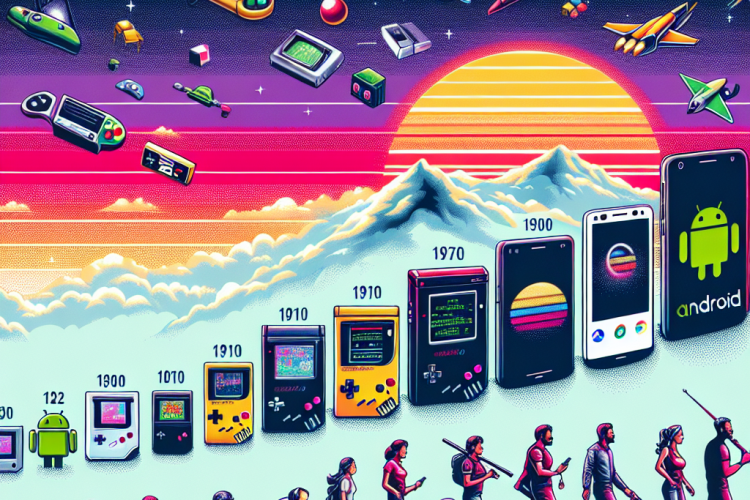
The mobile gaming industry has undergone significant transformation since the early days of Snake on Nokia phones. Today, with powerful smartphones in nearly every pocket, the gaming industry is not only surviving but thriving. Leading Android game developers offer unique insights into how mobile gaming has evolved over the last two decades and what the future holds.
The Genesis of Mobile Gaming
Mobile gaming began as a simple form of entertainment with basic graphics and limited gameplay. With the launch of the Game Boy in 1989 and later the Nokia’s famous game Snake in 1997, the foundation was set for mobile games. These early games were significant because they paved the way for more complex and interactive forms of gameplay.
As technology evolved, so did the aspirations of game developers. Andy Wong, a veteran Android game developer, recalls, “We wanted to break away from static experiences. Early mobile games were engaging but lacked depth. We wanted to offer players worlds that they could dive into and explore.”
The Rise of Smart Devices
The introduction of smartphones changed the mobile gaming landscape dramatically. The launch of Apple’s App Store in 2008 and Google Play in 2012 democratized game distribution, allowing developers to reach millions of players globally.
“Smartphones were a game-changer,” says Emily Chen, co-founder of a successful Android game studio. “Suddenly, we had devices that could handle graphics and processing comparable to some of the earlier consoles, and that opened up new possibilities in terms of game design and interactivity.”
Changing Player Expectations
With technological advancements came changes in player expectations. Gamers wanted more than just entertainment; they sought immersive experiences that could rival those on consoles and PCs. Urban environments, dynamic character models, and intricate narratives became foundational elements of successful mobile games.
“Today’s gamers expect a lot, and rightly so,” states Mark Robinson, lead designer at a prominent Android game company. “We are constantly pushed to think outside the box and offer engaging storylines and mechanics that keep players coming back.”
Evolution of Game Design and Monetization
Game design philosophies have also shifted. Freemium models, where games are free to play with in-app purchases, have become the norm. This model allows players to access games without an upfront cost, relying instead on microtransactions for revenue.
“The freemium model has its challenges,” explains Alice Ngan, a researcher in mobile gaming trends. “But it has also democratized mobile gaming. Players can try games without financial commitment, making it more accessible to younger audiences or those hesitant to invest in an unknown title.”
The Impact of Social Connectivity
Another critical factor in the evolution of mobile gaming is the emphasis on social connectivity. Games like Clash of Clans and Pokemon Go have shown the immense potential of social and multiplayer elements in mobile games.
“Connecting players enhances the experience,” mentions Tom Silva, a social game developer. “Gaming has become an integral social activity, connecting friends and strangers alike across the globe.”
Technological Advances: AR and VR
Augmented Reality (AR) and Virtual Reality (VR) have opened new frontiers in mobile gaming. Games like Pokemon Go and AR apps have shown the potential of integrating real-world environments with gaming worlds.
Leading developers believe the future lies in further blending these technologies. “We are just scratching the surface,” says Lisa Tran, an expert in AR game development. “AR and VR can create mind-blowing experiences and redefine how we perceive mobile games.”
Challenges and Opportunities
Despite the successes, the mobile gaming industry faces challenges such as market saturation and the constant need for innovation to keep players engaged. Developers must balance creativity, monetization, and technical limitations.
“Innovation is key,” highlights Richard Kwan, a seasoned Android game developer. “The industry moves rapidly, and staying ahead means adapting quickly to trends and technologies.”
Conclusion
The evolution of mobile gaming is a testament to technological advancements and the creativity of developers worldwide. From simple pixelated games to complex virtual worlds, mobile gaming has become a significant part of global entertainment.
As technology continues to advance, mobile gaming will undoubtedly experience further transformations. Insights from leading Android game developers underscore the importance of adaptability, innovation, and understanding player desires in this dynamic landscape. Mobile gaming stands poised to continue captivating and connecting players, shaping the future of digital entertainment.



0 Comments