
<h2>Introduction</h2>

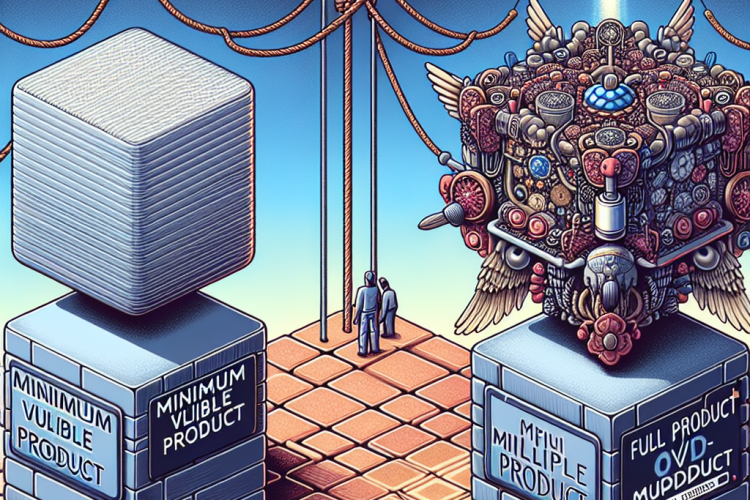
<p>In the fast-paced world of product development, the debate between launching a Minimum Viable Product (MVP) and a Full Product is ever-present. Entrepreneurs and product managers often wrestle with the timing of their launches. Each approach has its unique set of advantages and drawbacks, and the decision of when to launch what can significantly affect the product's long-term success. This article will explore the intricacies of MVPs and full products, offering insights into their definitions, benefits, and strategic applications.</p>
<h2>What is a Minimum Viable Product (MVP)?</h2>

<p>A Minimum Viable Product (MVP) is the most basic version of a product that still provides enough value to attract early adopters. The primary goal of an MVP is to validate a business idea and gather user feedback without investing significant resources into a complete product. An MVP typically includes:</p>

<ul>

    <li>Core functionality that addresses the primary problem.</li>

    <li>Basic user interface with essential features.</li>

    <li>A focus on rapid development and iteration.</li>

</ul>
<h3>Advantages of Launching an MVP</h3>

<p>1. **Cost Efficiency**: Developing an MVP allows businesses to minimize upfront costs and avoid significant financial risks.</p>

<p>2. **User Feedback**: By engaging with early adopters, companies can gather valuable feedback that informs product development and ensures a better market fit.</p>

<p>3. **Quick Iteration**: An MVP enables faster iteration cycles, allowing teams to pivot or adjust based on real user data.</p>

<p>4. **Market Validation**: An MVP helps validate the business idea in the market, allowing entrepreneurs to assess demand before fully committing to the product.</p>
<h3>When to Launch an MVP</h3>

<p>Launching an MVP is ideal when:</p>

<ul>

    <li>You are testing a new concept or business idea.</li>

    <li>Resource limitations prevent full product development.</li>

    <li>You want to gauge market interest before fully investing.</li>

    <li>Your product requires extensive user testing and feedback for improvement.</li>

</ul>
<h2>What is a Full Product?</h2>

<p>A full product is a complete and polished version that includes all anticipated features and functionalities. It is often the result of prolonged development, detailed market research, and extensive testing. Key characteristics of a full product include:</p>

<ul>

    <li>Comprehensive feature set addressing all user needs.</li>

    <li>A refined and user-friendly interface.</li>

    <li>Robust support and documentation.</li>

</ul>
<h3>Advantages of Launching a Full Product</h3>

<p>1. **Complete User Experience**: A full product offers users a rich and complete experience without the limitations of an MVP.</p>

<p>2. **Brand Reputation**: Launching a fully developed product enhances brand credibility and can lead to positive public perception.</p>

<p>3. **Market Competitiveness**: A fully functional product is more likely to compete effectively against established offerings in the market.</p>

<p>4. **Customer Retention**: With all desired features available, customers are more likely to stay engaged with the product.</p>
<h3>When to Launch a Full Product</h3>

<p>Launching a full product is appropriate when:</p>

<ul>

    <li>The product has undergone adequate testing and validation.</li>

    <li>The market shows substantial demand, justifying the investment.</li>

    <li>You have a clear understanding of customer needs and market dynamics.</li>

    <li>There's a plan for marketing and user acquisition post-launch.</li>

</ul>
<h2>MVP vs. Full Product: Key Differences</h2>

<table>

    <tr>

        <th>Aspect</th>

        <th>Minimum Viable Product (MVP)</th>

        <th>Full Product</th>

    </tr>

    <tr>

        <td>Purpose</td>

        <td>Test and validate a new idea</td>

        <td>Offer a complete solution</td>

    </tr>

    <tr>

        <td>Features</td>

        <td>Basic, essential features only</td>

        <td>Comprehensive feature set</td>

    </tr>

    <tr>

        <td>Development Time</td>

        <td>Short and rapid</td>

        <td>Longer and methodical</td>

    </tr>

    <tr>

        <td>Cost</td>

        <td>Lower initial investment</td>

        <td>Higher upfront costs</td>

    </tr>

    <tr>

        <td>Feedback</td>

        <td>Focus on user feedback for iterations</td>

        <td>Based on market research and testing</td>

    </tr>

</table>
<h2>Choosing the Right Approach</h2>

<p>The decision to launch an MVP or a full product is not always straightforward. Several factors influence this choice, including:</p>

<ul>

    <li><strong>Market Conditions:</strong> In highly competitive markets, an MVP may allow for faster entry, while a niche market may necessitate a full product for success.</li>

    <li><strong>Product Complexity:</strong> Complex products may benefit from MVP testing to avoid costly mistakes during full-scale development.</li>

    <li><strong>Resource Availability:</strong> Limited resources often push startups toward MVPs to minimize risk.</li>

    <li><strong>Customer Insights:</strong> If there is already a deep understanding of user needs, a full product may be the way to go.</li>

</ul>
<h3>Case Studies</h3>

<h4>Case Study 1: Uber</h4>

<p>Uber began as an MVP. The founders launched a simple app for black car services in San Francisco. Through user feedback and market testing, they iteratively developed the platform into the comprehensive ride-sharing service we know today. This approach saved them time and money while allowing them to adapt to user preferences.</p>
<h4>Case Study 2: Facebook</h4>

<p>Facebook launched as a full product targeting university students, based on extensive research into user preferences and needs. This strategic approach allowed them to quickly gain traction and grow their user base exponentially.</p>
<h2>Challenges and Risks</h2>

<h3>Challenges of Launching an MVP</h3>

<p>1. **Limited Features**: An MVP may leave users wanting more, leading to negative first impressions.</p>

<p>2. **Perception Issues**: Users might associate an MVP with low quality or lack of commitment.</p>

<p>3. **Difficulty in Monetization**: With a stripped-down version, monetization strategies may be hard to implement effectively.</p>
<h3>Challenges of Launching a Full Product</h3>

<p>1. **High Development Costs**: Investing heavily in features that may not resonate with users can be financially risky.</p>

<p>2. **Longer Time to Market**: This may hinder establishing early ownership in a competitive landscape.</p>

<p>3. **Risk of Overengineering**: Spending too much time perfecting the product may lead to lost opportunities.</p>
<h2>Conclusion</h2>

<p>The choice between launching an MVP and a full product ultimately hinges on various factors, including market conditions, available resources, and the complexities inherent in the product being developed. An MVP can be an invaluable tool for startups looking to minimize risk and gather crucial feedback, whereas a full product may be necessary for established ideas with clear customer demands. Understanding the nuances between these two approaches empowers entrepreneurs to make informed decisions, significantly influencing their trajectory of success in the competitive marketplace.</p>



0 Comments