
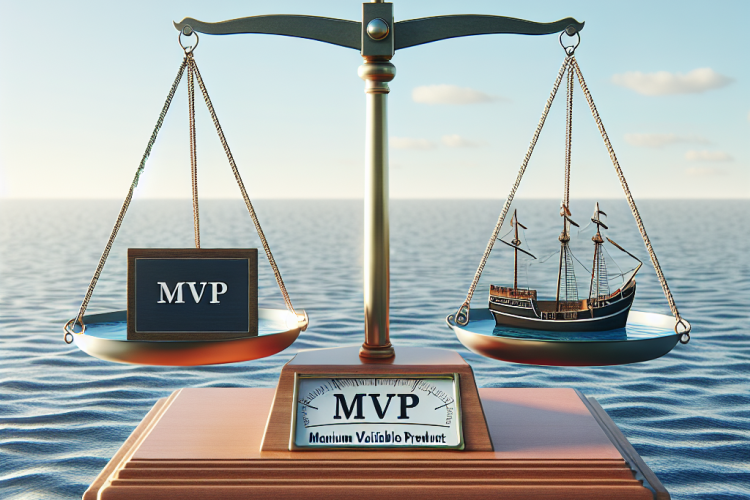
Understanding the MVP Concept
The Minimum Viable Product (MVP) is a critical concept in the realm of entrepreneurship and product development. An MVP is the simplest version of a product that can be released to the market to gather feedback from early users. This approach allows businesses to test hypotheses about their offerings, understand what works, and what doesn’t, all with minimal resources. By focusing on the core features that address the primary problem the product aims to solve, startups can effectively gauge market interest without a hefty upfront investment.
The Role of MVP in Market Validation
Market validation involves verifying that there is a genuine demand for a product before investing significant resources into its development. An MVP serves as a vehicle for this validation. It allows companies to engage with their target audience early on, collecting valuable insights about customer preferences, behaviors, and pain points. Essentially, an MVP is a tool for learning and adaptation, enabling businesses to pivot quickly based on feedback.
Benefits of Market Validation Through MVP
- Cost Efficiency: Creating a full-featured product can be expensive. An MVP allows for a significant reduction in costs related to development, marketing, and distribution.
- Feedback Loop: Early users provide critical feedback that can guide future iterations of the product, ensuring that subsequent versions align more closely with market needs.
- Reduced Risk: By validating ideas with real consumers, businesses can mitigate the risk of launching a product that fails to attract attention or sales.
- Focus on Core Features: An MVP forces teams to hone in on the essential features that solve the main problem, avoiding feature bloat and maintaining a clear value proposition.
- Time to Market: Launching an MVP can significantly accelerate the time it takes to enter the market. This rapid deployment allows businesses to start generating interest while they refine their offerings.
Identifying Your Target Market
Before developing an MVP, it’s crucial to identify the target market. Understanding the audience ensures that the product is tailored to meet their needs. This involves conducting market research to identify customer segments, their behaviors, preferences, and pain points. Surveys, interviews, and competitor analysis can be effective strategies in this phase.
Techniques for Market Research
- Surveys: Utilizing tools like Google Forms or SurveyMonkey can help gather feedback from potential users, allowing businesses to understand their needs better.
- Interviews: Conducting one-on-one interviews can provide deeper insights into user motivations and challenges.
- Focus Groups: Engaging small groups of target market representatives can stimulate discussion and generate qualitative data regarding product concepts.
- Competitor Analysis: Studying competitors can reveal gaps in the market and opportunities for differentiation.
Developing Your MVP
Once the target market is identified, and the insights are collected, it’s time to develop the MVP. The development process can be broken down into several critical steps:
1. Define Your Value Proposition
Your value proposition is a statement that explains why customers should choose your product over alternatives. Clearly articulating this helps to focus the MVP on delivering maximum impact.
2. Outline Key Features
Determine which features are essential to solving the user’s problem. This phase involves prioritizing features based on user feedback and business goals. Remember, the goal is to keep it simple and functional.
3. Build the MVP
Choose an appropriate development method. Depending on resources, this can range from coding a simple product by hand to utilizing no-code platforms like Bubble or Glide. Additionally, consider which technical stack will best serve your product.
4. Launch and Gather Feedback
Once the MVP is built, launch it to the target audience. In this phase, actively encourage user feedback through surveys, interviews, and usage analytics. It’s vital to create open channels for communication, allowing users to express their thoughts on the product’s performance.
Iterate Based on Feedback
The process of iteration is where the real learning happens. Analyze user feedback to identify patterns, strengths, and weaknesses. Key questions to consider during this phase include:
- What features do users love?
- What pain points still exist?
- Are there additional features users are requesting?
- How frequently are users engaging with the product?
Using this data, teams should be prepared to make informed decisions on what changes or improvements to implement in the next version of the product.
Real-World Examples of Successful MVPs
Many successful companies began with an MVP, allowing them to validate their business ideas effectively.
1. Dropbox
Dropbox started with a simple MVP: a video demonstrating how the product worked. The video generated significant interest, leading to a waiting list of potential users before the product had even been developed. This early validation of the concept helped inform product features and functionality.
2. Airbnb
Airbnb began by renting out air mattresses in the founders’ apartment. This rudimentary model allowed the team to test the concept of short-term rentals and gather feedback from guests and hosts, leading to the development of their current platform.
3. Zappos
Zappos’ original MVP involved taking pictures of shoes from local stores, posting them online, and fulfilling orders by buying the shoes from actual stores when there was a purchase. This smart strategy allowed them to validate the demand for online shoe sales without maintaining inventory initially.
Challenges of Launching an MVP
While MVPs can be incredibly beneficial, they also come with their own set of challenges:
Incomplete Vision
There’s a risk of focusing too much on creating a minimal version of a product at the expense of the overall vision. Balancing simplicity with user experience is crucial.
Misinterpreted Feedback
Not all feedback is equally valuable. It’s essential to filter out noise and prioritize feedback that aligns closely with business objectives and user goals.
Technical Constraints
Depending on the MVP’s complexity, technical limitations may arise, making it difficult to implement certain features or desired functionality during the initial launch phase.
Overlooking Marketing
Even with a fantastic MVP, poor marketing efforts can lead to a lack of visibility and user engagement. Marketing should be integrated into the MVP strategy to ensure potential users are aware of the product.
Conclusion
In today’s fast-paced business environment, the importance of a Minimum Viable Product cannot be overstated. An MVP is a crucial tool for market validation, enabling businesses to test ideas, gather feedback, and minimize risk before moving to full-scale production. By focusing on the core features that address customer pain points and conducting rigorous market research, entrepreneurs can create products that resonate with their target audience. Through thoughtful iterations based on real user feedback, companies can continuously improve, ensuring they are on the path to long-term success. Ultimately, an MVP is not just about testing waters; it’s about making informed decisions that drive businesses toward sustainability and growth.



0 Comments