
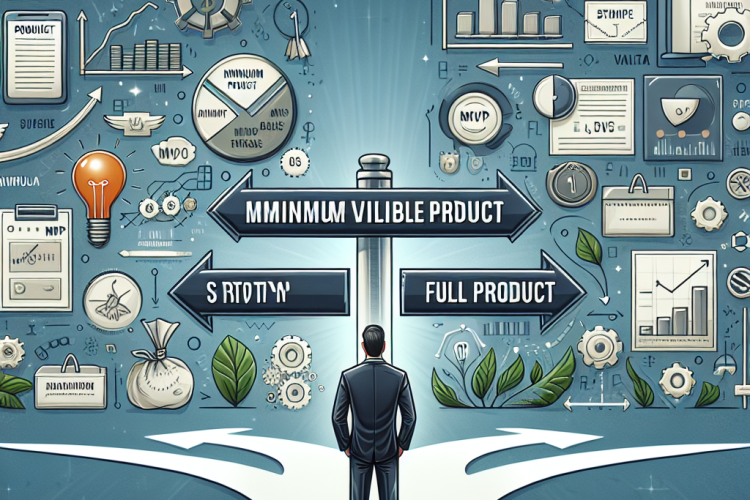
In the fast-paced world of startups and product development, businesses often face a critical decision: should they launch a Minimum Viable Product (MVP) or invest in a fully developed product? This decision significantly impacts a company’s strategy and can influence its future success. Understanding the nuances and implications of MVPs versus full products is essential for any entrepreneur navigating the competitive landscape of modern business.
Understanding Minimum Viable Product (MVP)
A Minimum Viable Product is the most basic version of a product that still allows a business to collect validated learning about customers. The aim of an MVP is to test hypotheses and gain insights with minimal initial investment. This approach enables businesses to learn about customer needs, preferences, and behaviors before committing significant resources to development.
The Key Features of an MVP
- Core Functionality: An MVP includes only the essential features necessary to solve the primary problem for its users.
- User Feedback Focus: MVPs are designed to gather user feedback, enabling rapid iteration and improvement.
- Cost-Effective: By minimizing features, businesses can reduce development time and costs.
- Market Validation: Launching an MVP allows businesses to test their concept in the market without a full-scale commitment.
Benefits of Using an MVP
Choosing to develop an MVP can offer several benefits:
- Quick Time to Market: Businesses can enter the market rapidly, potentially seizing first-mover advantage.
- Lower Risk: The risk of investing in a product that may not resonate with consumers is minimized.
- Iterative Learning: Feedback from MVP launches helps refine the product based on real user data.
- Resource Optimization: Companies can allocate resources more effectively, focusing on features that truly meet customer needs.
Understanding Full Product Development
In contrast, a full product is a comprehensive version that includes all planned features and functionalities. Developing a full product typically requires more resources, time, and investment before launching to the market compared to an MVP.
The Key Features of a Full Product
- Comprehensive Functionality: A full product fully addresses the needs and demands of its target audience.
- Brand Image: A complete product reflects a stronger brand identity and can create a significant first impression.
- Market Positioning: Full products can better position a business against competitors by showcasing a polished offering.
- Customer Experience: A complete product often provides a superior user experience due to thorough testing and UX/UI design.
Benefits of Full Product Development
Investing in a full product development can have its own set of advantages:
- Robust Feature Set: Customers gain access to a broader range of features right from the start.
- Professional Quality: A fully developed product typically results in fewer bugs and a more polished user experience.
- Brand Credibility: A well-executed full product can enhance brand perception and trust among potential users.
- Potential for Higher Revenue: Full products can command higher prices due to their comprehensive offerings.
MVP vs. Full Product: Key Differences
Understanding the differences between an MVP and a full product can help entrepreneurs make informed decisions. Below are significant distinctions:
1. Development Time and Cost
The development timeline and costs vary greatly between the two strategies. MVPs require significantly less time and financial investment, while full products demand comprehensive development efforts.
2. Flexibility and Adaptability
MVPs are inherently more flexible. Businesses can quickly pivot based on user feedback. Full products, on the other hand, may require a more extended adjustment period after launch.
3. Risk Profile
Launching an MVP lowers risk, as businesses can validate their assumptions with minimal exposure. Full product development carries higher risk since extensive resources are dedicated upfront without initial market validation.
When to Choose an MVP
Choosing to develop an MVP is particularly advantageous in the following scenarios:
- Uncharted Territory: When entering a market for the first time or when developing a novel idea with uncertain demand.
- Limited Resources: When budget constraints require a more cost-effective solution.
- User-Centric Development: When companies want to prioritize user feedback in their design process.
- Rapid Innovation Needs: In fast-moving industries where speed is crucial.
When to Develop a Full Product
Conversely, opting for a full product development may be wise in the following cases:
- Established Markets: When entering a mature market where customer expectations are defined and competitive products already exist.
- Brand Reputation: When a company’s brand relies on presenting high-quality products to maintain credibility.
- Funding and Resources: When adequate resources are available to support comprehensive development efforts.
- Clear User Needs: When businesses have a strong understanding of their users’ desires and needs.
Strategies for Transitioning from MVP to Full Product
For businesses that have initially launched an MVP, transitioning to a full product involves careful planning and execution.
1. Analyze Market Feedback
After launching the MVP, gather and analyze feedback to identify strengths and weaknesses. This data serves as a basis for determining which features to prioritize in the full product.
2. Prioritize Features
Based on user input, identify critical features necessary for the full product. Focus on creating value for the user, enhancing the product’s overall quality.
3. Iterative Development
Engage in an iterative development cycle that allows for testing, feedback, and refinement. This approach increases the likelihood of creating a product that meets market demands.
4. Communicate with Users
Maintain an open line of communication with users throughout the development process. Keep them informed about upcoming features and improvements, fostering a sense of community and investment.
5. Marketing Strategy
Begin developing a marketing strategy tailored to the full product, identifying target audiences and unique selling propositions to differentiate the product in the market.
Conclusion
Choosing between an MVP and a full product is a pivotal decision that can shape the trajectory of a business. While MVPs offer a pathway to rapid learning and reduced risk, full products can create a strong market presence and meet defined customer expectations. Entrepreneurs must assess their unique circumstances—including budget, market conditions, and customer feedback—to determine the best approach for their product strategy. Ultimately, understanding when to pivot between an MVP and a full product is crucial for adapting to market dynamics and achieving long-term success.


0 Comments