
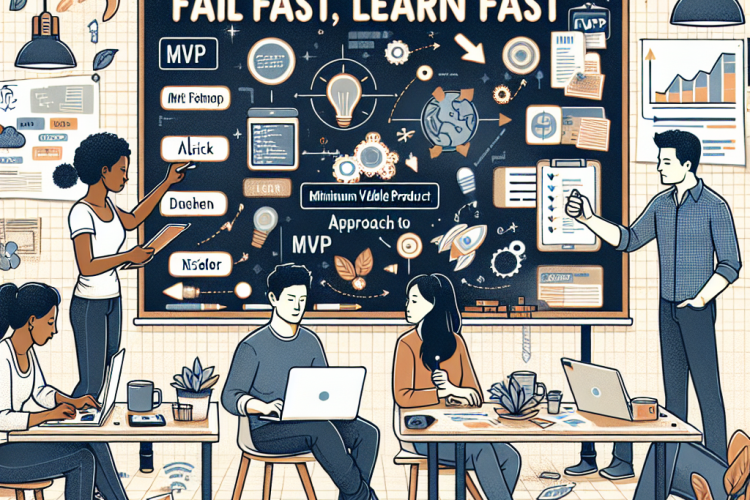
The concept of developing products using the Minimum Viable Product (MVP) approach has gained significant traction in recent years. This strategy emphasizes creating a basic version of a product to quickly validate ideas and gather feedback from real users. The essence of the MVP approach is to “fail fast, learn fast.” In a fast-paced world where customer needs change rapidly, being agile in product development can be the difference between success and failure.
What is a Minimum Viable Product?
A Minimum Viable Product (MVP) is the simplest version of a product that still meets the essential needs of its users. It includes just enough features to allow early adopters to engage with it and deliver feedback. This process enables teams to learn from real-world usage and make informed decisions about future development.
Key Characteristics of an MVP
- Minimal Features: The MVP includes only core functionalities that fulfill the primary needs of early adopters.
- User-Centric: The focus is on solving real problems faced by users rather than trying to develop the perfect product from the outset.
- Feedback Loop: MVPs are designed to provide feedback from users to inform future product iterations.
- Quick to Market: The development cycle for an MVP is typically shorter, enabling faster launches and quicker learning.
The Philosophy Behind “Fail Fast, Learn Fast”
The phrase “fail fast, learn fast” encapsulates an agile mindset. It advocates for rapid experimentation to discover what works and what doesn’t. This approach reduces risk, minimizes wasted resources, and accelerates incremental improvements based on user feedback.
The Benefits of Failing Fast
- Cost-Effective: By testing ideas quickly, companies can save money by avoiding large investments in untested concepts.
- Adaptability: Organizations can pivot or make changes based on feedback without being heavily invested in a particular direction.
- Cultural Shift: Encourages a culture of innovation where teams feel safe to experiment and learn from mistakes.
Implementing the MVP Approach
Transitioning to an MVP approach requires strategic planning and a mindset shift within the organization. The following steps outline how to effectively implement the MVP methodology:
1. Identify Customer Needs
The first step in any MVP process is to deeply understand the target audience. This involves conducting market research, surveys, and interviews to identify the most pressing problems that potential customers face.
2. Define Success Metrics
Before launching an MVP, it’s crucial to define what success looks like. This could involve metrics such as user engagement, conversion rates, or customer satisfaction. Clear metrics will help in assessing the MVP’s performance and guiding future iterations.
3. Develop the MVP
With customer needs and success metrics in mind, the next step is to develop the MVP. This involves prioritizing features based on user feedback and focusing on building a product that addresses the essential problems identified initially.
4. Launch and Gather Feedback
Once the MVP is developed, it’s time to launch it to a select group of early adopters. Gathering feedback is vital during this phase. This can be done through user interviews, surveys, and analytics to understand how users interact with the product and what improvements can be made.
5. Iterate and Improve
After gathering feedback, the next step is to analyze the data and make necessary adjustments. This could involve adding new features, refining existing ones, or even pivoting based on user insights. The process should be repeated iteratively to progressively enhance the product.
Case Studies of Successful MVP Implementation
Numerous companies have successfully leveraged the MVP approach to great effect. Understanding their journeys provides valuable lessons for product development.
Case Study 1: Dropbox
Dropbox started as a simple MVP—a video demonstration showcasing the product’s functionality and benefits. Rather than building a full product upfront, the team gauged interest and captured email addresses from potential users. This initial MVP allowed Dropbox to build a community and refine its product based on user feedback before launching a more feature-complete version.
Case Study 2: Airbnb
Airbnb’s MVP was a simple website that allowed owners to rent out their space. The founders began by listing their own apartment to gain feedback from users. This minimal approach enabled them to understand the market dynamics and what guests expected before investing heavily in the platform.
Challenges of the MVP Approach
While the MVP approach is highly beneficial, it also comes with its own set of challenges:
1. Misinterpretation of MVP
One common pitfall is misunderstanding the concept of an MVP. Some teams might think a minimal product means a low-quality product, leading to poor user experiences.
2. Insufficient User Feedback
If user feedback is not gathered adequately or the right audience isn’t targeted, it can lead to misguided iterations that stray from solving users’ real problems.
3. Over-Iteration
Another challenge is getting stuck in a cycle of iteration without ultimately launching a stable product. Teams can get bogged down in minor tweaks instead of focusing on major features that would enhance the user experience.
Conclusion
The MVP approach embodies the philosophy of “fail fast, learn fast,” making it an invaluable strategy for modern product development. By focusing on core user needs and rapidly testing hypotheses, organizations can innovate more effectively and keep pace with changing market demands.
However, successful MVP implementation requires a commitment to understanding users, gathering meaningful feedback, and adapting based on insights gained. Those who master the art of MVP development will not only reduce their risk of failure but also pave the way for long-term success in an ever-evolving landscape.
In the final analysis, the MVP approach, when executed thoughtfully, allows teams to cultivate a culture of innovation and continuous improvement—essentials for thriving in today’s competitive market.



0 Comments