
Introduction
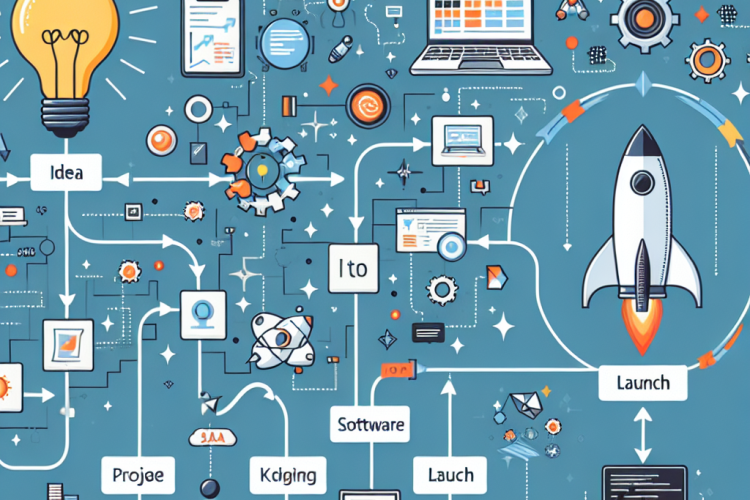
In the fast-evolving world of technology, Software as a Service (SaaS) has become a dominant business model for delivering software solutions. This article delves into the lifecycle of SaaS development from idea conception to launch, exploring each phase and its critical components.
Phase 1: Ideation and Market Research
Identifying the Problem
The initial step in the SaaS development lifecycle is identifying a problem that needs solving. This involves understanding user pain points and discovering opportunities for innovation.
Conducting Market Research
Thorough market research is crucial. It aids in understanding the competition, market demand, and potential customer base. Tools like surveys, interviews, and SWOT analysis can provide valuable insights.
Phase 2: Planning
Outlining the Vision
A clear vision and detailed project plan are vital. This includes setting goals, defining the target audience, and creating a value proposition.
Developing a Strategic Plan
Developing a strategic plan involves defining the technology stack, identifying resources, and setting timelines and milestones for development.
Phase 3: Design
User Experience (UX) Design
User experience is a critical component of SaaS applications. Creating intuitive and user-friendly interfaces ensures customer satisfaction and loyalty.
User Interface (UI) Design
The UI design phase focuses on visual elements such as typography, color schemes, and layout. It complements UX design to provide a seamless end-user experience.
Phase 4: Development
Agile Methodologies
Many SaaS companies adopt agile methodologies to enhance flexibility and efficiency in development. Regular sprints and feedback loops ensure continuous improvement.
Implementation of Core Features
Developing and implementing core features in alignment with initial requirements and feedback is essential to building a robust SaaS product.
Phase 5: Testing
Quality Assurance (QA)
QA testing is vital to identify and eliminate bugs, ensuring the product meets high standards of reliability and functionality.
Beta Testing
Beta testing involves releasing the SaaS application to a limited audience to gather real-world feedback and make necessary adjustments before the full launch.
Phase 6: Deployment
Choosing the Right Deployment Strategy
Choosing an appropriate deployment strategy is crucial and involves selecting between options like cloud-based, on-premises, or hybrid solutions.
Monitoring and Maintenance
Continuous monitoring and regular updates are essential post-deployment tasks that help ensure the application’s performance and security.
Conclusion
The journey from idea to launch in the SaaS development lifecycle involves various complex and interrelated stages. Success in SaaS development requires meticulous planning, patient execution, and continuous learning and adaptation. By understanding and efficiently managing each stage of the lifecycle, businesses can deliver high-quality software solutions that meet user needs and stand the test of time.


0 Comments