
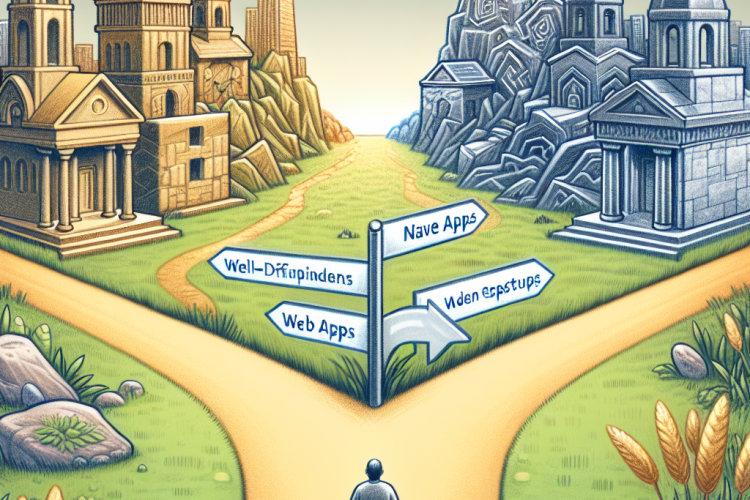
In today’s fast-paced digital world, businesses and developers face an important choice: whether to invest in native applications, web applications, or a hybrid of both. Each option has its own set of advantages and challenges. Understanding these can help you navigate the hybrid landscape effectively.
Understanding Native Applications
Native apps are built for specific platforms (iOS, Android) using platform-specific programming languages and tools. Some key features include:
- Performance: Native apps generally offer superior performance and responsiveness.
- Access to Device Features: They have direct access to device hardware and features (camera, GPS, etc.).
- User Experience: Designed specifically for each platform, providing a seamless user experience.
The Case for Web Applications
Web applications are built using technologies like HTML, CSS, and JavaScript and can be accessed via web browsers. Advantages include:
- Cross-Platform Compatibility: Operate on any device with a web browser, reducing development time.
- Easy Updates: Changes can be made server-side, and users always access the latest version.
- Cost-Effective: Lower development and maintenance costs compared to native applications.
The Pros and Cons of Hybrid Apps
Hybrid apps combine elements of both native and web apps. They are typically built using web technologies and wrapped in a native shell. Their advantages include:
- Single Codebase: One codebase for multiple platforms, reducing time and effort.
- Faster Development: Quicker initial release since you don’t need separate apps for each platform.
However, there are downsides:
- Performance Limitations: May not perform as well as native apps, especially for resource-intensive tasks.
- Limited Access to Native Features: Some device capabilities may not be accessible or perform sub-optimally.
Making the Choice: Native, Web, or Hybrid?
Choosing the right approach depends on various factors:
- Target Audience: Know your users and their preferred platforms.
- Budget: Assess the costs involved in development and maintenance.
- Project Goals: Understand what you want your application to achieve and its required features.
Conclusion
The decision to go native, web, or hybrid should be based on a careful analysis of project requirements, target audiences, and long-term business goals. Each type of application has distinct merits and drawbacks, making it crucial to evaluate factors before making a choice.



0 Comments