
Introduction
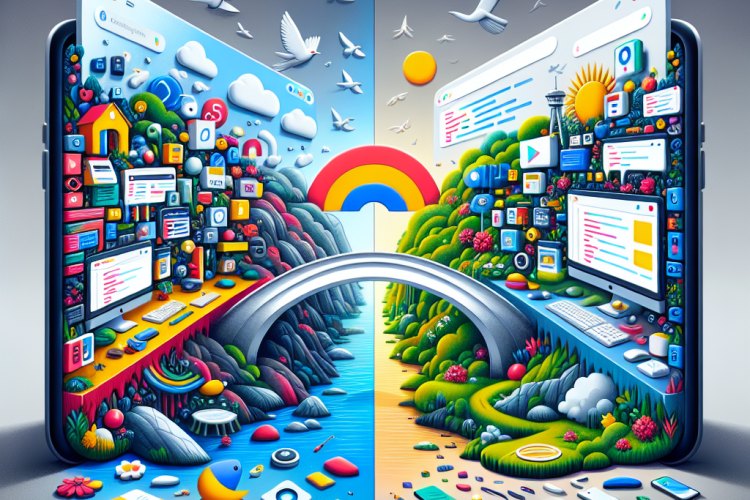
In today’s digital landscape, providing a seamless user experience across multiple platforms is more critical than ever. Flutter, an open-source UI software development kit created by Google, offers a powerful framework for building natively compiled applications for mobile, web, and desktop from a single codebase. This article explores how Flutter bridges the gap between web and mobile development, enabling developers to create unified user experiences efficiently.
1. Single Codebase for All Platforms
One of the most significant advantages of Flutter is its ability to develop applications using a single codebase. This feature drastically reduces the time and effort required to build applications for both web and mobile platforms. Instead of maintaining separate codebases, developers can write their code once and deploy it across multiple platforms, ensuring consistency in design and functionality.
2. Highly Customizable Widgets
Flutter provides an extensive collection of customizable widgets that adapt easily to both mobile and web interfaces. This flexibility allows developers to create visually appealing and responsive user interfaces that maintain a consistent look and feel. With Flutter’s widget tree structure, changes can be made quickly without impacting the entire application.
Key Features of Flutter Widgets:
- Rich set of pre-designed widgets.
- High customization potential.
- Responsive designs that adapt to various screen sizes.
- Access to Material Design and Cupertino styles.
3. Hot Reload for Rapid Development
Flutter’s hot reload feature enables developers to make changes to the code and instantly see the results without losing the application’s current state. This capability is particularly beneficial for iteration and testing, allowing teams to refine their applications quickly and efficiently across both web and mobile platforms.
4. Performance and Speed
Flutter applications are compiled to native ARM code, which significantly enhances performance and speed. This ensures that apps run smoothly, whether on mobile devices or through web browsers. The framework’s efficient rendering engine further optimizes UI performance, providing a consistent experience across different platforms.
5. Strong Community and Ecosystem
Flutter has garnered a robust community of developers and contributors, ensuring continuous support and innovation. With a growing library of plugins and packages, developers can easily integrate third-party services and functionalities, enhancing the overall capabilities of their applications.
Conclusion
Flutter stands out as a powerful tool for bridging the gap between mobile and web development. Its advantages, including a single codebase, customizable widgets, rapid development features, excellent performance, and a strong community, make it an ideal choice for developers aiming to create unified user experiences. Embracing Flutter can lead to reduced development time and increased user satisfaction, positioning businesses for success in a competitive digital market.



0 Comments