
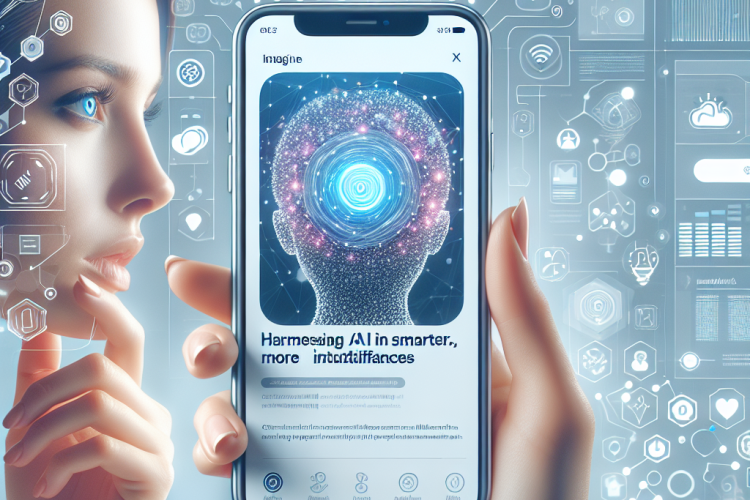
In recent years, artificial intelligence (AI) has transformed numerous industries, from healthcare to finance, by enhancing efficiency and offering new insights through data analysis and automation. One area that has seen significant advancements is app design, where AI is harnessed to create smarter, more intuitive interfaces. As users demand seamless and personalized experiences, AI-driven design becomes integral. This article delves into how AI is revolutionizing app design by making interfaces more user-centric and engaging.
The Evolution of App Design
App design has evolved significantly since the first smartphone applications. Initially, apps were functional tools aimed at completing specific tasks. Today, they are complex ecosystems designed to provide enhanced user experiences through intuitive interfaces. This evolution has been influenced by changing user expectations, technology advancements, and the need for personalization.
The traditional approach to app design involved static interfaces that required significant input from users to perform tasks. Over time, the integration of AI has allowed for dynamic interfaces that can adapt to user behavior and preferences. These developments have introduced a shift from user-initiated actions to AI-driven suggestions, streamlining interactions and making apps more engaging.
AI in App Design: The Key Components
1. Machine Learning
At the heart of AI-driven app design is machine learning, a subset of AI that enables systems to learn and improve from experience without being explicitly programmed. Machine learning algorithms analyze vast amounts of data to identify patterns and predict user behavior. This capability is instrumental in creating personalized user experiences.
2. Natural Language Processing (NLP)
NLP is another critical component of AI in app design. It aids in understanding and interpreting human language, allowing apps to communicate with users more effectively. NLP enables voice recognition features, chatbots, and virtual assistants, transforming how users interact with apps.
3. Computer Vision
Computer vision, a technology that enables computers to interpret and make decisions based on visual data, is increasingly integrated into app design. It allows for face recognition, object detection, and augmented reality features, enhancing user engagement and offering new interaction methods.
4. Predictive Analytics
Predictive analytics involves analyzing historical data to forecast future events, which is critical in anticipating user needs and preferences. By integrating predictive analytics, apps can proactively offer solutions, making interactions smoother and more efficient.
Creating Intuitive Interfaces with AI
Creating an intuitive interface is central to app design. An intuitive interface allows users to navigate seamlessly, anticipating their needs and minimizing friction. AI plays a pivotal role in achieving this by enabling personalization, enhancing accessibility, and improving usability.
1. Personalization
Personalization is at the core of intuitive app interfaces. By harnessing AI, apps can offer personalized content and recommendations based on user preferences and behavior. This tailoring enhances user satisfaction and engagement by making the app relevant to individual needs.
For example, streaming platforms like Netflix and Spotify use AI algorithms to analyze viewing and listening habits, respectively. These insights are used to recommend content that aligns with users’ tastes, resulting in a tailored experience that encourages continued use.
2. Enhancing Accessibility
Accessibility is a crucial aspect of app design, ensuring that applications are usable by people with varying abilities. AI enhances accessibility by providing features like voice recognition, text-to-speech, and gesture-based controls. These innovations make apps more inclusive, allowing everyone to interact meaningfully with technology.
Additionally, AI can assist users with disabilities by simplifying navigation. For instance, AI-powered screen readers can describe visual content to visually impaired users, providing a richer experience.
3. Improving Usability
AI contributes to usability by analyzing user interactions and identifying areas for improvement. Machine learning algorithms can detect patterns in user behavior, highlighting common pain points that designers can address to streamline the user experience.
Furthermore, AI allows for adaptive interfaces that change based on context. For instance, an app might adjust its layout and features based on whether the user is stationary or on the move, providing a seamless experience in varied scenarios.
AI Challenges in App Design
While AI offers substantial benefits in app design, it also presents challenges that must be addressed to maximize its potential. These challenges include privacy concerns, algorithmic bias, and the need for significant computational resources.
1. Privacy Concerns
AI-driven personalization relies heavily on data collection and analysis. This dependence raises privacy concerns, as users are wary of how their personal information is used. Designers must prioritize transparency and data security, ensuring that user information is handled responsibly and ethically.
2. Algorithmic Bias
Algorithmic bias occurs when AI models reflect and propagate existing biases in the data they are trained on. This bias can lead to unfair treatment of certain groups, detracting from the user experience. To combat this, developers must ensure diverse and representative data sets and continuously monitor AI outputs for biased results.
3. Computational Resources
Implementing AI in app design requires substantial computational resources, which can be a barrier for smaller developers. The need for powerful hardware and specialized expertise can increase costs and limit AI integration. Developing efficient algorithms and exploring cloud-based solutions can help mitigate these challenges.
The Future of AI in App Design
The future of AI in app design is promising, with continuous advancements expected to enhance user experiences further. Trends such as explainable AI, emotion recognition, and augmented reality integration are poised to drive future developments.
1. Explainable AI
Explainable AI refers to systems that can provide insights into their decision-making processes. As AI becomes more prevalent in app design, explainable AI will help build user trust by providing transparency and understanding of how decisions are made.
2. Emotion Recognition
Emotion recognition technology analyzes facial expressions and voice tones to determine users’ emotions. By integrating emotion recognition into app design, developers can create interfaces that adapt to users’ emotional states, offering personalized responses and enhancing engagement.
3. Augmented Reality (AR) Integration
AR is set to revolutionize app design by merging the digital and physical worlds. AI-driven AR experiences will allow users to interact with digital content in real-world settings, providing immersive and engaging experiences. This integration will open new possibilities for gaming, retail, education, and various other industries.
Conclusion
AI has undeniably transformed app design by enabling smarter, more intuitive interfaces that prioritize user needs. Through personalization, accessibility enhancements, and improved usability, AI-driven design elevates user satisfaction and engagement. However, designers must navigate challenges such as privacy concerns, algorithmic bias, and computational demands to harness AI’s full potential.
As AI technology continues to evolve, its role in app design will undoubtedly expand, promising even more sophisticated and personalized user experiences. By embracing AI responsibly, app designers can create innovative, user-centric applications that cater to a diverse audience. The integration of AI into app design is not just a trend but a fundamental shift that will shape the future of digital interactions.


0 Comments