
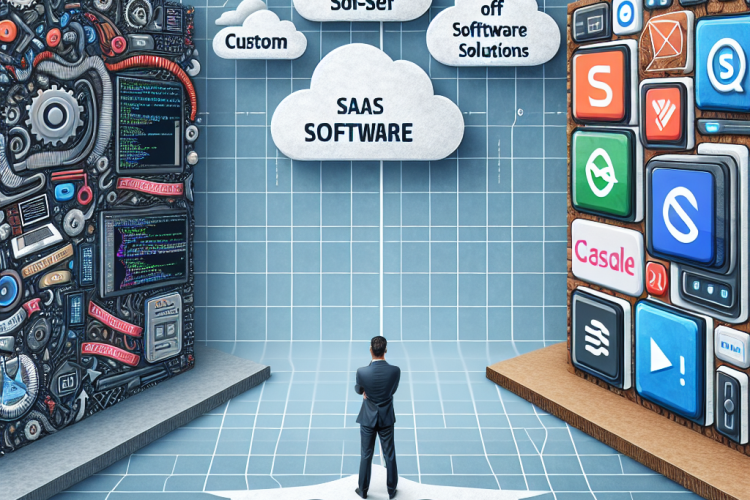
Software as a Service (SaaS) has revolutionized the way businesses operate by providing scalable, flexible, and cost-effective solutions. When it comes to developing SaaS applications, organizations face a pivotal decision: should they opt for custom-built software or choose an off-the-shelf solution? Each approach has its own advantages and limitations. In this article, we will delve into the unique characteristics of both custom and off-the-shelf SaaS solutions to help you make an informed decision that aligns with your business goals.
Custom SaaS Solutions
Custom SaaS solutions are tailored specifically to meet the unique needs of a business. With a custom solution, organizations have the advantage of crafting a product that fits seamlessly with their workflow, ensuring that all specific requirements are met. Here are some key considerations when opting for custom SaaS development:
Advantages of Custom SaaS Solutions
1. Tailored Functionality
Custom software development allows businesses to create features and functions that are specific to their operational needs. Unlike off-the-shelf software that is designed for a broad audience, custom solutions can incorporate unique business processes and solve specific challenges.
2. Scalability
Custom solutions provide the flexibility to scale with your business growth. As your organization expands, you can modify and add new features to accommodate increasing demands without the constraints of predefined structures.
3. Competitive Advantage
A custom solution can give your business a competitive edge by offering unique features that differentiate your services or products from competitors who use generic solutions.
4. Better Integration
Custom applications can be designed to fit seamlessly with existing systems and processes, minimizing disruptions and improving overall efficiency.
Limitations of Custom SaaS Solutions
1. Higher Costs
Developing a custom solution typically involves higher upfront costs. The resources, time, and expertise required to design, build, and maintain bespoke software can be significant.
2. Time-Intensive
Creating a custom solution often requires a long development cycle, which might delay the time-to-market compared to deploying an off-the-shelf product.
3. Risk of Developer Dependence
Businesses may become dependent on the provider or development team for ongoing support and updates, with fewer alternatives available if issues arise.
Off-the-Shelf SaaS Solutions
Off-the-shelf SaaS solutions are pre-made products designed for a broad range of users and industries. These solutions offer general functionalities that cater to a wide audience. Below are the considerations for choosing off-the-shelf software:
Advantages of Off-the-Shelf SaaS Solutions
1. Lower Initial Costs
Since off-the-shelf solutions are developed for mass use, license fees are typically lower compared to the costs of custom development. This makes them more accessible for small to mid-sized businesses with limited budgets.
2. Quick Implementation
Ready-made solutions can often be deployed immediately, enabling businesses to benefit from the software without the delays inherent in custom development.
3. Regular Updates
Vendors of off-the-shelf solutions frequently release updates and new features, ensuring that the software remains relevant and secure without requiring significant user involvement.
4. Vendor Support
Off-the-shelf software usually comes with support and documentation, providing resources for solving common issues and learning how to maximize the software’s potential.
Limitations of Off-the-Shelf SaaS Solutions
1. Limited Customization
These solutions may not fulfill all the specific requirements of a business, leading to potential inefficiencies and the need for workarounds.
2. Scalability Issues
Rapid business growth might outpace the capabilities of the off-the-shelf software, necessitating additional investments in new solutions down the line.
3. Inflexible User Experience
The user experience in off-the-shelf systems may be constrained by the software’s design, which could affect productivity and satisfaction if the system is not conducive to efficient use.
4. Vendor Lock-In
Switching to another solution can be challenging if the software provider ceases support or increases prices, as extracting data or processes from one system to another can be complex.
Factors to Consider in Your Decision
Choosing between custom and off-the-shelf SaaS solutions requires careful consideration of various factors. Here are some important considerations:
1. Business Needs
Understand the specific needs of your business. If your operations are highly unique or require specialized functions, custom solutions might be the right choice. For more generalized processes, off-the-shelf software could suffice.
2. Budget
Consider the financial implications. While custom solutions may require higher initial investments, the long-term return on investment should be evaluated against the limitations of off-the-shelf solutions.
3. Time-to-Market
If you need to implement a solution rapidly, off-the-shelf may be the better option. Custom solutions are ideal if you have the luxury of time and can afford the lengthy development process.
4. Long-Term Growth
Anticipate your business’s growth and ensure that the solution you choose can accommodate changes in scale and scope. Custom solutions offer greater flexibility in long-term growth scenarios.
5. Technical Expertise
Assess your company’s technical capabilities. If your team lacks the skills to manage and maintain a custom solution, off-the-shelf options with vendor support might be preferable.
Conclusion
Deciding between custom and off-the-shelf SaaS solutions is a critical step in aligning technology with your business strategy. Custom solutions offer tailored, scalable, and potentially competitive advantages but come with higher costs and time investments. Off-the-shelf solutions provide cost-effectiveness and speed but may lack flexibility and customization. Ultimately, the right choice should be a function of your specific needs, resources, and long-term vision. By carefully weighing these factors, businesses can opt for the development approach that best suits their unique circumstances, ensuring that technology serves as a catalyst for growth rather than a hurdle.



0 Comments