
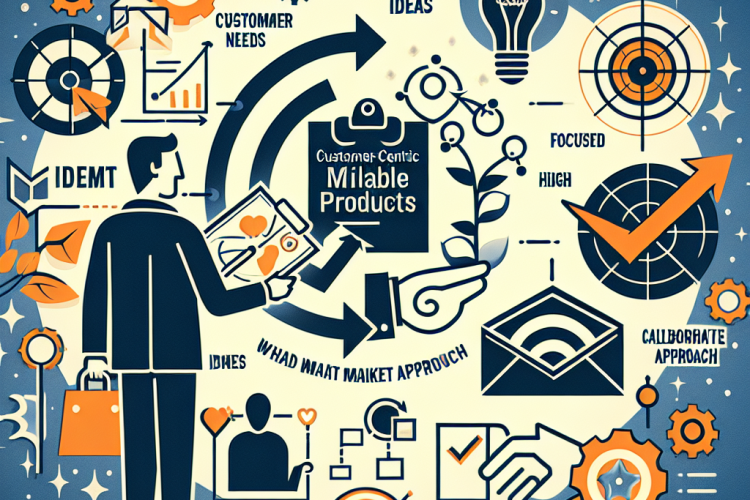
In the competitive landscape of product development, creating a customer-centric Minimum Viable Product (MVP) has become a critical strategy for startups and established businesses alike. An MVP is a version of a product that includes only the essential features necessary to satisfy early adopters. However, a customer-centric MVP goes beyond mere functionalities; it focuses on understanding and addressing the actual needs of customers.
The Importance of Customer-Centricity
Adopting a customer-centric approach means placing the customer at the heart of the product development process. This approach not only aligns with the fundamental goal of any business—solving customer problems—but also enhances customer loyalty, satisfaction, and retention. With the evolving market dynamics, customer expectations are consistently rising, making it essential for companies to prioritize their voice in product development.
Key Principles of Building Customer-Centric MVPs
1. Deep Customer Understanding
Understanding your customers is the cornerstone of a customer-centric MVP. This can involve:
- Conducting extensive market research.
- Engaging with customers through surveys and feedback sessions.
- Utilizing analytics to assess user behavior.
By gathering qualitative and quantitative data, businesses can build personas that represent their target audience, ensuring that the MVP aligns with actual needs.
2. Prioritizing Features Based on Value
After gaining insights into customer needs, companies should prioritize features that deliver maximum value. This means creating a feature set that addresses the most pressing pain points while avoiding feature bloat, which can dilute the product’s core value proposition.
3. Rapid Prototyping and Iteration
Once the essential features are identified, the next step is to create prototypes quickly. Rapid prototyping allows teams to create physical or digital representations of the MVP, facilitating timely feedback and iterations. This process should be repeated multiple times to refine the product according to customer input.
4. Continuous Feedback Loop
A successful customer-centric MVP relies heavily on continuous feedback during and after the product development cycle. Utilizing platforms like user testing, beta releases, and community forums can help gather invaluable feedback that informs future iterations and improvements.
Case Studies of Successful Customer-Centric MVPs
1. Dropbox
Dropbox is a prime example of a company that successfully implemented a customer-centric MVP. Initially, the founders created a simple video demonstrating how the product would work and shared it on tech forums. The overwhelming interest from viewers validated their idea before building the actual product, allowing them to focus on features that mattered most to their users.
2. Zappos
Zappos started as an MVP selling shoes online, without even having an inventory. The founder would go to local shoe stores, take pictures of the shoes, and list them on the website. When customers made an order, he would buy the shoes from a store and ship them directly. This customer-centric approach not only validated the market need but also helped Zappos refine their business model based on customer feedback.
Common Challenges and Solutions
1. Misalignment Between Customer Input and Business Goals
One challenge in building customer-centric MVPs is ensuring that customer feedback aligns with broader business goals. Over-reliance on customer input may lead down paths that do not align with strategic objectives.
Solution: Engage in open dialogues with customers while ensuring that all input is analyzed through the lens of your company’s vision and goals.
2. Overcomplicating the MVP
It can be tempting to add more features than necessary to impress early adopters. However, this approach can lead to feature bloat, confusing users and detracting from the core product value.
Solution: Stick to a lean approach by focusing on core functionalities that address customer needs.
3. Ignoring User Experience
A great product must also provide a great user experience. Sometimes, businesses forget that a product useful in theory must be easy to use in practice.
Solution: Integrate user experience design principles throughout the MVP development process, ensuring that each interaction is seamless and intuitive.
Metrics for Evaluating a Customer-Centric MVP
To assess the effectiveness of your customer-centric MVP, you should focus on several key metrics:
- Customer Satisfaction Score (CSAT): How satisfied are customers with the product?
- Net Promoter Score (NPS): Would customers recommend your product to others?
- Customer Retention Rate: Are customers sticking around after initial use?
- Engagement Rate: How often are customers using your product?
Monitoring these metrics will provide insights on strengths and weaknesses, informing future iterations.
Conclusion
Building a customer-centric MVP is a dynamic and ongoing process that requires a keen understanding of customer needs, strategic prioritization of features, rapid prototyping, and a commitment to continuous improvement based on feedback. Companies that invest time and resources into understanding their customers will not only design products that meet market needs but also foster strong relationships and loyalty among their user base.
As businesses navigate the complexities of product development, the principles of customer-centricity should remain central to their strategy. By placing customers at the forefront, companies can create products that not only succeed in the market but also resonate profoundly with the people they serve.


0 Comments