
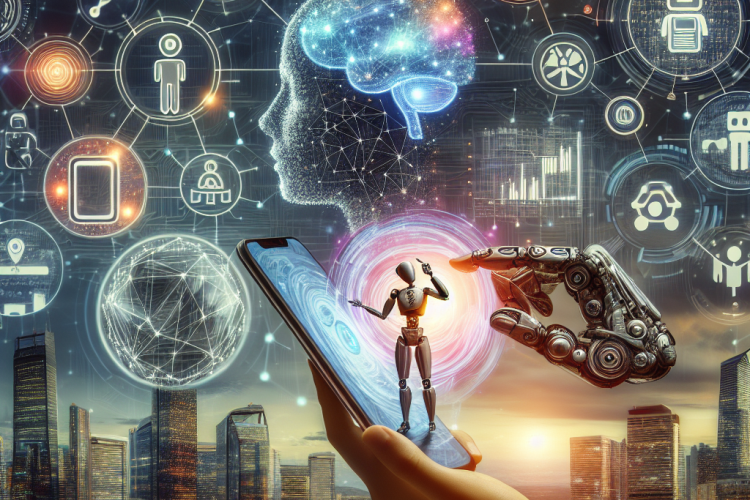
The mobile app industry has undergone a remarkable transformation over the last decade, driven by technological innovations and consumer demands. Among the most influential forces in this evolution is Artificial Intelligence (AI), a technology that has redefined how mobile apps are developed, deployed, and experienced by end-users. AI’s integration into mobile platforms has opened new pathways to enhance user experience, streamline app operations, and enable intelligent decision-making, thus significantly impacting the mobile app industry landscape.
AI-Driven User Experience
AI has fundamentally changed user experiences on mobile devices by offering personalization and dynamic content. Machine learning algorithms analyze user data to offer tailored recommendations in apps like Netflix or Spotify. AI systems can learn from user interactions, improving content suggestions over time.
AI’s role in enhancing predictive text and voice recognition is another significant development. Virtual assistants like Siri, Google Assistant, and Alexa demonstrate AI’s capability in understanding and processing natural language. These advances enable users to interact more fluidly with their devices, increasing app engagement and satisfaction.
Streamlining Development Processes
The integration of AI has streamlined the app development process itself. Automated coding assistants, powered by machine learning, can help developers by suggesting code snippets, detecting bugs, or even writing entire sections of code. This reduces development time and increases efficiency.
AI also aids in quality assurance. Automated testing tools use AI algorithms to detect anomalies and predict potential failures before they occur. This ensures higher reliability and security in apps, nurturing a trustful relationship between developers and users.
Enhancing Security and Privacy
Security is paramount in mobile app development, and AI has played a crucial role in fortifying app defenses. Machine learning models can detect unusual patterns and flag potential security breaches in real-time. This proactive approach allows developers to safeguard sensitive user information against emerging threats.
AI also enhances data privacy through advanced encryption algorithms and secure authentication methods, like facial and fingerprint recognition. These features provide both security and convenience, encouraging user retention and loyalty.
Revolutionizing App Marketing Strategies
AI has revolutionized app marketing by providing deep insights into consumer behavior and preferences. Businesses leverage AI-driven analytics to create highly targeted marketing campaigns. By understanding user patterns, developers and marketers can strategize and optimize outreach efforts effectively.
Chatbots powered by AI are an integral part of customer engagement strategies. These virtual agents provide 24/7 customer service, instantly addressing user queries and guiding them through services or products. This direct interaction fosters positive user experiences and higher conversion rates.
Facilitating Accessibility and Inclusion
AI-driven apps have made significant strides in accessibility, ensuring inclusivity for all users regardless of their abilities. Voice recognition, text-to-speech, and image recognition technologies enable individuals with disabilities to interact with apps seamlessly, thus broadening the user base.
Customization and adaptability are at the heart of AI’s contribution to inclusivity. Apps can learn user preferences, adjust interfaces, and optimize functionalities to suit individual needs, ensuring an equitable digital experience.
The Role of AI in Future Innovations
As AI technology advances, its impact on mobile app development is expected to grow. Innovations such as augmented reality (AR) and virtual reality (VR) are gaining momentum with AI’s capabilities. Enhanced virtual environments and interactive experiences are poised to redefine user engagement, especially in gaming and e-commerce sectors.
Moreover, AI-driven Internet of Things (IoT) applications empower mobile platforms to interact with smart devices, offering comprehensive control and automation. This interconnectedness heralds a new era in device functionality and user interaction.
Challenges and Considerations
Despite its benefits, AI integration in mobile apps presents challenges. One critical issue is data privacy, as AI systems require substantial data for training, raising concerns about data collection, storage, and usage. Developers must prioritize transparent data practices and adhere to regulations like GDPR to maintain user trust.
Additionally, the complexity of AI technologies demands skilled professionals for development and maintenance. Organizations must invest in training and retaining skilled personnel to sustain AI-driven innovations within the industry.
Conclusion
AI has indelibly transformed the mobile app industry, catalyzing advancements in user experience, security, marketing, and accessibility. As AI technologies continue to evolve, their influence over mobile platform innovations will expand, unlocking new possibilities. However, developers and businesses must navigate associated challenges responsibly to harness AI’s full potential, ensuring sustainable growth and a positive impact on society.
The symbiosis between AI and mobile app development illustrates a future where technology not only meets but anticipates user needs, driving the industry forward into a smarter, more intuitive era.



0 Comments