
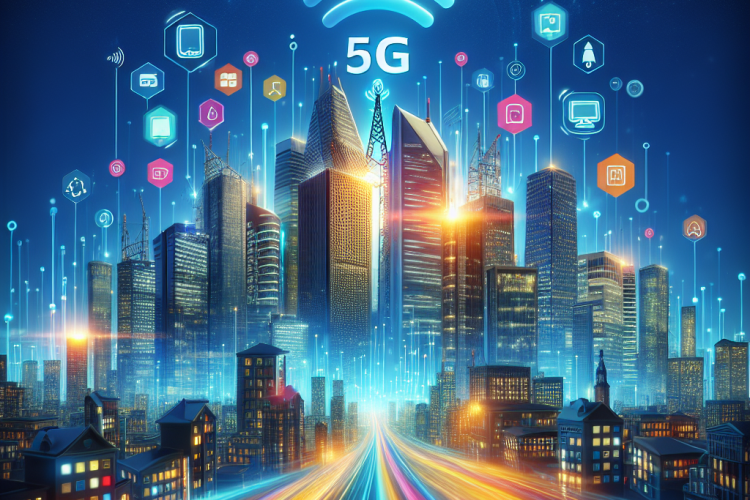
The advent of 5G technology is not just a mere upgrade from its predecessor, 4G; it represents a fundamental shift in how we connect and communicate. The implications for mobile app development are profound, with 5G poised to accelerate innovation in ways previously unimaginable. By offering unparalleled speed, reduced latency, and increased connectivity, 5G is set to transform the mobile app landscape, enabling developers to create more immersive and responsive experiences.
Enhanced Speed and Bandwidth
One of the most significant advantages of 5G is its remarkable speed. With theoretical download speeds reaching up to 10 Gbps, 5G is nearly 100 times faster than 4G. For mobile app developers, this means quicker load times, faster data transfer, and a seamless user experience.
High-speed connectivity allows apps to handle large amounts of data efficiently, something that is particularly beneficial for applications that rely heavily on streaming, such as video and gaming apps. Users will experience smooth, buffer-free streaming at higher resolutions, enhancing the overall user experience.
Reduced Latency
Latency refers to the time it takes for data to travel from the sender to the receiver. In 4G networks, latency can range from 30 to 50 milliseconds, whereas 5G dramatically reduces this to as low as 1 millisecond. This reduction in latency is crucial for real-time applications such as online gaming, virtual reality (VR), augmented reality (AR), and telemedicine.
With near-instantaneous data transmission, mobile apps can offer real-time interactivity and responsiveness. Gaming apps can provide a more immersive experience with no noticeable lag, while AR and VR applications can deliver smoother and more convincing augmented environments. In telemedicine, reduced latency allows for real-time monitoring and consultations, potentially saving lives by enabling faster medical responses.
Greater Connectivity with IoT
5G can handle significantly more connected devices per square kilometer than 4G, making it an enabler for the Internet of Things (IoT). This capability promises a future where everyday devices are interconnected, creating opportunities for innovative mobile applications.
Mobile apps can now integrate with a broader array of devices, providing users with more comprehensive control and data access. For example, smart home apps can offer more detailed insights and control over household gadgets, while health-focused applications can gather and analyze data from various wearable devices, providing a holistic view of a user’s well-being.
Improved Reliability and Network Slicing
5G enhances network reliability with technology such as network slicing, which allows operators to create bespoke virtual networks tailored to specific industry needs. This capability ensures that applications with high reliability and specific performance requirements can operate efficiently.
Network slicing can be particularly beneficial for mission-critical applications, ensuring consistent and reliable connectivity. Industries such as autonomous vehicles, emergency services, and remote control of industrial operations stand to benefit greatly, with mobile apps playing a central role in managing these complex systems.
Potential for New Business Models
With the capabilities of 5G, new business models for mobile apps are emerging. Subscriptions, in-app purchases, and ad-based models can be complemented by the ability to offer premium, real-time features as a service. For instance, augmented reality tours that make use of 5G’s capabilities might charge users per session or time spent.
This new potential for monetization can lead to more sustainable app development, encouraging more startups and companies to innovate in the mobile space. By offering lower latency and higher bandwidth, 5G supports robust cloud services, facilitating greater off-device processing and storage.
Transformative Impact on Specific Sectors
The impact of 5G on mobile apps is felt across various sectors:
- Healthcare: Telehealth apps providing real-time consultations, remote monitoring, and access to vast databases of health information become more feasible, improving patient engagement and care outcomes.
- Education: Enhanced e-learning platforms can offer immersive experiences through AR and VR, making learning more engaging and interactive.
- Retail: Retail apps can leverage AR to provide virtual try-ons and in-store navigation, enhancing the shopping experience.
- Entertainment: High-speed, low-latency streaming makes mobile apps the platform of choice for on-demand content, live sports, and interactive media.
Security Considerations
While 5G presents numerous opportunities, it also brings new security challenges. The increased number of connected devices, combined with higher data transfer rates, necessitates more robust cybersecurity measures. Developers must prioritize security to safeguard user data and ensure trust in their applications.
Implementing end-to-end encryption, robust authentication methods, and regular security updates are key to protecting mobile apps in a 5G world. As the network grows, collaboration with security experts will be paramount in addressing emerging threats effectively.
Conclusion
The role of 5G in accelerating mobile app innovation cannot be overstated. With its high speed, low latency, and ability to connect more devices, 5G is setting the stage for a new wave of mobile applications that offer unprecedented user experiences and functionalities. From transforming existing sectors like healthcare and entertainment to enabling entirely new business models, 5G is a catalyst for innovation.
Despite the challenges, particularly regarding security, the opportunities that 5G offers are immense. As this technology becomes more widespread, developers who leverage its full potential will be at the forefront of mobile app innovation, shaping the future of how we live, work, and connect.


0 Comments