
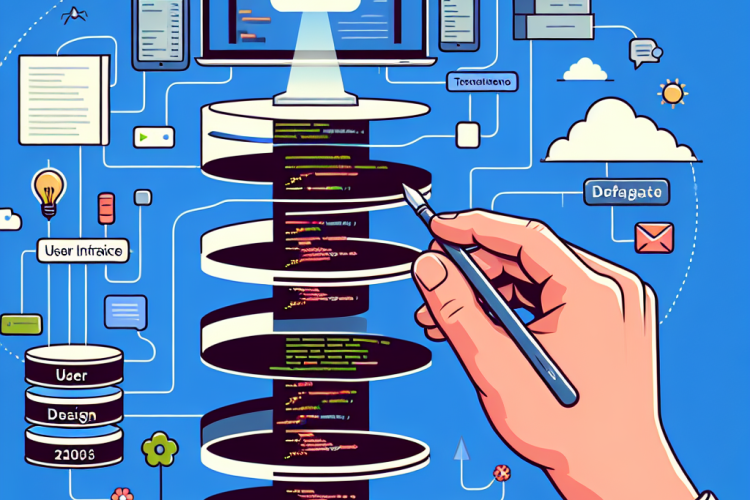
In today’s digital landscape, full-stack development has emerged as a crucial skill for developers, combining both front-end and back-end expertise. This article explores the essential components of full-stack development and offers insights into mastering this multifaceted discipline.
    <h2>Understanding Full-Stack Development</h2>

    <p>Full-stack development refers to the practice of working on both the client side (front-end) and the server side (back-end) of web applications. A full-stack developer possesses a versatile skill set that includes:</p>

    <ul>

        <li>**Front-End Technologies:** HTML, CSS, JavaScript, and frameworks like React or Angular.</li>

        <li>**Back-End Technologies:** Server, databases, programming languages such as Node.js, Python, Ruby on Rails.</li>

        <li>**Database Management:** SQL, NoSQL databases like MongoDB or MySQL.</li>

        <li>**Version Control & Deployment:** Git, Docker, CI/CD practices.</li>

    </ul>


    <h2>The Front-End: User Interface Design</h2>

    <p>Front-end development focuses on the visual aspects of a web application. Developers must ensure:</p>

    <ul>

        <li>Responsive design that works on various devices.</li>

        <li>Intuitive user experience (UX) to enhance engagement.</li>

        <li>Fast loading times and performance optimization.</li>

    </ul>

    <p>Frameworks like <code>React</code> and <code>Vue.js</code> facilitate building complex user interfaces through reusable components, making the development process more efficient.</p>


    <h2>The Back-End: Server and Database Management</h2>

    <p>Back-end development is responsible for storing, processing, and managing data. Key responsibilities include:</p>

    <ul>

        <li>Setting up and managing databases.</li>

        <li>Creating APIs for data exchange between the client and server.</li>

        <li>Implementing business logic and ensuring security protocols.</li>

    </ul>

    <p>Popular back-end technologies include <code>Node.js</code> for JavaScript applications and <code>Express.js</code> as a web framework.</p>


    <h2>Bridging the Gap: Full-Stack Frameworks</h2>

    <p>Full-stack frameworks consolidate front-end and back-end practices, offering streamlined development processes. Some notable frameworks include:</p>

    <ul>

        <li><code>MERN</code>: MongoDB, Express.js, React, Node.js</li>

        <li><code>MEAN</code>: MongoDB, Express.js, Angular, Node.js</li>

        <li><code>LAMP</code>: Linux, Apache, MySQL, PHP</li>

    </ul>


    <h2>Continuous Learning and Best Practices</h2>

    <p>Full-stack development is ever-evolving. Staying updated with the latest technologies, tools, and best practices is vital. Here are some tips for continued growth:</p>

    <ul>

        <li>Engage with online tutorials and bootcamps.</li>

        <li>Participate in open-source projects to gain real-world experience.</li>

        <li>Join developer communities and forums for networking and support.</li>

    </ul>


    <h2>Conclusion</h2>

    <p>Mastering full-stack development opens up a plethora of opportunities in the tech industry. By understanding both the front-end and back-end intricacies, developers can create robust applications that meet user needs effectively.</p>

</article>
0 Comments