
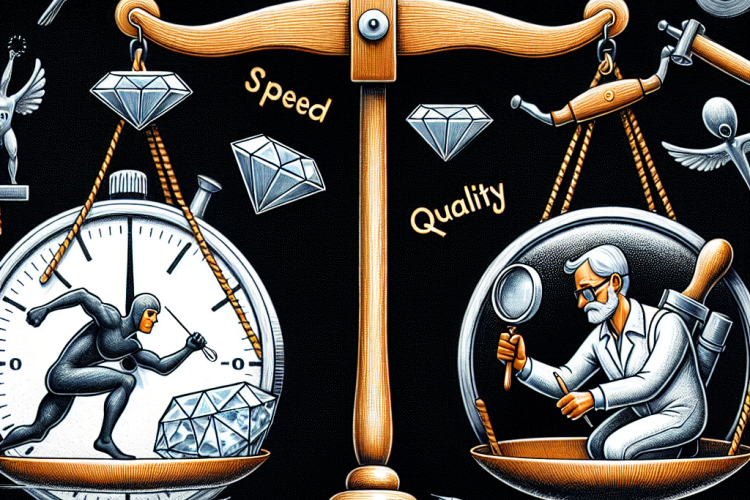
In today’s fast-paced tech landscape, businesses are urged to innovate and deliver products swiftly to match consumer demand. However, rapid development should not sacrifice quality. Building a Minimal Viable Product (MVP) provides a strategic method to balance speed and quality effectively. This article delves into strategies for achieving this equilibrium, guiding teams through the nuances of MVP development while ensuring that the core values of a quality product are not compromised.
Understanding MVP Development
Before delving into strategies for balancing speed and quality, it’s crucial to understand what an MVP is. An MVP is a product with just enough features to attract early adopters and validate business ideas without building the full product. The goal is to learn from user feedback and adapt accordingly.
The advantages of developing an MVP include:
- Reduced development costs
- Faster time-to-market
- Ability to gather user feedback and make data-driven improvements
- Risk mitigation by validating ideas before investing heavily
Key Challenges in Balancing Speed and Quality
Rapid MVP development faces specific challenges that can threaten both speed and quality:
- Scope Creep: Teams may be tempted to add more features, delaying release.
- Quality Assurance: Rushing can lead to insufficient testing and bugs.
- User Feedback Integration: Balancing the speed of delivery with the need for thoughtful iteration on user feedback can be tricky.
- Team Dynamics: High pressure can lead to burnout and lower morale, affecting overall productivity.
Strategies for Rapid MVP Development
1. Define Clear Goals and Objectives
Start with a clear understanding of what you want to achieve with your MVP. Well-defined goals can help teams prioritize essential features and avoid scope creep. Key elements include:
- Identifying the main purpose of the MVP.
- Understanding the target audience and their needs.
- Establishing criteria for success and metrics to evaluate the MVP post-launch.
2. Build a Minimal and Focused Feature Set
Focus on developing only the core features that deliver value to your users. This minimizes complexity and reduces time spent on non-essential elements. Utilize the MoSCoW method (Must have, Should have, Could have, Would like to have) to prioritize features effectively.
3. Leverage Agile Methodologies
Agile methodologies, such as Scrum or Kanban, can enhance speed and adaptability. By using short development cycles (sprints), teams can focus on incremental progress while allowing for rapid adjustments based on user feedback.
4. Implement Continuous Integration and Continuous Delivery (CI/CD)
CI/CD practices enable teams to automate testing and deployment processes, thus speeding up development without sacrificing quality. Regular code integration ensures that issues are identified early, reducing the risk of major delays as the deadline approaches.
5. Foster a Collaborative Environment
Collaboration among team members builds a culture of shared knowledge and creativity. Daily stand-up meetings, brainstorming sessions, and collaborative tools can streamline communication and expedite problem-solving. This collective effort results in a more balanced approach to speed and quality.
6. Conduct Regular User Testing
User feedback is invaluable in MVP development. Regular user testing, even with early prototypes, ensures that the product aligns with user expectations and needs. This iterative process allows for adjustments based on real user experiences, thereby improving overall quality without delaying the roadmap significantly.
7. Prioritize Quality Assurance (QA) in the Development Process
Quality assurance shouldn’t be an afterthought. Integrating QA processes throughout the development cycle helps identify bugs early. Automated testing tools can significantly reduce the QA workload, ensuring that the MVP is reliable and meets user standards.
8. Manage Stakeholder Expectations
Keep stakeholders informed about project progress and any challenges encountered. Transparent communication fosters trust and understanding, allowing for a more realistic timeline and expectations without compromising on quality.
9. Utilize Prototyping Tools
Tools like Sketch, Figma, or InVision allow teams to create rapid prototypes for user testing and feedback. Digital mockups can guide development and ensure that the final product is aligned with user expectations before detailed coding begins.
10. Focus on the User Experience (UX)
Even an MVP must offer a satisfactory user experience. Prioritize intuitive design and usability to make a positive impression on users. An engaging and functional interface can make the difference between a successful MVP and one that fails to attract users.
Measuring the Success of Your MVP
Once the MVP is launched, the next step is evaluating its success and impact. Measurement metrics include:
- User Engagement: Monitoring how users interact with your product.
- Feedback Analysis: Collecting and analyzing feedback to identify areas for improvement.
- Retention Rates: Assessing how many users continue to engage with the MVP over time.
- Conversion Rates: Evaluating how many users perform desired actions, such as signing up or making purchases.
This data will inform further iterations and refinements, ensuring ongoing alignment with user needs and expectations.
Conclusion
Balancing speed and quality in rapid MVP development is a challenging yet crucial endeavor. By implementing clear goals, a focused feature set, agile practices, and continuous feedback mechanisms, teams can successfully navigate this landscape without sacrificing product integrity. Furthermore, fostering a collaborative environment and prioritizing quality assurance enrich the development process and ensure optimal outcomes. As technology and user expectations continue to evolve, the strategies discussed here will aid organizations in maintaining a competitive edge while delivering valuable products to their customers.



0 Comments