
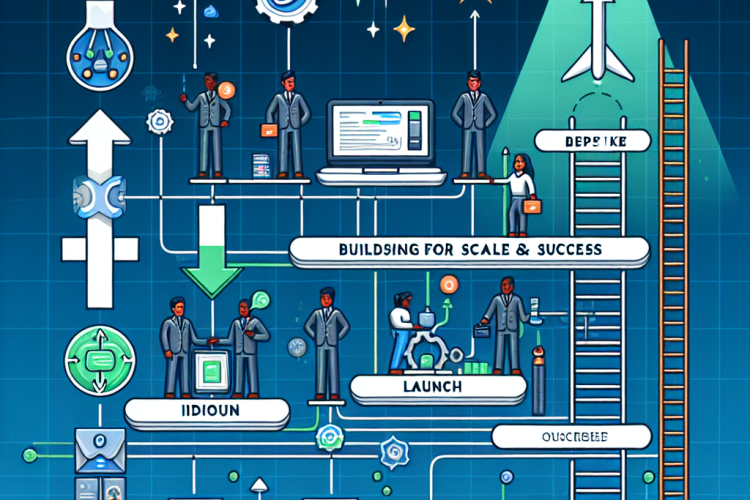
In the fast-paced world of startups, building a scalable app is crucial for success. Bespoke app development offers a tailored approach to creating innovative solutions uniquely suited to a startup’s needs. By prioritizing scalability from the outset, startups can ensure their application can handle growth efficiently.
Understanding Bespoke App Development
Bespoke app development is the process of developing custom applications tailored to specific business requirements. Unlike off-the-shelf solutions, bespoke apps are meticulously crafted to meet the unique challenges and goals of a startup. This personalized approach ensures that the app aligns perfectly with the business model, culture, and customer expectations.
The Importance of Scalability
Scalability is a system’s ability to handle growth gracefully. For startups, this means that as user demand increases, the application can accommodate additional load without compromising performance. A scalable app can support more users, transactions, and data without necessitating a complete overhaul, allowing startups to grow sustainably.
Identifying Key Scalability Factors
Several factors influence the scalability of an app. These include the choice of architecture, database management system, cloud services, and more. Choosing the right technology stack and designing with scalability in mind from day one can save significant resources and prevent potential roadblocks.
Benefits of Bespoke App Development
Bespoke app development offers numerous benefits:
- Customization: Developers create features tailored to the specific needs of the startup.
- Flexibility: The app can easily adapt to changes in market demands or business objectives.
- Competitive Advantage: A unique, well-designed app can differentiate a startup from its competitors.
- Improved Efficiency: Custom apps streamline processes and integrate seamlessly with existing systems.
- Enhanced Security: Tailored security measures can be built into the app from the ground up, providing better protection against threats.
Key Stages of App Development for Startups
A successful bespoke app development project generally follows these key stages:
1. Discovery and Planning
The initial stage involves understanding the startup’s vision, goals, and market needs. A thorough analysis helps in defining the project scope, objectives, and technical requirements. During this phase, developers and stakeholders collaborate to outline a strategic plan.
2. Design and Prototyping
In this phase, developers create prototypes and design the user interface (UI) and user experience (UX) of the app. This step often involves iterative feedback loops, ensuring the design aligns with user expectations and business objectives. A well-crafted design lays the foundation for development.
3. Development
The actual coding and development of the application take place here. This phase requires expert developers to build robust, efficient code bases, adhering to best practices and using modern development methodologies like Agile or DevOps for continuous integration and delivery.
4. Testing
Testing is crucial to identify and fix bugs, improve functionality, and ensure the app performs as intended under various conditions. Thorough testing includes unit testing, integration testing, performance testing, and user acceptance testing.
5. Deployment
Once testing is complete and the product is refined, the app is ready for launch. Deployment involves moving the application from a development environment to a live production environment, making it accessible to users.
6. Maintenance and Updates
Post-launch, the app requires regular maintenance to fix issues, improve functionality, and integrate new features based on user feedback and market changes. This ongoing process is crucial for maintaining user satisfaction and staying competitive.
Best Practices for Scalable App Development
Developers and startups should adopt the following best practices to ensure app scalability:
1. Modular Architecture
Using a modular architecture, such as microservices, allows developers to build an app in independent modules that can be developed, tested, and deployed separately. This strategy fosters scalability and flexibility, making it easier to update or scale specific components without affecting the entire application.
2. Cloud-Based Infrastructure
Leveraging cloud-based infrastructure from providers like AWS, Azure, or Google Cloud offers scalable resources and services on demand. Cloud platforms provide elastic scalability, automatic load balancing, and robust security features, making them ideal for startups.
3. Efficient Data Management
Efficient data management is crucial for app scalability. Using NoSQL databases like MongoDB or Elasticsearch, in combination with SQL databases, can help manage large datasets. Developers should implement caching strategies, indexing, and data partitioning to improve data retrieval speed and application performance.
4. Performance Monitoring
Implementing performance monitoring tools ensures that the app runs optimally. Tools like New Relic or AppDynamics provide real-time insights into app performance, identifying bottlenecks and alerting developers to potential issues before they impact users.
5. Continuous Integration and Deployment (CI/CD)
Adopting CI/CD practices allows developers to deliver updates more frequently and with greater confidence. Automated testing frameworks, along with version control systems like Git, streamline development workflows, ensuring that the app remains robust and scalable as it evolves.
6. Focus on Security
Security is a fundamental aspect of bespoke app development. Implementing secure coding practices, regular security audits, and utilizing encryption and authentication mechanisms enhances user trust and safeguards sensitive data.
Case Study: Successful Scalable App Implementation
Consider the case of a startup that developed a bespoke app for online education. Initially catering to a small market, they experienced rapid growth, causing a surge in user demand. Their application was built using microservices and deployed on AWS, providing the flexibility to scale individual components independently.
By implementing a robust caching strategy and utilizing both SQL and NoSQL databases, they managed to maintain high performance despite handling increased data volume. Regular performance monitoring and a strong CI/CD pipeline allowed them to deploy updates seamlessly, addressing emerging user requirements and maintaining product quality.
The startup’s choice to focus on bespoke development with a strong emphasis on scalability contributed significantly to their success, ultimately capturing a wide market and improving educational access for thousands of users.
Conclusion
Bespoke app development represents a strategic investment for startups aiming for long-term success. By focusing on customization, scalability, and a user-centered design approach, startups can create applications that stand out in competitive markets, efficiently adapt to growth, and fulfill evolving consumer needs.
By embracing best practices such as modular architecture, cloud-based infrastructure, and CI/CD, and by prioritizing security, startups can build robust, scalable applications. Whether in education, healthcare, finance, or any other sector, the principles and strategies outlined above apply across industries, positioning startups for sustained growth and success.



0 Comments