
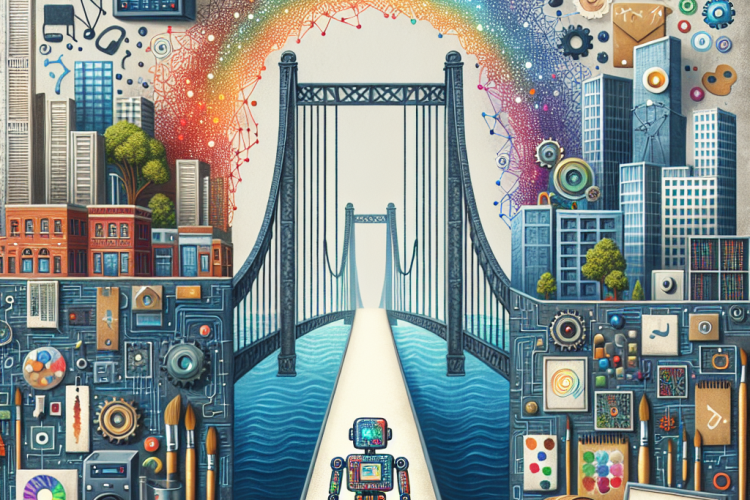
The fusion of technology and creativity has long driven innovation across various fields. In recent years, the advent of Artificial Intelligence (AI) has remarkably transformed the landscape of mobile app development. As a pivotal force, AI is enhancing the creative process and automating tedious tasks, thereby fostering innovation and efficiency. This article explores how integrating AI into mobile app development can act as a bridge between technology and creativity, revolutionizing the way apps are designed, developed, and deployed.
Understanding the AI Revolution in App Development
AI technologies like machine learning, natural language processing, and computer vision have opened new avenues in app development. These technologies enable developers to create apps that can understand, learn, and react to user inputs in a more human-like manner. AI-powered apps can offer personalized experiences, anticipate user needs, and provide innovative solutions to traditional challenges.
AI-Driven Design
One of the primary areas where AI is making a significant impact is in the design phase of app development. Tools like Adobe Sensei and Sketch2Code are leveraging AI to automate design processes, allowing designers to focus more on creativity and innovation. AI can suggest design elements, color schemes, and layouts based on user behavior and preferences, enhancing both the aesthetic and functional aspects of app design.
Enhancing User Experience with AI
AI significantly contributes to improving user experience by creating more intuitive and responsive interfaces. AI algorithms can analyze user data to understand behavior patterns and predict future actions, enabling developers to design more engaging and personalized user interfaces. Features like voice recognition, image recognition, and sentiment analysis are now integral to providing a seamless user experience.
The Role of AI in App Development Efficiency
AI’s role in enhancing development efficiency cannot be overstated. By automating repetitive tasks, AI allows developers to focus on more strategic aspects of development. AI-driven tools can automatically generate code, conduct code reviews, and test applications, significantly reducing time to market. This automation empowers developers to concentrate on refining their concepts and enhancing app features.
Automating Code Writing and Testing
Tools like TensorFlow and Keras have empowered developers to experiment with AI models without diving deep into complex algorithms. AI can also generate code snippets based on the developer’s requirements, automating the mundane aspects of writing repetitive code. Furthermore, AI-driven testing frameworks automatically detect and report bugs, ensuring higher software quality and reliability.
Optimizing App Performance
AI helps optimize app performance by analyzing user data and adapting resource allocation accordingly. Predictive analytics can forecast server demands, allowing apps to scale resources proactively. Such optimizations not only enhance performance but also contribute to cost savings by reducing unnecessary computational expenses.
AI as a Catalyst for Innovation
Beyond improving existing processes, AI acts as a catalyst for innovation, enabling the development of entirely new app functionalities. AI’s potential for creativity is vast, unlocking innovative possibilities previously unattainable. From augmented reality experiences to intelligent virtual assistants, AI is redefining the capabilities of mobile applications.
Creating Immersive Experiences
AI has paved the way for augmented reality (AR) and virtual reality (VR) experiences in mobile apps. By understanding and interpreting sensory data, AI algorithms create environments that feel real and tangible to users. Industries such as gaming, retail, and education are leveraging these immersive experiences to engage users in unprecedented ways.
Developing Intelligent Assistants
The proliferation of intelligent virtual assistants, such as Siri, Alexa, and Google Assistant, is largely attributed to advancements in AI. These assistants utilize natural language processing and machine learning to understand and respond to user commands, offering a more personalized interaction. As AI continues to evolve, these assistants will become even more intuitive and integral to mobile app ecosystems.
Challenges and Ethical Considerations
While AI presents numerous opportunities, its integration into mobile app development comes with challenges and ethical considerations. Issues such as data privacy, algorithmic bias, and the loss of jobs due to automation need to be addressed thoughtfully. Developers must ensure transparent data practices and incorporate ethical guidelines to keep AI deployment responsible and fair.
Data Privacy and Security
With AI-driven apps heavily relying on data, ensuring user privacy and data security is paramount. Developers need to implement strong encryption protocols and ensure compliance with data protection regulations, such as GDPR and CCPA. Transparency in how AI uses user data can build trust and foster user engagement.
Addressing Algorithmic Bias
AI algorithms can inadvertently perpetuate biases if not carefully monitored. Developers must ensure datasets are diverse and representative of various demographics to mitigate bias. Regular audits and updates to AI models are essential to maintaining fairness and accuracy in AI-driven applications.
Conclusion
Bridging technology and creativity through the AI approach in mobile app development holds limitless potential. By automating mundane tasks, enhancing user experiences, and fostering innovation, AI is transforming how apps are conceived and executed. However, the journey comes with challenges that necessitate careful consideration, especially concerning ethics and security.
As developers, designers, and stakeholders continue to explore AI’s potential, a balance between technological advancement and human creativity will be crucial. Embracing AI responsibly will not only redefine the mobile app industry but also unlock new dimensions of possibilities for the digital future.


0 Comments