
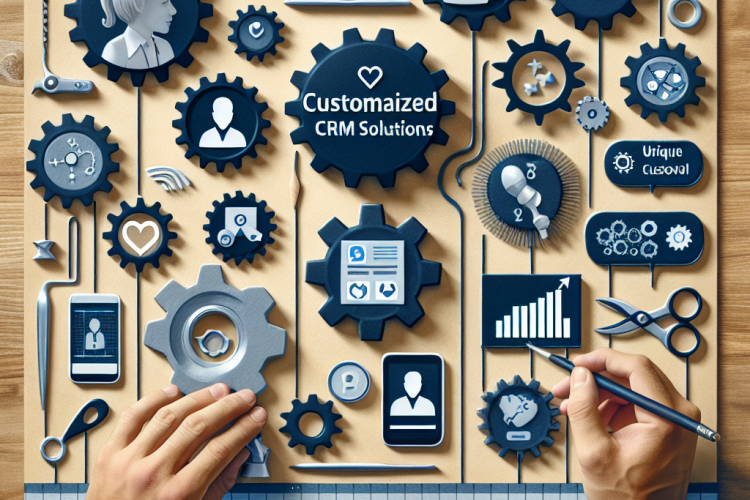
In the ever-evolving world of business, customer relationship management (CRM) systems have become essential tools for managing a company’s interactions with current and potential customers. These platforms help organizations streamline processes, improve customer relationships, and increase profitability. However, the “one-size-fits-all” approach of standard CRM software often falls short of meeting the specific needs of different industries and businesses. This is where customized CRM solutions come into play.
Customized CRMs are tailored to accommodate the unique requirements of an organization, offering flexibility and adaptability that are essential for success in today’s competitive environment. In this article, we will explore how agencies tailor CRM platforms to foster success, diving into the customization process, the benefits of personalized solutions, and key considerations for businesses.
Understanding CRM Customization
CRM customization refers to the process of modifying a CRM platform’s existing functionalities to better fit the operational needs and goals of a company. This can range from simple interface tweaks to advanced modifications involving third-party integrations, custom modules, and automated workflows.
By customizing a CRM, agencies can align the software with a company’s business processes, ensuring that all customer-related data and activities are managed more efficiently. Customization enables businesses to tailor features to specific tasks, optimize user experience, and drive higher adoption rates among staff.
Benefits of Customized CRM Solutions
1. Enhanced User Experience
One of the most significant advantages of a customized CRM is the improved user experience. By tailoring the interface and functionalities to align with users’ daily activities, agencies can ensure that the platform is intuitive and easy to navigate. This leads to increased user satisfaction and higher rates of adoption.
2. Improved Efficiency and Productivity
Customized CRMs help businesses streamline their operations by automating repetitive tasks and processes. With tailored workflows and integrations, employees can focus on high-value activities, resulting in improved efficiency and productivity. This automation also reduces the risk of errors, further boosting operational effectiveness.
3. Better Data Management
Custom CRM solutions enable companies to manage and organize data more effectively. Businesses can customize fields, dashboards, and reports to suit their specific requirements, ensuring that decision-makers have access to the most relevant and accurate data. This enhances data-driven decision-making and supports overall business strategy.
4. Scalability
As businesses grow, their CRM needs are likely to change. Customized CRMs offer the flexibility required to scale solutions as needed, whether by adding new features, accommodating more users, or integrating additional systems. This scalability helps businesses maintain seamless operations as they expand.
5. Competitive Advantage
A well-tailored CRM solution can provide a significant competitive advantage. By addressing specific business needs and improving customer interactions, companies position themselves to deliver superior service. This can lead to increased customer satisfaction, loyalty, and ultimately, better market positioning.
Customization Techniques and Strategies
1. Interface Customization
Customizing the user interface (UI) is a fundamental aspect of creating a personalized CRM experience. This includes adjusting layouts, color schemes, and workflows to improve accessibility and user-friendliness. An intuitive UI encourages user engagement and helps employees adapt quickly to the new system.
2. Automated Workflows
Automating workflows within a CRM platform enhances operational efficiency. Custom CRM solutions can automate a series of processes based on specific triggers, such as sending follow-up emails, assigning tasks, or updating records. These automated workflows reduce manual effort and allow teams to focus on strategic activities.
3. Integration with Third-Party Applications
Many businesses rely on a variety of software tools to manage different aspects of their operations. Customized CRMs can be integrated with third-party applications such as email marketing platforms, accounting software, and social media tools. This seamless integration ensures that all relevant data is synchronized and accessible from a single platform.
4. Custom Modules
Agencies often develop custom modules tailored to meet specific business processes. These modules can address unique requirements such as industry-specific compliance, customer feedback management, or product lifecycle tracking. Custom modules enhance the CRM’s capabilities and align it more closely with the company’s objectives.
Case Studies in CRM Customization
1. Retail Industry
A leading retail chain sought a customized CRM solution to improve the management of its extensive customer database. By tailoring the CRM’s features, the retailer was able to segment customers based on purchasing behavior and preferences. This personalization allowed for targeted marketing campaigns, resulting in a 30% increase in customer engagement and a significant boost in sales.
2. Healthcare Sector
In the healthcare sector, patient data management is crucial. A hospital network implemented a customized CRM to streamline interactions between staff, patients, and healthcare providers. The system was tailored to manage appointments, track patient history, and facilitate communication between departments. This resulted in a 40% reduction in appointment scheduling errors and improved patient satisfaction scores.
3. Financial Services
A financial advisory firm used a customized CRM to enhance its client management processes. By integrating the CRM with financial analysis tools, advisors gained real-time insights into client portfolios. Customized reporting features allowed for in-depth analysis and better-informed investment decisions, leading to a 20% increase in client retention.
Key Considerations in Customizing CRM Solutions
1. Identifying Business Needs
Before embarking on a CRM customization project, it is essential to identify and document the specific needs and goals of the business. This involves analyzing existing processes, gathering feedback from stakeholders, and setting clear objectives for the CRM implementation.
2. Selecting the Right Technology Partner
Choosing the right technology partner is crucial to the success of a CRM customization project. The partner should have a proven track record of delivering customized solutions, a deep understanding of the industry, and the technical expertise required to execute the project effectively.
3. Balancing Customization and Complexity
While customization offers many benefits, it is essential to balance these with the complexity of the solution. Over-customization can lead to overly complex systems that are difficult to maintain and upgrade. Businesses should focus on customizing only those aspects that truly add value to their operations.
4. Ensuring User Adoption
For a customized CRM to deliver its full potential, user adoption is critical. Organizations should invest in comprehensive training programs, provide ongoing support, and involve users in the customization process to ensure the solution meets their needs and encourages widespread use.
Challenges in CRM Customization
1. Cost and Time
Customizing a CRM solutions can be time-consuming and costly, especially for businesses with limited budgets. Organizations must carefully consider the ROI of customization efforts and allocate appropriate resources to ensure successful implementation.
2. Technical Limitations
Some CRM platforms may have inherent limitations that restrict the extent of possible customizations. Agencies must be aware of these technical constraints and choose platforms that offer sufficient flexibility and adaptability.
3. Data Privacy and Security
Custom CRM solutions often involve handling vast amounts of sensitive customer data. Ensuring compliance with data privacy laws and implementing robust security measures is crucial to protect against data breaches and maintain customer trust.
Conclusion
In the quest for business success, a customized CRM solution can be the key to unlocking unparalleled efficiency and improved customer relationships. By tailoring CRM platforms to fit the unique needs of an organization, businesses can streamline processes, improve data management, and gain a competitive edge. However, the customization process is not without challenges.
Careful planning, a clear understanding of business needs, and collaboration with the right technology partner are critical to achieving a successful CRM implementation. As companies continue to evolve and grow, their CRM solutions must be flexible and scalable to adapt to changing demands, ensuring long-term success and sustained competitiveness in the market.


0 Comments