
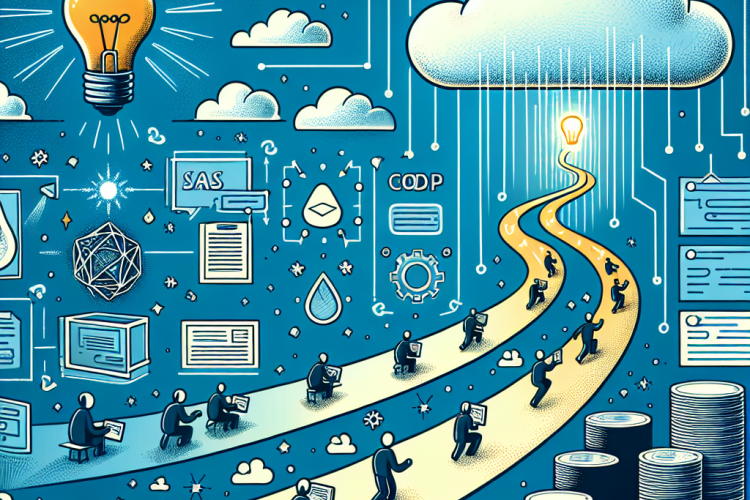
The evolution from on-premise software to Software as a Service (SaaS) has transformed the technology landscape. This model delivers software applications through the cloud, enabling users to access services remotely. The journey of developing a SaaS product is intricate, involving various stages from concept inception to cloud deployment. This article explores the comprehensive journey of SaaS product development.
Conceptualization and Market Research
The journey begins with an innovative idea. Conceptualization is about identifying the core problem the SaaS product will solve. This stage requires thorough market research to understand the needs of potential users and evaluate existing solutions in the market. Competitor analysis helps in identifying gaps and opportunities. Validation of the concept through customer surveys or focus groups is crucial to ensure there is a real demand for the product.
Defining the Product Strategy
Once the concept is validated, the next step involves defining a clear product strategy. This includes outlining the product’s vision, mission, and objectives. A product roadmap is drafted to highlight the development phases, timelines, and milestones. Defining the target audience and understanding their needs guides the scope of the product features. At this stage, pricing models (e.g., subscription-based, freemium, tiered pricing) are also evaluated.
Design and Prototyping
The design phase is crucial as it translates the product strategy into a tangible interface. User Experience (UX) and User Interface (UI) design focus on creating an intuitive and engaging experience for users. Wireframes and prototypes are developed to visualize the product. These prototypes are used for early testing and feedback gathering, ensuring the product design aligns with user expectations and needs.
Technology Stack Selection
Choosing the right technology stack is vital for the product’s performance, scalability, and maintenance. Decisions about the server, database, programming languages, frameworks, and cloud service providers play a significant role. SaaS solutions commonly leverage cloud platforms like AWS, Azure, or Google Cloud for flexibility and scalability.
Development and Iteration
The actual development phase involves writing code, integrating systems, and building functionalities as outlined in the product roadmap. Agile methodologies are often applied, emphasizing iterative development and continuous feedback. This approach allows for quick adaptations to changes or enhancements based on user feedback. Regular testing and quality assurance ensure that the product is stable and functional.
Security and Compliance
SaaS products handle various types of data, making security a critical concern. Implementing robust security measures such as encryption, authentication, and secure APIs is essential. Compliance with regulations like GDPR, HIPAA, or CCPA also needs to be addressed, depending on the industry and geographical location of the users. Regular security audits and updates fortify the product against potential threats.
Deployment and Cloud Integration
Once development is complete, deploying the product to a production environment is the next step. Cloud integration ensures that the product is available to users anywhere, at any time. It’s important to establish monitoring and logging to track system performance and user activity. Scalability features are implemented to handle varying loads and user demands efficiently.
Marketing and Customer Acquisition
Successful SaaS products require effective marketing strategies to reach potential users. Digital marketing, SEO, content marketing, and partnerships can be leveraged to increase visibility and attract customers. Customer acquisition techniques, such as free trials and demos, offer potential users a risk-free way to evaluate the product. Building a strong brand presence is crucial to gaining trust and driving user adoption.
Continuous Improvement and Scaling
The SaaS development journey does not end at deployment. Continuous improvement through updates, new features, and enhancements based on customer feedback is vital. Scaling the product involves optimizing performance and expanding the infrastructure to support a growing user base. A robust customer support system helps in addressing user issues and maintaining satisfaction.
The journey of developing a SaaS product from concept to cloud is comprehensive and complex. It requires a well-defined strategy, meticulous planning, and agile execution. By focusing on the needs of the users, ensuring security and compliance, and integrating a scalable infrastructure, businesses can successfully bring their SaaS products to market. Continuous improvement and adaptation to market changes are key to sustaining growth and success in the competitive SaaS landscape.



0 Comments