
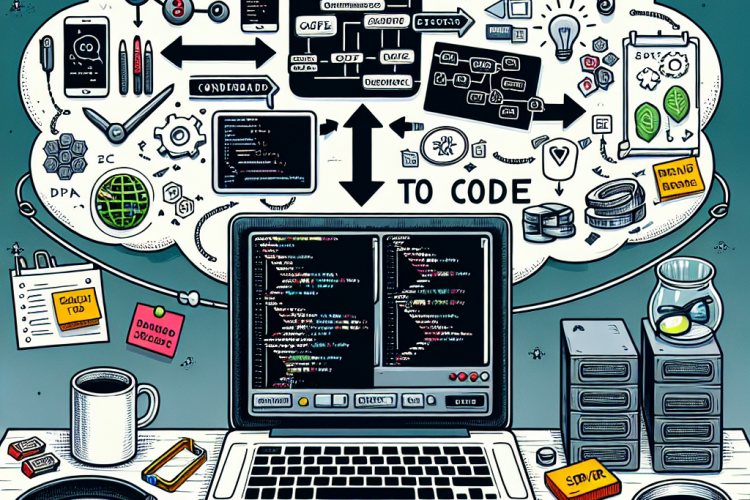
Backend development is an essential aspect of software engineering that deals with server-side components, including database interactions, server logic, authentication, and much more. Backend developers use a variety of tools and technologies to build the logic and manage the databases that power applications. This article will explore some of the essential tools used by backend developers and how they transition concepts into functional code.
Planning and Designing
The journey from concept to code starts with planning and designing. Before any code is written, backend developers must understand the project’s requirements clearly. This involves engaging with stakeholders to gather requirements and understanding the system architecture. Here are some tools commonly used in this phase:
1. UML and Design Diagrams
Unified Modeling Language (UML) is used to visualize the design of a system. Use case diagrams, class diagrams, and sequence diagrams are typical UML diagrams that help map out how the system will function. Tools like Lucidchart and Microsoft Visio are often used for creating these diagrams.
2. Project Management Tools
Backend developers need to track their progress and manage tasks effectively. Tools like Jira, Trello, and Asana are essential for organizing tasks, setting deadlines, and collaborating with team members. These tools help teams maintain an agile workflow and track project milestones.
Development Environments
Once the design phase is complete, the next step is coding. Backend developers need robust development environments to write, debug, and test their code.
1. Integrated Development Environments (IDEs)
Popular IDEs like Visual Studio Code, IntelliJ IDEA, and Eclipse offer powerful features for backend development. They provide syntax highlighting, code completion, debugging tools, and integration with version control systems, significantly enhancing productivity.
2. Version Control Systems
Version control is crucial in managing code changes and collaborating with other developers. Git, hosted on platforms like GitHub, GitLab, and Bitbucket, is the most popular version control system. It allows developers to track changes, manage branches, and collaborate on code efficiently.
Programming Languages
Backend development requires proficiency in one or more programming languages. The choice of language often depends on the specific needs of the application.
1. JavaScript (Node.js)
Node.js is a popular runtime for executing JavaScript on the server side. It allows developers to use JavaScript for full-stack development, enabling seamless communication between frontend and backend systems.
2. Python
Known for its readability and simplicity, Python is widely used in backend development. Frameworks like Django and Flask provide structures for building scalable web applications quickly.
3. Java
Java is a versatile language with a strong presence in enterprise environments. Its frameworks, such as Spring Boot, are highly regarded for building robust backend systems.
Frameworks
Frameworks provide a foundation of pre-written code, components, and utilities developers can use to build applications more efficiently. They follow the best practices and reduce the overhead of coding everything from scratch.
1. Express.js
Express.js is a minimal and flexible Node.js web application framework that provides a robust set of features for building web and mobile applications. It’s known for its performance and ease of use.
2. Django
Django is a high-level Python framework that encourages rapid development and clean, pragmatic design. It includes many built-in features such as authentication, URL routing, and an ORM.
3. Spring Boot
Spring Boot is an extension of the Spring framework that simplifies the process of setting up and developing new Spring applications. It provides a range of pre-configured options for creating standalone applications efficiently.
Databases
Interacting with databases is a core part of backend development. Choosing the right database depends on the application’s requirements, such as scalability, speed, and complexity.
1. SQL Databases
SQL databases like MySQL, PostgreSQL, and Microsoft SQL Server are highly structured databases that are excellent for transactions. They are widely used for applications requiring complex queries and consistency.
2. NoSQL Databases
NoSQL databases such as MongoDB and Cassandra are used for applications that need to handle large volumes of unstructured data. They provide flexibility, scalability, and performance benefits for certain types of workloads.
APIs and Communication
Backend developers must ensure that different parts of the application can communicate effectively. This is often done through APIs.
1. RESTful APIs
REST (Representational State Transfer) is a widely used architectural style for designing networked applications. RESTful APIs allow different applications to communicate with each other using standard HTTP methods.
2. GraphQL
GraphQL is a query language for APIs that allows clients to request the exact data they need. It provides more flexibility compared to REST and is becoming increasingly popular for projects requiring complex data fetching.
Testing and Quality Assurance
Ensuring that the backend code is robust and free of bugs is vital. Testing tools and methodologies help validate and verify the application’s functionality.
1. Unit Testing
Unit testing involves testing individual units of code to ensure they work as expected. Frameworks like JUnit for Java, Mocha for Node.js, and PyTest for Python are commonly used.
2. Integration Testing
Integration testing ensures that different modules of the application work together correctly. Tools like Postman for API testing and Selenium for end-to-end testing are widely used.
Deployment and Monitoring
Once the application is built and tested, the next step is deployment and ongoing maintenance.
1. Continuous Integration and Continuous Deployment (CI/CD)
CI/CD tools like Jenkins, Travis CI, and GitHub Actions automate the build, test, and deployment processes. They ensure that code changes are tested and deployed swiftly and safely.
2. Cloud Platforms
Cloud platforms like AWS, Google Cloud, and Azure provide scalable infrastructure for hosting applications. They offer various services, from virtual machines to databases, simplifying the deployment process.
3. Monitoring and Logging Tools
Maintaining the health of a backend system involves monitoring its performance and logging any errors. Tools like Prometheus, Grafana, and Logstash are popular choices for collecting metrics and monitoring applications.
Security
Security is a critical component of backend development. Developers must ensure their applications are protected from threats and vulnerabilities.
1. Authentication and Authorization
Tools like OAuth, JWT, and LDAP provide solutions for authenticating and authorizing users, ensuring that only verified users can access certain features of an application.
2. Data Encryption
Encryption tools ensure that sensitive data, such as user passwords and credit card numbers, are securely stored and transmitted. SSL/TLS certificates and libraries like OpenSSL are commonly used to encrypt data.
3. Vulnerability Scanning Tools
Tools like OWASP ZAP and Nessus help identify and mitigate vulnerabilities in applications. Regular scanning ensures that potential security risks are addressed promptly.
The path from concept to code in backend development is paved with various essential tools and technologies. From planning and designing to actual coding, testing, deployment, and security, each phase requires specific tools to ensure the development process is efficient and the final application is robust, scalable, and secure. As technology evolves, backend developers must stay updated with the latest tools and best practices to keep up with industry demands. Whether you are a seasoned developer or just beginning, understanding and mastering these essential tools will significantly enhance your ability to deliver high-quality backend solutions.



0 Comments