
Introduction
In today’s fast-paced and ever-evolving digital landscape, the concept of building a Minimum Viable Product (MVP) has become crucial for startups and established enterprises alike. An MVP is a product with just enough features to gather feedback from early adopters, enabling teams to validate ideas and make informed decisions about future development. This article will explore the entire process of MVP development, from initial concept to final creation, aiming to equip you with the knowledge and tools needed to master each stage effectively.
Understanding the MVP Concept
The term MVP was first introduced by Eric Ries in his book “The Lean Startup.” Ries describes it as the simplest version of a product that allows a team to collect the maximum amount of validated learning about customers with the least effort. This focus on learning over perfection is the cornerstone of the MVP approach.
At its core, an MVP helps validate a business idea without investing unnecessary time and resources into fully developing a product that may not meet market needs.
Importance of Building an MVP
- Risk Reduction: Developing an MVP allows businesses to test their ideas with real users before fully committing to a large-scale investment.
- Faster Time to Market: With fewer features, an MVP can be created, tested, and launched faster than a full-fledged product.
- User Feedback: Early adopters provide valuable insights that drive product improvements and adjustments.
- Cost-Effective: By focusing only on essential features, companies can save on development costs and resources.
- Iterative Development: The MVP approach encourages ongoing iteration based on user feedback, helping to refine the product over time.
The MVP Development Process
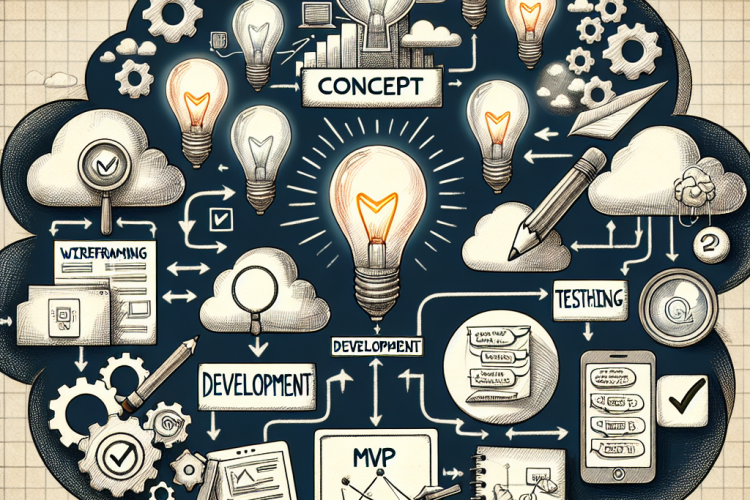
Understanding the MVP development process is vital for any entrepreneur or product manager. This process can be divided into several key stages:
1. Idea Validation
The first step in developing an MVP is to validate your business idea. Before investing time and resources, it’s crucial to determine if there is a real market need for your product.
- Market Research: Conduct surveys or focus groups to gather insights into customer needs and preferences.
- Competitive Analysis: Analyze existing solutions in the market to identify gaps that your product can fill.
- Define Target Audience: Understand who your potential users are, what their pain points are, and how your product can address those issues.
2. Define Core Features
Once your idea has been validated, the next step is to identify the core features of your MVP. These features should focus on solving the primary problem of your target audience.
- Prioritization: Use tools like the MoSCoW method (Must have, Should have, Could have, Won’t have) to prioritize features based on user needs.
- Scope Control: Limit the scope to essential features only, ensuring the MVP remains manageable and focused.
- Functional Requirements: Clearly define what each feature needs to accomplish to meet user expectations.
3. Create Prototypes
After defining the core features, the next step is to create a prototype. Prototyping involves building a visual representation of the product, which can be a low-fidelity paper model or high-fidelity digital mock-ups.
- Wireframes: Develop wireframes to map out the user interface and flow of the application.
- Interactive Prototypes: Use tools like Figma or InVision to create clickable prototypes for better user testing.
- User Testing: Conduct usability testing with real users to gather feedback on the prototype.
4. Development
Once the prototype has been validated, it’s time to move into the development phase. This is where developers bring the MVP to life using the preferred technology stack.
- Agile Development: Employ agile methodologies to ensure flexibility and quick iterations during the development process.
- Continuous Testing: Implement testing throughout the development cycle to identify and fix issues early.
- Collaboration: Maintain open communication between developers, designers, and stakeholders to align on goals and progress.
5. Launch and Measure
The launch of the MVP marks a critical turning point in the development process. It is essential to launch the product to a select group of users for initial feedback.
- Feedback Gathering: Use surveys, interviews, and analytics tools to collect data on user experiences.
- Key Performance Indicators (KPIs): Define metrics to gauge the success of your MVP in terms of user engagement, retention, and satisfaction.
- Iterate: Based on the feedback, plan for future iterations and improvements to refine the product.
Challenges in the MVP Development Process
While the MVP process offers numerous benefits, it also presents certain challenges that teams must navigate:
- Scope Creep: It’s easy to get carried away and try to add extra features before launch.
- Lack of User Understanding: Insufficient research on the target audience can lead to misguided development efforts.
- Technical Debt: Rushing the development process can result in poor code quality or architecture, creating issues down the line.
- Feedback Overload: Balancing conflicting user feedback can be challenging, especially if measuring qualitative insights against quantitative data.
Best Practices for Successful MVP Development
To navigate the MVP process successfully, consider the following best practices:
- Start Small: Focus on a single problem or functionality that offers significant value to users.
- Engage Early Users: Involve actual users throughout the development process for continuous insights and validation.
- Stay Lean: Keep resources and feature sets minimal to avoid unnecessary overhead.
- Document Learnings: Keep track of feedback and lessons learned during the MVP development to inform future iterations.
- Iterate Rapidly: Use an agile approach to make quick adjustments based on user feedback.
Conclusion
In summary, mastering the MVP development process is essential for modern entrepreneurs and product managers. By validating ideas, defining core features, and engaging users throughout the development lifecycle, teams can create products that truly resonate with their markets. While challenges abound, adhering to best practices and maintaining a lean mindset can significantly enhance the chances of success. Remember, the goal of an MVP is not just to launch a product, but to learn from it and evolve over time. By continuously iterating based on user feedback, businesses can not only survive but thrive in an increasingly competitive landscape.



0 Comments