
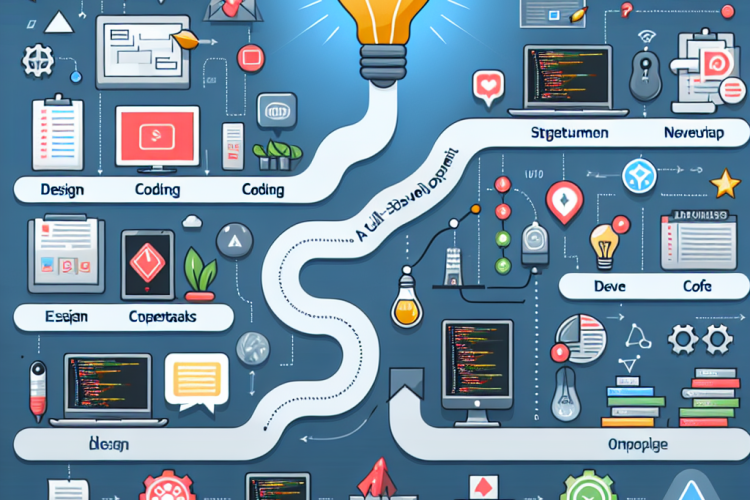
In today’s digital landscape, building a web application involves multiple stages, from initial conception to final deployment. This journey can be daunting, but understanding each phase can make the process smoother and more effective. Here, we break down the full-stack journey step by step.
1. Ideation
The first step in the full-stack journey is ideation. This phase involves brainstorming ideas, identifying problems to solve, and determining your target audience. Tools like mind maps and user personas can help conceptualize your app.
2. Planning and Design
Once the idea is solidified, it’s time to plan the architecture of your application. This includes defining the features, user interface (UI), and user experience (UX) design. Wireframes and prototypes are essential in this stage to visualize the application before coding begins.
3. Frontend Development
With a clear design in hand, the next phase is frontend development. Frontend developers use technologies such as HTML, CSS, and JavaScript to create the parts of the application that users interact with. Frameworks like React or Vue.js can enhance productivity and create dynamic user experiences.
4. Backend Development
The backend is the server-side of your application where data is processed and stored. Backend developers typically use languages like Python, Ruby, or Node.js. They must create APIs that allow the frontend to communicate with the backend seamlessly.
5. Database Management
A crucial part of any application is the database. Developers must choose the appropriate database (SQL vs. NoSQL) and set up data models that facilitate efficient data storage and retrieval.
6. Testing
Testing is vital to ensure your application works correctly under various conditions. Frontend and backend testing should be conducted, including unit tests, integration tests, and user acceptance testing (UAT) to iron out any bugs or issues.
7. Deployment
After thorough testing, the application is ready for deployment. This involves uploading your application to a web server, configuring the server, and making sure the app runs smoothly in the production environment. Cloud services like AWS, Heroku, or DigitalOcean are popular choices for hosting.
8. Maintenance and Updates
The journey doesn’t end with deployment. Continuous maintenance and updates are necessary to keep your application running smoothly and securely. User feedback can guide enhancements and feature updates.
Conclusion
The full-stack journey is an intricate process that requires a blend of creativity, technical know-how, and strategic planning. By understanding and executing each phase, you can transform your idea into a functional web application ready for the world.



0 Comments