
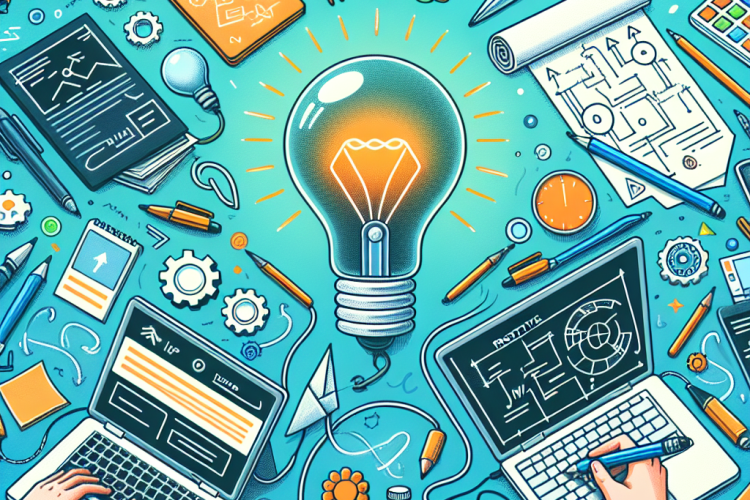
In the world of startups, the journey from a mere idea to a Minimum Viable Product (MVP) is both exciting and challenging. With the ever-growing competition and the need for speed in launching new products, entrepreneurs must navigate a complex process to turn their vision into reality. This guide takes you through the essential steps to build the perfect prototype and create an MVP that resonates with your target audience.
Understanding the Concept of MVP
An MVP is defined as the most straightforward version of a product that can be released to satisfy early adopters and provide feedback for future development. The primary goal of an MVP is to test a concept without investing significant resources in full-fledged product development. This approach allows startups to gather user feedback, validate ideas, and iterate quickly.
The Importance of Prototyping
Prototyping is a crucial part of the product development process. It enables teams to visualize ideas, test functionality, and explore design concepts before committing to full implementation. Quick prototyping helps identify potential issues early, minimizes costly mistakes, and ensures that the final product aligns with user needs. Here are some key benefits of prototyping:
- Facilitates User Feedback: Prototypes allow real users to interact with the product idea and provide valuable feedback.
- Reduces Costs: Early identification of flaws helps avoid expensive changes later in the development cycle.
- Refines Ideas: Iterative prototyping helps refine concepts, ensuring the final product meets market demands.
- Enhances Collaboration: Prototypes serve as a communication tool for team members and stakeholders to discuss ideas and improvements.
Steps to Go from Idea to MVP
1. Define Your Vision
The first step in transforming your idea into an MVP is to clearly define your vision. What is the problem you aim to solve? Who is your target audience? Understanding the core of your product idea will shape your development process. Craft a vision statement that articulates your goals and the value your product brings to users.
2. Conduct Market Research
Before you start building, conducting thorough market research is essential. Analyze your competition, identify trends, and understand your target market’s needs and preferences. This research will help you validate your idea and refine your product features. Some effective market research strategies include:
- Surveys and Questionnaires: Gather quantitative data from potential users.
- User Interviews: Gain qualitative insights into user behavior and preferences.
- Competitor Analysis: Examine what existing solutions offer and identify gaps in the market.
- Social Media Listening: Monitor discussions and trends related to your product or industry.
3. Create a User Persona
Once you’ve gathered insights from your research, create user personas that represent your target audience. A user persona is a fictional character that embodies the characteristics, needs, and behaviors of your users. This step helps ensure that your product development remains user-centric. Consider factors such as:
- Demographic information (age, gender, location)
- Goals and motivations
- Pain points
- Usage habits and preferences
4. Define MVP Features
With your user persona in mind, it’s time to narrow down the features your MVP will include. Focus on the core functionalities that address the primary problem your product aims to solve. Avoid the temptation to add unnecessary features—your goal is to create a stripped-down version that effectively tests your value proposition. Prioritize features using the MoSCoW method (Must have, Should have, Could have, and Won’t have).
5. Sketch Your Ideas
Now that you’ve defined your features, sketch out your ideas. Create wireframes or low-fidelity mockups to visualize the product’s layout and design. This process doesn’t require high design skills; simple sketches are enough to convey your ideas. Tools like Balsamiq, Sketch, or even pen and paper can be utilized for this purpose.
6. Build a Prototype
Next, it’s time to create a prototype. Prototyping can range from simple interactive wireframes to high-fidelity prototypes that closely resemble the final product. Choose an appropriate prototyping tool based on your needs and skill level. Some popular tools include:
- Figma
- InVision
- Adobe XD
- Axure
Focus on demonstrating key functionalities and user interactions rather than achieving perfect design aesthetics. Aim for clarity and usability in this stage.
7. Test Your Prototype
With your prototype ready, it’s time to gather user feedback. Conduct usability testing with your target audience to observe how they interact with your prototype. Pay attention to their comments, questions, and suggestions. Use this feedback to identify usability issues and areas for improvement.
8. Iterate Based on Feedback
Iterate on your prototype based on the feedback received during testing. Make necessary adjustments, refine features, and polish the user interface. This iterative approach will help you close the gap between your initial idea and the final product that resonates with users.
9. Develop Your MVP
Once you have validated your prototype and made necessary adjustments, you can proceed to develop your MVP. In this phase, you’ll work with developers to turn your prototype into a functional product. Maintain open communication to ensure that your vision aligns with the execution.
10. Launch Your MVP
After development, it’s time to launch your MVP to the market. Plan a strategic launch to reach your target audience effectively. Promote your product through various marketing channels, such as social media, email marketing, and content marketing. Encourage feedback from early adopters to gather insights for future iterations.
11. Measure Success
Once your MVP is live, monitor its performance and gather data on user behavior. Key performance indicators (KPIs) can help you assess the success of your MVP. Measure metrics such as user engagement, retention rates, and conversion rates. Use this data to make informed decisions for future development.
12. Iterate and Scale
Based on the data collected, iterate on your product to improve user experience and address any shortcomings. Scaling your MVP involves adding new features, optimizing performance, and marketing to a broader audience. Always keep user feedback at the forefront as you continue to evolve your product.
Common Challenges During the MVP Journey
The process of going from idea to MVP is fraught with challenges. Here are some common hurdles that startups may encounter, along with strategies to overcome them:
- Scope Creep: Avoid adding too many features; stick to your prioritized list.
- Inadequate User Feedback: Engage a diverse group of users during testing to gather comprehensive feedback.
- Technical Limitations: Partner with experienced developers who can navigate necessary technical challenges.
- Resource Constraints: Efficiently allocate resources and consider outsourcing for specific tasks to maximize productivity.
Tools and Resources for Prototyping
Several tools can assist you in the prototyping and MVP development process. Here are some recommendations:
Prototyping and Design Tools
- Figma: A collaborative interface design tool suitable for wireframing and prototyping.
- InVision: A prototyping tool that allows you to create interactive mockups and gather feedback.
- Sketch: A digital design tool for creating user interfaces and prototypes.
- Balsamiq: A low-fidelity wireframing tool for quick sketches of your ideas.
Project Management Tools
- Trello: A project management tool that helps you organize tasks and collaborate with your team.
- Asana: A robust project management platform for tracking progress and managing projects.
- Jira: A tool tailored for software development, ideal for agile teams.
Feedback and Testing Tools
- UserTesting: A platform for conducting user tests and gaining insights from real users.
- SurveyMonkey: A tool for creating surveys to gather feedback from users.
- Lookback: A research platform that allows you to observe user interactions and gather feedback in real-time.
Conclusion
The journey from idea to MVP is both challenging and rewarding. By following the outlined steps and leveraging the right tools, startups can create a prototype capable of validating their concepts and attracting early adopters. Remember that the heart of an MVP lies in its ability to solve a problem for real users; thus, user feedback is crucial throughout the process. As you iterate and improve your product, stay attuned to your market and be willing to adapt. With determination and strategic planning, your MVP can evolve into a fully developed product that meets the needs of your audience and drives business success.

0 Comments