
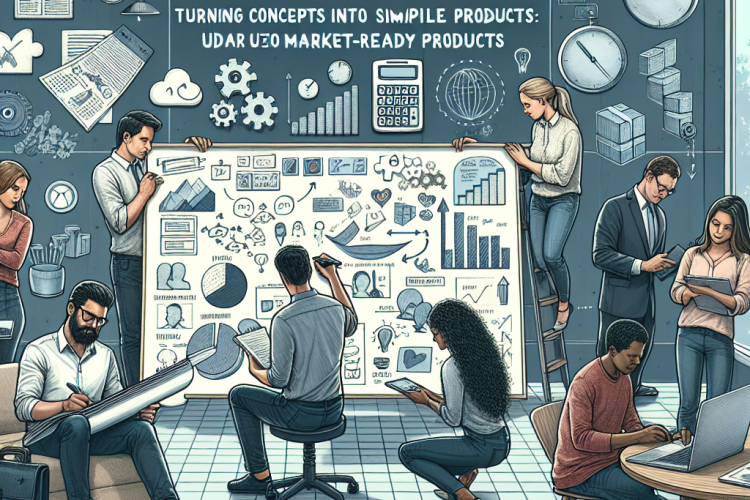
In today’s fast-paced digital landscape, entrepreneurs and startups are continuously seeking effective ways to bring their concepts to life while minimizing risks. The solution is often found in the practice of developing a Minimum Viable Product (MVP). An MVP is a simplified version of a product that includes only the essential features necessary to satisfy early adopters and gather feedback for future development.
What is an MVP?
The term “Minimum Viable Product” was coined by Eric Ries in his book, ‘The Lean Startup’. An MVP demonstrates the core functionality of a product with minimal resources and effort devoted to its development. The objective is to quickly validate a business idea and gauge customer interest before investing significant time or funds into full-scale product development.
Why Develop an MVP?
Developing an MVP provides several advantages:
- Early Validation: Testing assumptions about the market demand for a product.
- Reduced Risk: Lowering the likelihood of investing in a product that may not meet market needs.
- Faster Time to Market: A quicker route from concept to launch allows for earlier user feedback.
- Resource Optimization: Efficient use of resources, both in time and budget, by focusing only on essential features.
Steps in MVP Development
The process of developing an MVP can be broken down into several stages:
1. Identifying the Problem
The first step in MVP development is understanding the problem your product aims to solve. Conduct thorough market research to identify pain points experienced by potential users. Surveys, interviews, and competitor analysis can provide valuable insights into user needs.
2. Defining Your Target Audience
Identifying your target demographic is crucial. Define your user personas based on their characteristics, behaviors, and needs. Understanding who your customers are helps tailor your MVP to their preferences.
3. Outlining Core Features
With a clear understanding of the problem and your target audience, outline the core features that will address the identified pain points. Focus on the functionalities that deliver the highest value to users and differentiate your product from competitors.
4. Building a Prototype
Creating a prototype is essential for visualizing your product and testing your assumptions. This prototype need not be perfect; it should serve as a tool to gather feedback through user testing. Use wireframes or mockups to depict navigation flows and interactions.
5. Gathering Feedback
Once the prototype is ready, share it with a small group of users to gather their feedback. Utilize this input to refine your feature set and make improvements. Understand what users appreciate, what confuses them, and what additional features they desire.
6. Developing the MVP
After iterating on the prototype based on user feedback, begin developing the actual MVP. Use an agile development approach to ensure flexibility and adaptability during the build process. Always keep your core features in focus, avoiding feature creep.
7. Launching the MVP
Deploy your MVP to the market with a clear strategy. It doesn’t need to be perfect, but it should effectively demonstrate your product’s value proposition. Leverage marketing strategies that resonate with your target audience to drive initial traffic and user acquisition.
8. Measure and Learn
Post-launch, utilize analytical tools to measure user engagement and product performance. Gather qualitative and quantitative data to assess how well the MVP meets user needs and determine areas for improvement. Iterate on your product based on these insights.
Common Pitfalls in MVP Development
While the MVP approach is advantageous, it is not without challenges. Beware of these common pitfalls:
1. Feature Creep
It’s easy to get carried away and add unnecessary features to the MVP. Stick to the core functionality to maintain focus and efficiency during development.
2. Ignoring User Feedback
Neglecting to incorporate user feedback can lead to creating a product that does not resonate with users. Actively seek input and be responsive to it.
3. Overlooking Market Research
Skipping thorough market research can result in misunderstanding the audience or misidentifying their needs. Ensure diligent research is performed during the initial phases.
4. Poor Quality
While an MVP is not a final product, it should still meet basic quality standards. A poorly functioning MVP can tarnish your brand’s reputation.
5. Lack of Clear Vision
A disjointed vision can halt progress and confuse the development team. Establishing clear product goals and objectives at the outset is crucial.
Case Studies
To provide a clearer understanding of MVP development, let’s look at a few successful case studies:
1. Dropbox
Dropbox started with a simple MVP in the form of a video explaining how their file-sharing service would work. This video garnered significant interest, allowing them to validate their idea and adjust based on potential users’ feedback before creating the actual product.
2. Airbnb
Before becoming a multi-billion dollar company, Airbnb began by simply renting out air mattresses in their apartment to conference attendees. This MVP allowed the founders to test the viability of their concept and understand user needs before scaling.
3. Zappos
Zappos initially launched by selling shoes online without maintaining an inventory. They took pictures of shoes from local stores and listed them on their website. Upon receiving orders, they purchased the shoes from the stores. This MVP approach helped them validate the market for online shoe sales.
Tools for MVP Development
When developing an MVP, a variety of tools can facilitate the process:
- Prototyping Tools: Tools like Figma and InVision help visualize user interfaces and interactions.
- Development Frameworks: Frameworks like React and Angular simplify the coding process, providing reusable components.
- Analytics Tools: Google Analytics and Hotjar can help monitor user behavior and engagement.
- Project Management Tools: Tools like Trello and Asana streamline task management and team collaboration.
Conclusion
MVP development is a powerful strategy for entrepreneurs seeking to transform concepts into market-ready products. By focusing on core functionalities, leveraging user feedback, and maintaining a clear vision, businesses can navigate the complexities of product development while minimizing risks. Successful MVPs not only validate business ideas but also provide a roadmap for future growth and improvement.
In a rapidly evolving market, the ability to adapt and iterate based on real-world feedback is invaluable. By following the outlined steps and avoiding common pitfalls, entrepreneurs can significantly enhance their chances of launching a successful product that meets user needs and stands out in the competitive landscape.
As new technologies and methodologies continue to emerge, the importance of developing an MVP will remain a crucial component of successful product management and innovation.



0 Comments