
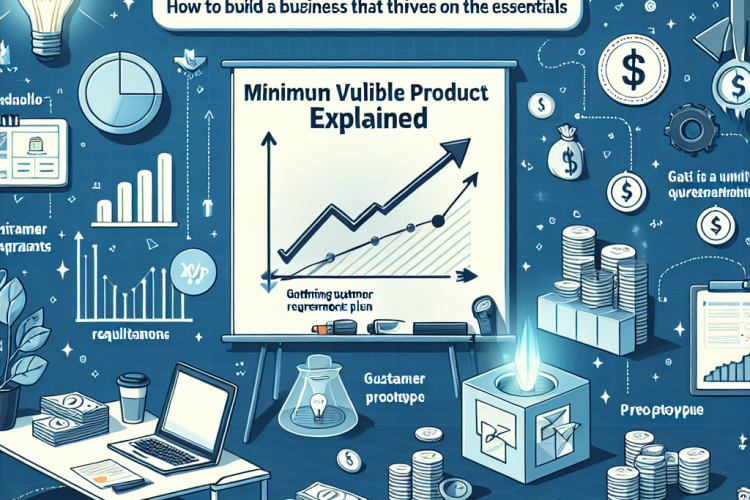
The concept of Minimum Viable Product (MVP) has become a buzzword in the startup ecosystem, especially in the tech industry. An MVP is the simplest version of a product that allows a team to collect the maximum amount of validated learning about customers with the least amount of effort. This approach focuses on the essentials—delivering a product that satisfies the core needs of users while minimizing waste in resources.
What is an MVP?
At its core, an MVP is a strategy for developing products that meet the basic needs of early adopters. An MVP typically includes only the most essential features necessary to satisfy these customers and provide feedback for subsequent product development. By concentrating on the simplest version of a product, businesses can launch quickly and start collecting user data instead of spending unnecessary time and resources on features that might not resonate with users.
The Origins of the MVP Concept
The concept of MVP was popularized by Eric Ries in his book “The Lean Startup.” Ries emphasized a scientific approach to creating and managing successful startups in an age where traditional business plans may not suffice. The Lean Startup methodology encourages iterative product releases and validated learning through customer feedback. This framework is particularly beneficial in uncertain markets where consumer needs and preferences can dramatically shift.
Key Principles of an MVP
1. Focus on Essential Features
The primary goal of an MVP is to deliver a product with only the most crucial features. This allows companies to avoid the common pitfall of developing overly complex products that can alienate users. By prioritizing essential features, businesses can quickly validate their ideas and iterate based on actual user feedback.
2. Validate Learning
One of the most significant advantages of an MVP is its capacity for validation. Companies can test their assumptions about customer needs and preferences, allowing them to make informed decisions moving forward. This minimizes risks and encourages a data-driven approach to product development.
3. Iterative Development
An MVP is never truly “done” because it is part of an iterative development process. After launching an MVP, businesses must continuously gather user feedback and analytics. This information should inform the next version of the product, thus shaping ongoing development.
4. Engage Early Adopters
Early adopters are essential in the MVP process. They are typically more forgiving of flaws and willing to provide feedback. Engaging this group can lead to valuable insights that help refine the product and identify opportunities for additional features.
The MVP Process
1. Identify the Problem
Before creating an MVP, it’s crucial to have a clear understanding of the problem that the product aims to solve. This identification process often involves market research, competitor analysis, and the exploration of user pain points. The more precisely the problem is defined, the easier it becomes to develop a solution that resonates with users.
2. Define the Target Audience
Understanding your target audience is vital for any successful product. For an MVP, it is especially important to define who the early adopters will be. This helps tailor the MVP to meet specific needs, leading to higher chances of product adoption.
3. Develop Core Features
Once the problem and target audience are defined, the next step is to outline the core features of the MVP. This can be done using techniques such as user story mapping, where the focus remains on what users will actually do with the product. It is essential to limit feature sets to ensure that the MVP remains simple and focused.
4. Build the MVP
With a clear outline of the core features, the development team can begin building the MVP. Agile methodologies are frequently used here, allowing for flexibility and adaptation as new information is gathered from user feedback.
5. Launch and Gather Feedback
After developing the MVP, it’s time to launch. This can be a full launch or a soft launch targeting a smaller segment of users. The critical aspect of this stage is to gather feedback rigorously. Employing tools like surveys, interviews, and analytics can help track user interactions and sentiments toward the MVP.
6. Iterate Based on User Feedback
Finally, the feedback collected should be evaluated and prioritized. This leads to subsequent iterations of the product, where new features can be added, and existing features refined. This cycle of building, measuring, and learning is core to the MVP approach.
Advantages of Using an MVP Approach
1. Cost-Effectiveness
Because MVPs focus on core functionalities, development costs are significantly lower than those for fully fleshed-out products. This is particularly beneficial for startups that operate with limited resources.
2. Faster Time to Market
Developing an MVP allows businesses to bring their products to market faster. This quick launch enables teams to start learning from users sooner, which is critical in rapidly changing industries.
3. Reduced Risk
An MVP helps to mitigate risks by validating ideas before investing heavily in development. By testing and iterating based on real-world data, businesses can make informed decisions that lead to greater success rates.
4. Enhanced Customer Focus
The MVP approach emphasizes customer feedback and needs. This focus fosters a customer-centric culture and helps businesses cultivate strong relationships with their user base over time.
5. Streamlined Development Processes
With a focus on essential features, teams can streamline their development processes, which enhances productivity and reduces wasted effort
Challenges in Building an MVP
1. Misunderstanding User Needs
One common challenge is misinterpreting the actual needs of users. Not involving target customers early in the process can lead to an MVP that fails to address real pain points.
2. Underestimating Feature Requirements
Initially, teams may overlook features that seem non-essential but are crucial for user satisfaction. As a result, the MVP may not perform well, leading to poor user adoption.
3. Balancing Simplicity and Functionality
Finding the right balance between building a product that’s too simple and one that’s adequately functional can be challenging. A too-simple MVP may not attract users, while an overly complex one defeats the purpose of moving quickly.
4. Ongoing Resource Allocation
Even after launching an MVP, maintaining and iterating the product requires ongoing resources. This can be a point of tension in startups where budgets are tight.
Successful MVP Examples
1. Dropbox
Dropbox started as a simple MVP, which was a video demonstrating how the product would work. The response was positive, leading the founders to build the actual software. This minimal approach allowed them to validate demand before investing heavily in development.
2. Airbnb
Airbnb began by renting out a few air mattresses in a San Francisco apartment, effectively serving as an MVP for their idea of a shared accommodation platform. This approach allowed them to test demand and gather feedback before expanding the business.
3. Zappos
Zappos initially operated as an MVP by taking photos of shoes from local stores and listing them online. When someone made a purchase, the founder would go buy the shoes from the store and ship them. This model validated demand before the company invested in inventory.
Best Practices for Building an MVP
1. Start with a Strong Hypothesis
A clearly defined hypothesis about the product and its potential users will serve as the foundation for your MVP development. This hypothesis should center around who your users are and their specific pain points.
2. Engage with Users Early
Gather feedback from potential users as early in the process as possible. This engagement will provide insights into what features to prioritize and what expectations users may have.
3. Measure Metrics That Matter
Establish clear KPIs to determine the success of your MVP. Metrics such as user engagement, customer satisfaction, and retention rates can offer vital insights as you iterate.
4. Prepare for Future Development
Your MVP should not be an afterthought; rather, it should lay the groundwork for future iterations. Be committed to continuously refining the product based on user feedback.
5. Be Open to Pivoting
Prepare to adapt based on what you learn from user feedback. Often, your initial idea may need to pivot significantly based on real-world applications and user preferences.
Conclusion
Building a business around the concept of a Minimum Viable Product is a strategic approach that emphasizes learning, agility, and customer focus. The MVP allows entrepreneurs to test their ideas with minimal resources, ensuring that their offerings meet the actual needs of users. By prioritizing essential features and engaging in iterative development, businesses can navigate the uncertainties of the market more effectively.
While the MVP model presents unique challenges, the benefits often outweigh the risks. Successful examples from various industries illustrate that a well-executed MVP can serve as a launching pad for thriving businesses. As customer needs evolve, so too should the product. Continuous learning and adaptation are vital to ensuring long-term success.
In an ever-changing landscape, embracing the MVP philosophy can empower entrepreneurs to be more innovative, responsive, and ultimately successful in building products that truly resonate with their audience.



0 Comments