
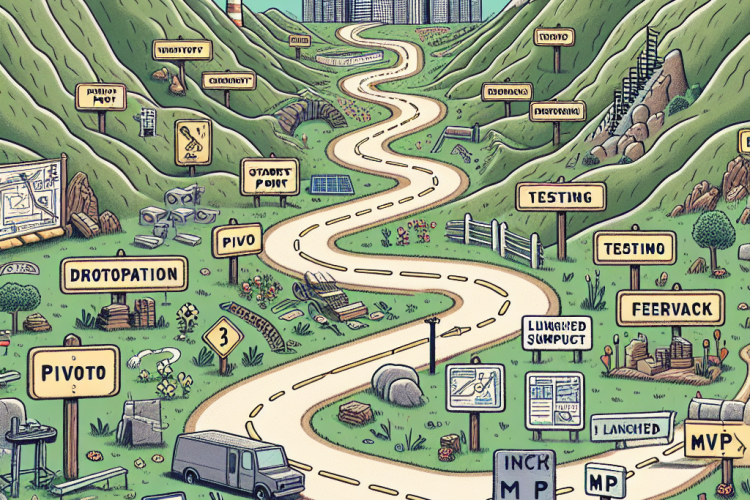
In the ever-evolving landscape of product development, particularly in the tech industry, the concept of the Minimum Viable Product (MVP) has emerged as a vital component for startups and established businesses alike. An MVP is a product that includes just enough features to satisfy early users and gather feedback for future development.
What is an MVP?
The concept of an MVP was popularized by Eric Ries in his book “The Lean Startup.” It emphasizes the importance of building a product that meets the minimum requirements to validate an idea before investing significant time and resources into full-scale development.
An MVP is not a subpar product; rather, it is a strategy for learning and iterating. It allows teams to test their assumptions and understand the needs of their users. This iterative cycle fosters agility and ensures that the product evolves in line with user feedback.
Benefits of an MVP
Launching an MVP offers numerous advantages:
- Faster Time to Market: By focusing on core features, teams can launch their product quickly, allowing them to enter the market ahead of competitors.
- Cost-Effective: Developing a scaled-down version means reduced resources are required, making it easier for startups to manage budgets.
- User Feedback: Early adopters provide invaluable feedback, allowing teams to refine the product based on real user experiences. This can lead to better decision-making regarding feature enhancements and prioritization.
- Risk Mitigation: By testing hypotheses on a smaller scale, companies can identify potential pitfalls before full-scale development, thus minimizing financial risk.
- Improved Understanding of the Market: Collecting user data and market reactions helps teams align their product with real market demands.
Steps to Create an MVP
Creating a successful MVP involves several crucial steps:
1. Identify Your Target Audience
Understanding who your users are is critical. Conduct market research, surveys, and engage with potential users to gather insights on their needs, pain points, and preferences.
2. Define the Core Problem
What specific problem does your product solve? Clearly defining this problem is vital as it will shape your MVP’s value proposition.
3. Outline Essential Features
Once you understand your audience and the problem, you should outline the essential features that address this problem. Remember, less is more; focus on the minimum features needed to solve the core problem effectively.
4. Develop a Prototype
A prototype is a preliminary version of your product, which can be a wireframe or a basic interface, allowing you to visualize the final product. Prototyping helps in refining ideas based on initial feedback.
5. Build Your MVP
With your prototype in hand, you can begin developing your MVP. Focus on building the product using agile methodologies, allowing for adjustments while coding.
6. Test Your MVP
Before launching, conduct thorough testing to ensure that everything functions as intended. Look for bugs, gather internal feedback, and make necessary adjustments.
7. Launch and Gather Feedback
Launch your MVP to a selected audience of early adopters. Monitor user interactions, gather feedback, and understand how well the product meets user needs. The feedback loop is crucial for further iterations.
8. Iterate and Improve
Use the feedback collected to refine your product. Determine which features to enhance, change, or eliminate based on user input. Iterate quickly to keep up with user demands.
Case Studies: Successful MVP Implementations
1. Dropbox
Dropbox is a well-known example of a successful MVP. Instead of developing a fully-fledged online storage solution, the team created a simple video demonstrating how the service would work. It captured the interest of potential users and validated the concept before officially launching the platform.
2. Airbnb
Airbnb started as a simple platform to rent out air mattresses in a living room. The founders created a basic website to offer their own apartment for rent, validating the marketplace concept before expanding into the larger platform it is today.
3. Zappos
Before becoming a giant in online retail, Zappos tested their MVP by taking photos of shoes from local stores and posting them online. When customers ordered, they would buy the shoes from the store and ship them. This simple model allowed them to validate a market for online shoe sales without investing in inventory upfront.
Challenges of Developing an MVP
While developing an MVP offers many benefits, it is not without challenges. Here are a few common pitfalls to watch for:
1. Overbuilding Features
A common mistake is the desire to include too many features in the MVP, confusing the product’s core value. Focus on essential features that provide immediate value.
2. Ignoring User Feedback
Disregarding user feedback can lead to building a product that does not resonate with its target audience. It’s critical to listen actively and iterate based on user needs.
3. Poor Market Research
Skipping thorough market research can lead to building a product that doesn’t solve any real problem. Engage with potential users early to understand their needs better.
4. Ineffective Testing
Failing to conduct adequate testing can lead to a buggy and frustrating user experience, damaging credibility. Ensure thorough testing before launch.
Tools for Building Your MVP
Here are some tools that can help streamline the MVP development process:
- Prototyping Tools: Figma, Sketch, and Adobe XD can help in creating visual prototypes.
- Project Management: Tools like Trello, Asana, or Jira help in tracking progress and managing tasks.
- Feedback Collection: SurveyMonkey and Typeform can be utilized to gather user feedback efficiently.
- Analytics: Google Analytics or Mixpanel can help track user behavior and gather insights post-launch.
Conclusion
The Minimum Viable Product (MVP) is an invaluable approach for launching a successful product in today’s rapidly changing market. By focusing on the essential features that address user needs and engaging in multiple iterations based on feedback, companies can effectively reduce risks and optimize their product fit. The MVP strategy not only facilitates quicker time to market but also nurtures a culture of continuous learning and adaptation. As seen in the successes of Dropbox, Airbnb, and Zappos, a well-executed MVP can pave the way for robust product development and ultimately lead to long-term business success. Embrace the MVP approach, validate your ideas, and let customer feedback guide your journey towards creating a product that truly resonates with your audience.


0 Comments