
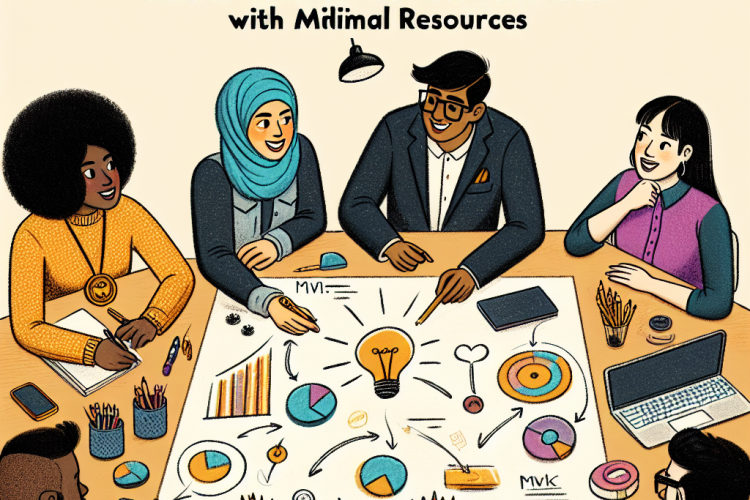
The concept of MVP, or Minimum Viable Product, is pivotal for entrepreneurs looking to bring their business ideas to life without succumbing to the pressures of full-scale development. An MVP is essentially a product with the minimum set of features necessary to garner feedback from real customers. By focusing on essential functionalities, businesses can conserve resources while gathering valuable insights about their target market.
The Importance of Validation
Before pouring time and financial resources into a new venture, it is crucial to validate the business idea. This process can save entrepreneurs from investing in a concept that may ultimately fail due to a lack of market demand. Validation involves testing the hypothesis that your business idea solves a real problem or fulfills a genuine need for an audience.
Why Use an MVP?
- Cost-Effective: An MVP minimizes financial risks by allowing you to create a bare-bones version of your product.
- Faster Time to Market: By focusing on core features, you can launch your product more swiftly, allowing you to enter the market early.
- Customer Feedback: You obtain real-world feedback, which can guide iterations and improvements.
- Focused Development: Teams can concentrate on the most crucial aspects, preventing feature bloat.
Steps to Create Your MVP
Step 1: Identify Your Target Audience
The first step in creating an MVP is to identify who your target audience will be. Understanding their demographics, preferences, and behaviors will help you build a product tailored to their needs. Use tools like surveys, interviews, and social media polls to gather information about potential customers.
Step 2: Define the Problem
Clearly articulate the problem your product aims to solve. This step ensures that you remain focused on delivering a solution that benefits your target audience. A well-defined problem statement serves as the foundation for your MVP and can be refined by engaging with your audience directly.
Step 3: Brainstorm Solution Features
Once you have identified the problem, brainstorm potential features for the solution. Create a list that includes all possible features but focus on categorizing them into must-haves and nice-to-haves. Prioritize essential features that directly address the core problem.
Step 4: Create a Prototype
A prototype is an initial model of your product that helps visualize the concept. This can be a simple wireframe or a more advanced clickable prototype. The key is to create something that can be shared with potential users to gather feedback without requiring extensive development.
Step 5: Gather User Feedback
Share the prototype with potential users and gather their feedback. Ask open-ended questions about their experience, what they liked or disliked, and any suggestions they may have for improvement. This information is crucial for refining your MVP and aligning it with customer expectations.
Testing and Iteration
Creating a Feedback Loop
Use the feedback gathered to make iterative improvements to your product. This is a continuous cycle of testing, learning, and evolving based on user input. Aim for at least three iterations, gathering more feedback each time, to ensure you are on the right track.
Using Analytics Tools
Implement analytics tools to monitor user engagement and behavior once the MVP is launched. Tools like Google Analytics, Hotjar, or Mixpanel provide insights into how users interact with your product and can highlight areas that need improvement.
Promoting Your MVP
Launch an initial marketing campaign to promote your MVP. This might include social media marketing, email marketing, or even participating in local events. The goal is to generate interest and draw potential users to your product. Use the existing feedback to refine your messaging and value proposition.
Common Mistakes to Avoid
- Feature Creep: It’s easy to get carried away and add more features than necessary. Stick to the essentials.
- Neglecting Market Research: Failing to gather adequate feedback could lead to a solution that misses the mark.
- Ignoring User Experience: An MVP should be functional but also provide a satisfactory user experience, even in its early stages.
Case Studies
Case Study 1: Dropbox
Dropbox started as an MVP consisting of a simple video that explained its functionality. By presenting a clear problem and solution, they validated their idea before building the actual product. The video garnered significant interest, leading to a substantial waiting list for the product’s release.
Case Study 2: Airbnb
Airbnb began as a simple MVP where the founders rented out air mattresses in their apartment. This allowed them to validate the demand for short-term rentals before they invested heavily in tech and infrastructure.
Conclusion
Validating your business idea through the MVP approach is not just about saving resources; it’s a strategy for informed decision-making. By concentrating on the fundamental aspects of your product, you create the opportunity for real-world feedback that will guide your next steps. Remember, the goal is to learn and adapt. Entrepreneurship is an iterative process, and each cycle brings you closer to building a successful and impactful product. Stay nimble, embrace feedback, and keep validating until you find the winning formula.


0 Comments