
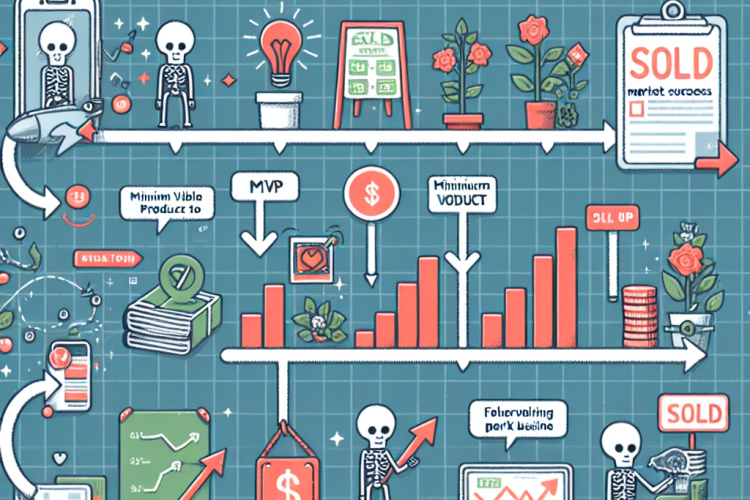
The journey from a Minimum Viable Product (MVP) to market success is a critical phase for startups and entrepreneurs. It involves numerous stages of development, validation, and gradual scaling. An MVP allows founders to test their initial ideas with minimal resources, aiming to efficiently capture feedback and adjust their product towards a successful market fit. This article will dissect the entire process, highlighting key steps, challenges, strategies, and concluding with insights into achieving a successful exit.
Understanding MVP
An MVP is a product with just enough features to satisfy early adopters and provide feedback for further development. The primary goal of an MVP is to learn about customers’ needs and preferences without investing heavily in product development upfront. This approach not only saves time and resources but also mitigates risks associated with launching a new product.
Why MVP is Essential
- Cost-Effectiveness: By launching a simple version of a product, businesses can conserve resources and avoid heavy losses.
- Customer Feedback: Early users provide invaluable feedback that can guide product improvements.
- Faster Time-to-Market: An MVP reduces time spent in development, allowing organizations to enter the market quickly.
- Learning and Iteration: MVPs are about continuous learning, enabling teams to pivot based on real user data.
The Phases from MVP to Market Success
The transition from MVP to market success is not a straight path; it comprises several distinct phases. Let’s explore these phases in detail.
1. Idea Validation
Before creating an MVP, entrepreneurs must validate their business idea. This involves identifying target customers and determining whether the product addresses a real need. Tools like surveys, interviews, and focus groups can help to gauge market demand.
2. Developing the MVP
Once the idea is validated, the next step is to build the MVP. Key aspects to consider include:
- Feature Selection: Identify the core features that solve the problem for your target audience.
- Design: Keep the user interface simple, ensuring it’s easy to navigate.
- Technology Stack: Choose technologies that allow for quick development and scalability.
3. Launching the MVP
After development, the MVP is launched to a select group of users. This is often referred to as a soft launch or beta testing. Early users should be encouraged to provide feedback, which can be collected through surveys, interviews, or direct communication channels.
4. Analyzing Feedback
Feedback analysis is crucial. This data helps to identify patterns in user behavior and preferences, highlighting areas for improvement. Entrepreneurs should focus on qualitative feedback as much as quantitative metrics.
5. Iteration and Improvement
Based on feedback, the next step involves refining the MVP. This may include adding new features, tweaking existing ones, or even pivoting the business model to better match the market demand.
6. Scaling the Product
Once the MVP has been refined, the focus shifts to scaling. This may involve:
- Marketing Strategies: Developing a comprehensive marketing plan to expand the user base.
- Partnerships: Exploring strategic alliances and partnerships to enhance market reach.
- Funding: Considering options for investment to support scaling efforts.
7. Achieving Market Fit
Achieving product-market fit signifies that the product meets the needs of a significant portion of the target market. Indicators of product-market fit may include growing retention rates, increased customer satisfaction, and positive word-of-mouth referrals.
8. Growth and Expansion
Once product-market fit is achieved, the focus can shift to growth strategies which include diversifying offerings, entering new markets, or enhancing marketing and sales efforts. This phase may necessitate expanding the team and capabilities.
Key Challenges in the Journey
While the pathway from MVP to success is promising, numerous challenges may arise during the journey. Understanding these obstacles in advance can help entrepreneurs navigate them effectively.
1. Market Misalignment
One of the most common challenges is a misalignment between the product and market demands. Entrepreneurs must remain vigilant, continuously validating their assumptions to ensure that the product evolves in accordance with customer needs.
2. Resource Constraints
Startups often operate under tight budgets and limited resources. Prioritizing features and focusing on core competencies can help alleviate this challenge. Entrepreneurs should be strategic in their resource allocation.
3. Scaling Difficulties
As the user base expands, scaling operations can pose a significant challenge. This may include hiring new team members, adopting new technologies, and enhancing customer support. Proper planning and systems in place are essential to manage this growth effectively.
Strategies for Success
To ensure a successful transition from MVP to market success, employing effective strategies is crucial. Below are several key strategies to consider:
1. Continuous Learning
The world of startups is dynamic; therefore, continuous learning should be a core value. Gathering data, analyzing trends, and adjusting strategies in real-time can keep entrepreneurs ahead of the curve.
2. Agile Methodology
Embracing an agile approach allows teams to remain flexible. This involves iterative development and quick response to feedback, making it possible to adapt rapidly to changes in user requirements or market conditions.
3. Building a Strong Team
A competent and motivated team is a vital asset. Investors and customers often look at the founding team’s capability and commitment. Hiring individuals who share the vision can enhance productivity and innovation.
4. Leveraging Technology
Utilizing the right tools and technologies can streamline processes and improve scalability. From CRM systems to marketing automation tools, employing technology strategically can foster efficiency.
Conclusion
The journey from MVP to market success is a challenging yet rewarding path for entrepreneurs. It involves understanding customer needs, continuous iteration, strategic scaling, and navigating various challenges. By implementing robust strategies, leveraging feedback, and maintaining a growth mindset, startups can increase their chances of success significantly. Ultimately, the goal is not just to create a product but to build a solution that resonates with users and drives long-term growth, setting the stage for a successful exit.



0 Comments