
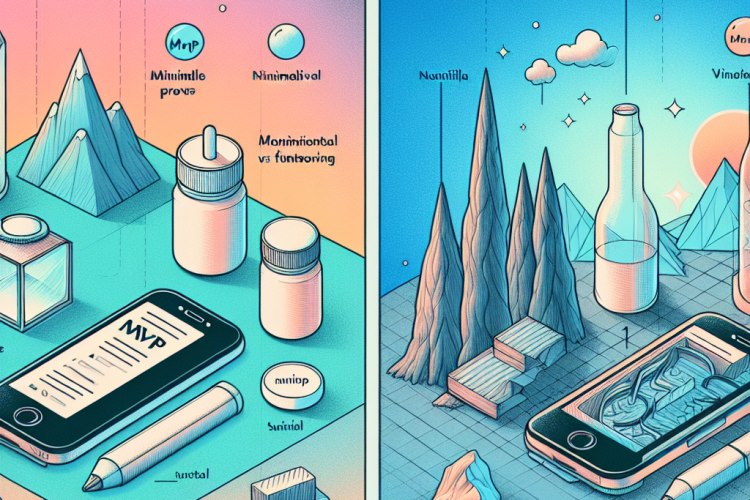
In the world of product development, two crucial concepts often come into play: the Minimum Viable Product (MVP) and the prototype. Both serve unique purposes, playing pivotal roles in how businesses conceptualize, develop, and bring new offerings to market. However, while they might seem similar at first glance, they are fundamentally different in terms of their objectives, processes, and end goals. This article delves into the distinctions between MVPs and prototypes, their respective uses, and why understanding these differences is essential for a successful product development strategy.
What is a Minimum Viable Product (MVP)?
The MVP is a version of a new product that includes only the essential features necessary to satisfy early adopters and gather feedback for future development. The primary goal of the MVP is to validate business hypotheses with minimal resources invested. Here are some key features of an MVP:
- Core Features: The MVP focuses on the most critical features that address the primary problem or need of the target audience.
- Feedback Loop: It’s designed to gather data and reactions from users, allowing companies to iterate and improve the product.
- Market Validation: MVPs help in testing the market response without fully launching a product, saving time and costs.
- Faster Time to Market: By concentrating on essential functionalities, companies can deliver a product to market quicker.
Examples of MVP
Many well-known tech companies started with MVPs to gauge market interest:
- Dropbox: The founders created a simple video demonstrating the file-syncing service before developing the actual product.
- Airbnb: Initially, they rented out air mattresses in their apartment during a conference to validate the concept before building a full-fledged platform.
- Buffer: The creators started by running a landing page that explained the service and collected email sign-ups before building the product.
What is a Prototype?
A prototype, on the other hand, is an early model of a product that demonstrates its functionality and design but is not necessarily functional or market-ready. Prototypes can vary widely in fidelity, from low-fidelity sketches to high-fidelity interactive models, and they aim to visualize and test ideas before extensive development takes place. Key characteristics of prototypes include:
- Visual Representation: Prototypes provide a physical or digital representation of the product, allowing stakeholders to visualize the concept.
- User Testing: They are used to conduct usability testing, uncovering potential design issues before full development.
- Iterative Improvement: Prototypes can be modified quickly based on feedback, enabling teams to iterate on designs rapidly.
- Communication Tool: They help in conveying ideas to stakeholders, team members, and potential users effectively.
Examples of Prototypes
Various industries utilize prototypes, exemplified by the following examples:
- Design Mockups: Early sketches and wireframes created by designers to outline user interfaces.
- 3D Printed Models: Engineers may use 3D printing to create tangible representations of parts before manufacturing.
- Interactive Demos: Software teams may create limited-functionality apps or websites to showcase how a final product may look and feel.
Key Differences Between MVP and Prototype
Understanding the differences between an MVP and a prototype is essential for guiding product development decisions.
Objective
The primary objective of an MVP is to test market demand and gather feedback on core functionalities. In contrast, the objective of a prototype is to visualize ideas, test design concepts, and identify usability issues.
Functionality
While an MVP is functional and intended to provide real value to end-users, a prototype may not be functional and often exists mainly for testing and feedback purposes.
Target Audience
MVPs are aimed at early adopters and potential customers who are willing to provide feedback on a usable product. Prototypes are typically shared with stakeholders, designers, and developers to refine concepts before development.
Investment and Resources
Creating an MVP typically requires a significant investment of time and resources since it must be functional and market-facing. In contrast, prototypes are often less resource-intensive and can vary widely in complexity and fidelity.
Feedback Type
MVPs gather feedback focused on product-market fit, while prototypes collect insights on usability and design.
Uses of MVPs and Prototypes
When to Use an MVP
Companies should consider developing an MVP when:
- They have validated the market need but need to test their assumptions.
- Time to market is critical, and there’s a need to capture early adopters.
- They want to minimize risks associated with full product development.
When to Use a Prototype
Prototypes are most beneficial when:
- Conceptualizing a new product or feature that needs to be visualized.
- Gathering feedback on design elements and user experience.
- Collaborating with stakeholders and team members early in the product development cycle.
Best Practices for MVP Development
To develop a successful MVP, consider the following best practices:
- Define Clear Objectives: Determine what you want to learn from the MVP and what questions you need to answer.
- Focus on Core Features: Prioritize features that solve the primary problem for users.
- Incorporate User Feedback: Engage early adopters and be ready to iterate based on their input.
- Measure Key Metrics: Identify and track key performance indicators (KPIs) to evaluate the MVP’s success.
Best Practices for Prototype Development
For effective prototype creation, adhere to these practices:
- Start Low-Fidelity: Begin with sketches or wireframes before moving on to high-fidelity prototypes.
- Iterate Frequently: Use the feedback received from testing to make swift improvements.
- Engage Users Early: Involve potential users in the testing process to gain insights into usability.
- Document Feedback: Keep detailed records of feedback for further development phases.
Challenges and Considerations
Challenges of MVP Development
While MVPs can provide many benefits, they also come with challenges:
- Narrow Feature Set: Focusing too narrowly on features may limit the product’s appeal.
- User Expectations: Users may have high expectations for an MVP that could lead to dissatisfaction if not managed.
- Data Interpretation: Understanding and acting on feedback appropriately requires analysis skills.
Challenges of Prototype Development
Similarly, prototypes have their own set of challenges:
- Scope Creep: A lack of clear objectives may lead to overly complex prototypes.
- Resource Allocation: Developing high-fidelity prototypes can consume valuable time and resources.
- Feedback Overload: Too much feedback from various sources can create confusion about the direction of the product.
Conclusion
Understanding the differences between Minimum Viable Products and prototypes is crucial for successful product development. While both serve essential roles in the iterative design and development process, they cater to different objectives, audiences, and stages of product life cycles. The MVP helps businesses validate their ideas and discover market fit with minimal investment, while prototypes allow for visualizing, testing, and refining concepts before full-scale development.
Ultimately, the strategic use of each tool can significantly impact a product’s success. By leveraging the strengths of MVPs and prototypes appropriately, companies can reduce risks, enhance user satisfaction, and streamline the path to market. Whether you’re a startup looking to build your first product or a seasoned enterprise innovating new offerings, understanding these concepts will equip you to make informed decisions and foster more successful outcomes.


0 Comments