
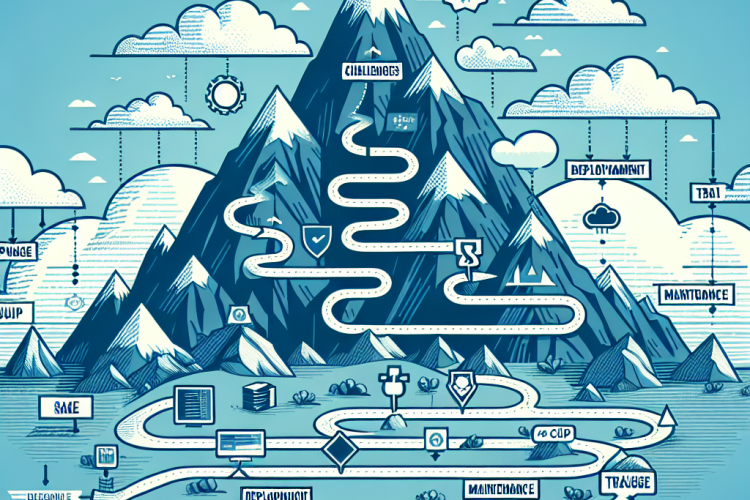
Software as a Service (SaaS) represents a significant shift in the software delivery model, prioritizing accessibility, scalability, and reduction in operational overheads. Deploying and maintaining a SaaS web app involves navigating various complex challenges, which encompass technical, operational, and strategic dimensions. This article delves into these challenges and offers insights into managing them effectively.
Understanding SaaS Deployment
SaaS applications are hosted in the cloud, providing users with access via the internet. This model requires developers to focus on cloud infrastructure, multi-tenancy, and security, among other concerns, to ensure successful deployment.
Cloud Infrastructure
One of the primary tasks in deploying a SaaS web app is choosing the right cloud infrastructure. Options typically include public clouds (e.g., AWS, Azure, Google Cloud), private clouds, or a hybrid approach. Each choice carries different cost implications, scalability options, and security measures, necessitating careful evaluation.
Multi-tenancy
Multi-tenancy is another crucial aspect where multiple customers share the same application instance while maintaining data isolation. Architects must design systems that ensure resource allocation efficiency and user data privacy without compromising on performance.
Technical Challenges in Deployment
Deploying a SaaS application involves several technical challenges that developers must tackle to ensure a smooth and efficient deployment process.
Continuous Integration/Continuous Deployment (CI/CD)
Implementing robust CI/CD pipelines is vital to accelerate deployment processes while maintaining code quality. Challenges include setting up automated testing, managing deployment scripts across environments, and ensuring zero-downtime deployments.
Scalability
Scalability ensures that the application can handle growing amounts of work by adding resources. This involves load balancing, database scaling, and ensuring that application architecture can support horizontal scaling.
Security and Compliance
Security is paramount, especially given the multi-tenant nature of SaaS solutions. Deploying secure applications involves regular security assessments, encryption standards, and compliance with regulations like GDPR and HIPAA.
Operational Challenges
Post-deployment, managing operations effectively is crucial to guarantee uptime and user satisfaction.
Monitoring and Logging
Maintaining comprehensive monitoring and logging systems is crucial for identifying and resolving issues quickly. Challenges include setting up alert systems, creating dashboards, and integrating with performance monitoring tools.
Disaster Recovery and Backup
Establishing robust disaster recovery plans is essential to mitigate risks associated with data loss or service outages. This includes regular data backups, failover processes, and service continuity plans.
User Support and Customer Service
Providing ongoing user support is an ongoing operational challenge. It requires setting up help desks, creating detailed documentation, and ensuring responsive customer service channels.
Maintenance Challenges
Maintaining a SaaS web app involves regular updates, bug fixes, and optimizing performance without disrupting the user experience.
Regular Updates and Patches
Deploying updates and patches regularly is necessary to fix bugs and improve functionality. This requires streamlined processes to ensure that updates are seamless and minimize downtime.
Performance Optimization
Continuous performance optimization ensures users have a fast and reliable experience. Challenges involve optimizing code, database queries, and reducing latency across networks.
Feedback and Iteration
Gathering user feedback is crucial for making practical improvements and supporting iteration. Setting up mechanisms for feedback collection and integrating insights into development cycles are key tasks.
Strategic Considerations
Strategic planning is essential for aligning technical deployment with business objectives and ensuring long-term success.
Cost Management
Effectively managing costs involves understanding pricing models of cloud services, predicting usage trends, and optimizing resource allocation to reduce unnecessary expenditure.
Market Adaptability
Ensuring that the application can quickly adapt to market changes involves staying updated with trends and integrating new features that resonate with user needs.
Competitive Positioning
Strategically positioning the SaaS product in a competitive landscape requires a unique value proposition, emphasizing features that differentiate your offering from competitors.
Conclusion
Navigating the challenges inherent in the deployment and maintenance of SaaS web applications is a multifaceted endeavor. By focusing on robust cloud infrastructure, ensuring high levels of security and compliance, and strategically managing operations and costs, organizations can overcome these challenges. The key to success lies in balancing technical execution with strategic foresight, enabling SaaS providers to deliver high-quality, scalable, and secure applications that meet and exceed customer expectations. Continuous iteration, driven by user feedback and technological advancements, will ensure that SaaS solutions remain competitive and relevant in the rapidly evolving digital landscape.



0 Comments