
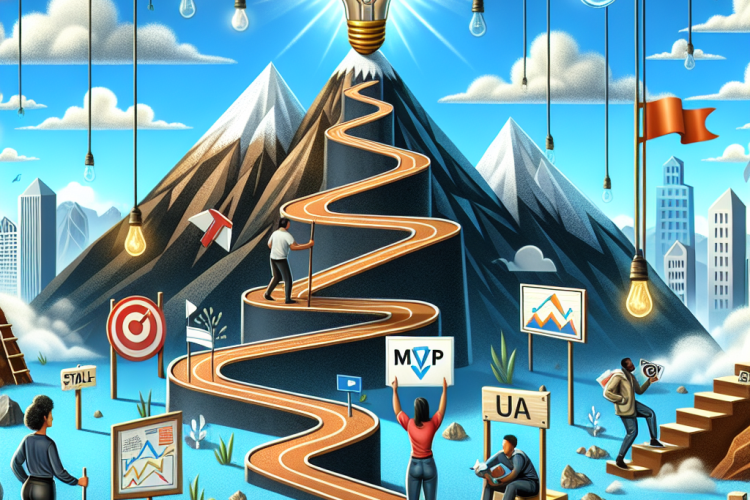
Creating a Minimum Viable Product (MVP) is a lean startup approach that allows entrepreneurs to start their journey in product development. An MVP is the most basic version of a product that delivers value to early adopters while collecting feedback for future development. This guide explores the crucial steps involved in launching your first product, including idea validation, design, development, testing, and iteration.
Step 1: Idea Validation
The first step in the MVP journey is validating your product idea. This stage is crucial as it saves time and resources by ensuring that there is a genuine market need for your product.
1.1 Market Research
Conduct thorough market research to understand industry trends, target audiences, and competitors. This information will inform your product’s niche and help define its value proposition.
1.2 Customer Interviews
Engage with potential customers through interviews or surveys. Ask open-ended questions to gather insights about their pain points, preferences, and willingness to use your product.
1.3 Analyze Competition
Study your competitors’ products. Identify their strengths and weaknesses, and look for gaps in the market that your MVP can fill.
Step 2: Define the Value Proposition
Once you have validated your idea, you need to clearly define the value proposition for your product.
2.1 Identify Key Features
List the core features that will provide the most value to your users. Prioritize features that address the primary pain points identified during the research phase.
2.2 Create a Unique Selling Proposition (USP)
Craft a concise statement that explains how your product solves a problem uniquely compared to existing solutions. Your USP will guide your marketing efforts and help attract your target audience.
Step 3: Create a Prototype
Before diving into full-scale development, creating a prototype is essential to visualize your product and test its functionality.
3.1 Wireframing
Use wireframes to outline the basic layout of your product. This will help you visualize the user interface and experience before any coding takes place.
3.2 Build a Clickable Prototype
Tools like Figma or Adobe XD allow you to create interactive prototypes. These prototypes can be shared with potential users for feedback and further validation.
Step 4: Development Process
Following the prototyping stage, it’s time to develop your MVP.
4.1 Choose the Right Technology Stack
Select the technology stack based on the MVP’s requirements, scalability, and your team’s expertise. Popular technologies include React, Angular, Node.js, and Python.
4.2 Agile Methodology
Adopt an Agile development approach to enable flexibility and adaptability. This will allow you to iterate quickly based on user feedback and evolving requirements.
4.3 Create a Minimum Viable Product (MVP)
Focus on developing only the essential features identified during the validation phase. This approach will result in a functional product that can be brought to market sooner.
Step 5: User Testing
Once the MVP is developed, conducting user testing is crucial to identify any usability issues and gather initial feedback.
5.1 Recruitment of Test Users
Identify a group of real users who can interact with your MVP. Ensure that these individuals represent your target audience.
5.2 Conduct Usability Testing
Observe how users interact with your MVP. Take notes on their experiences, challenges, and feedback. Aim for usability tests that expose any friction points in the user experience.
5.3 Gathering Data and Feedback
Collect qualitative and quantitative feedback through surveys or analytics to assess how users are engaging with your product.
Step 6: Iterate and Improve
Use the insights gained from user testing to refine and enhance your MVP.
6.1 Analyze Feedback
Evaluate the feedback data systematically. Identify patterns and prioritize changes that align with user needs and business goals.
6.2 Implement Changes
Adjust your MVP based on user feedback. Make necessary enhancements to features or fix usability issues to improve overall user experience.
6.3 Prepare for Launch
Once your MVP is refined, prepare for a broader audience launch. Develop a marketing strategy to create anticipation and excitement around your product.
Step 7: Launch Your MVP
Your MVP is ready for launch. This step requires careful planning to ensure a successful rollout.
7.1 Develop a Go-to-Market Strategy
Create a comprehensive marketing plan which includes defining your target audience, selecting platforms to reach them, and planning promotional activities.
7.2 Build a Landing Page
A well-designed landing page can capture leads and communicate the value of your MVP effectively. Ensure it includes strong calls to action and clear messaging.
7.3 Social Media Marketing
Leverage social media channels to spread the word about your product. Engage with your audience, share updates, and respond to inquiries promptly.
Step 8: Post-Launch Evaluation
After launching your MVP, it’s essential to evaluate its performance.
8.1 Monitor Key Performance Indicators (KPIs)
Track metrics such as user engagement, retention rates, and customer feedback to assess how well your MVP is performing in the market.
8.2 Continuous Improvement
Keep iterating based on customer feedback and market trends. This ongoing process will help you refine your product and stay competitive.
Conclusion
Navigating the MVP journey requires careful planning, execution, and ongoing iteration. By validating your idea, defining a strong value proposition, using an agile development approach, and actively seeking user feedback, you will increase the chances of launching a successful product. Remember, the goal of an MVP is not to be perfect but to learn quickly and adapt to user needs. Embrace the journey, and let each step guide you toward building a product that resonates with your audience.


0 Comments