
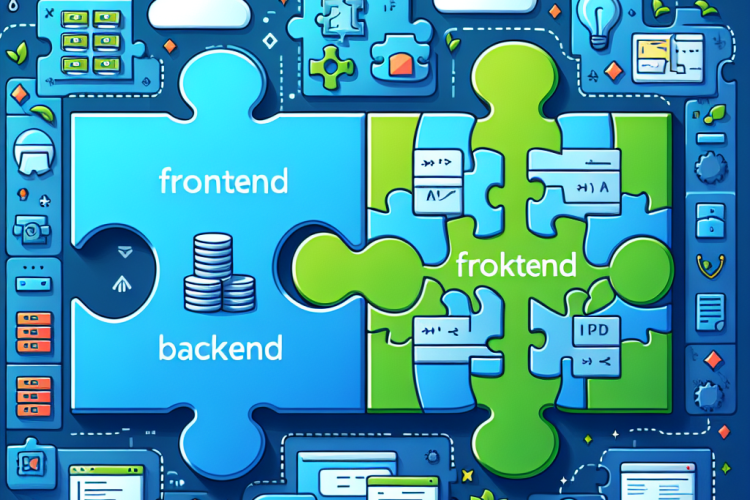
The digital experience of today’s users is founded on the seamless integration of frontend and backend systems. In an increasingly interconnected world, providing a seamless interaction necessitates combining user-friendly interfaces with robust back-end processes. This article explores the pathways to achieving such a unity, the challenges faced, and the technological solutions that facilitate this integration.
Understanding Frontend and Backend
The frontend of a system refers to the portion with which the user interacts directly. It includes the design, aesthetics, and usability of a website or application. Technologies such as HTML, CSS, and JavaScript play crucial roles in shaping how users perceive and interact with digital interfaces.
The backend, on the other hand, is the part of the system that runs behind the scenes. It handles data processing, database interactions, and server-side operations. Technologies utilized in the backend include programming languages like Python, Java, PHP, and frameworks like Node.js, Django, and Ruby on Rails.
A seamless integration between these two elements is crucial for providing a holistic user experience. Users demand quick responses, intuitive interfaces, and reliable data processing which can only be accomplished through a well-integrated system.
Challenges in Integration
1. Different Programming Paradigms
Frontend and backend development often use distinct programming paradigms which can create hurdles in maintaining consistency across the system. While front-end development may focus more on responsive design and user interaction, backend development zeroes in on operations scale and data integrity.
2. Synchronization Issues
Ensuring that frontend and backend updates occur in tandem is a significant challenge. As features evolve, keeping both ends synchronized to prevent conflicts and maintain user experience is essential but complex.
3. Scalability Concerns
Integration must not compromise the scalability of either the frontend or backend systems. As user demand increases, the entire architecture should scale efficiently without bottlenecks.
Technological Solutions for Integration
1. RESTful APIs
The use of RESTful APIs is one of the most common methods for achieving integration. By adhering to REST principles, developers can create scalable and stateless APIs that enable smooth communication between the frontend and backend.
RESTful services utilize HTTP requests for accessing and using data. They allow for CRUD operations (Create, Read, Update, Delete) which are essential for any application. This intermediary layer provides a universal language for frontend and backend systems to interact.
2. GraphQL
GraphQL, developed by Facebook, offers an alternative to REST by allowing clients to request only the data they need. This on-demand data-fetching capability reduces the bandwidth usage and can optimize the performance of applications.
By providing a more efficient method for querying data, GraphQL presents a powerful solution for systems where complex queries are made and fine-grained data-fetching is a requirement.
3. Service-Oriented Architecture (SOA)
Service-Oriented Architecture separates services into distinct units, making them more manageable and scalable. Each service can run its own process and communicate using well-defined API calls, enhancing modularity.
This architecture supports seamless incorporation and updating without affecting the entire system, ensuring a smooth user experience across platforms.
Ensuring Security in Integrated Systems
The integration between frontend and backend must also prioritize security. With increased connectivity and data exchange, vulnerabilities can expose sensitive information to attacks.
1. Authentication and Authorization
Implementing robust authentication methods like OAuth and JWT (JSON Web Tokens) ensures that only legitimate users have access to the system’s resources. Proper authorization policies further protect against unauthorized actions within the application.
2. Secure Communication
All communication between the frontend and backend should occur over SSL/TLS to encrypt the data in transit. This prevents interception and protection against man-in-the-middle attacks.
3. Regular Security Audits
Frequent security audits and penetration testing should be carried out to identify potential weaknesses. Implementing a culture of continuous security assessment can help catch vulnerabilities before they are exploited.
Conclusion
Seamless integration of frontend and backend is pivotal for delivering a united and satisfying user experience. By addressing the challenges of different programming paradigms, synchronization issues, and scalability concerns, organizations can build a robust digital presence.
Technologies like RESTful APIs, GraphQL, and SOA facilitate the merging processes, each offering unique benefits that complement varied use cases. Furthermore, maintaining a focus on security ensures that integrations provide not just seamlessness but also safety and reliability.
In conclusion, as user expectations grow, organizations must embrace the synergy between frontend and backend systems, utilizing evolving technologies and methodologies to remain competitive and relevant in today’s fast-paced digital landscape.



0 Comments