
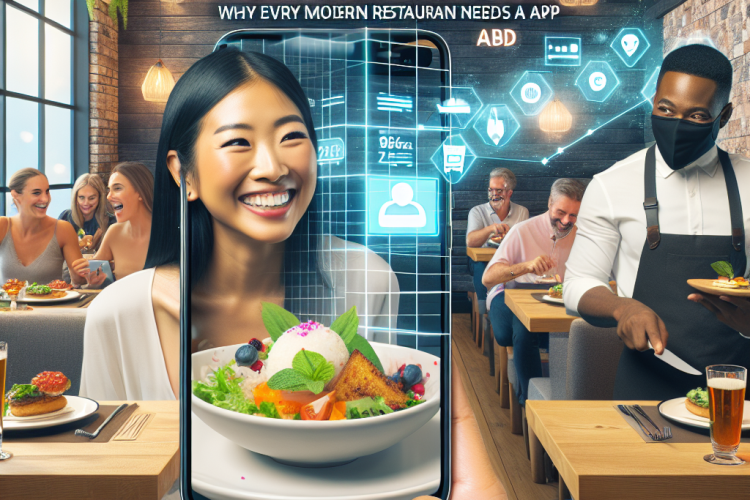
In today’s fast-paced digital world, technology has seeped into every aspect of life, reshaping how businesses operate and how customers interact with brands. The restaurant industry, a cornerstone of social life and culture, is no exception. With the increasing ubiquity of smartphones, mobile applications have become a vital tool for engagement, efficiency, and growth. This article delves into why every modern restaurant needs an app, examining key benefits, practical applications, and strategic advantages.
Enhancing Customer Experience
One of the most critical aspects of the restaurant business is ensuring a seamless and enjoyable experience for customers. A dedicated mobile app can significantly enhance customer experience by providing convenience and personalization.
Firstly, mobile apps allow for intuitive and efficient reservation systems. Customers can view available time slots and book tables without needing to call the restaurant, which streamlines the process and reduces human error.
Secondly, apps can facilitate easy ordering and payment. Whether a customer is dining in, ordering takeout, or requesting delivery, an app can make the process straightforward and user-friendly. Features such as order tracking, estimated delivery times, and easy payment options can greatly enhance convenience.
Moreover, apps can serve as a platform for personalized offers and loyalty programs. By collecting data on customer preferences and habits, restaurants can tailor promotions and rewards to individual users, thereby increasing customer satisfaction and retention.
Improving Operational Efficiency
Operational efficiency is crucial in the restaurant industry, where margins can be tight, and customer expectations are high. Mobile apps can streamline operations in several significant ways.
Firstly, they enable better inventory and resource management. Apps that integrate with stock management systems can provide real-time updates on inventory levels, helping to prevent overstocking or shortages.
Furthermore, apps can reduce the burden on staff, freeing them to focus on customer service. Features like self-ordering kiosks and digital menus reduce the need for front-of-house staff, while back-end integrations handle orders seamlessly.
Additionally, by facilitating quick feedback loops, apps allow restaurants to adjust staffing levels and menu items based on customer demand, improving service times and reducing waste.
Boosting Marketing and Brand Visibility
In an industry as competitive as hospitality, visibility and brand recognition are crucial. A well-designed app can serve as a powerful marketing tool, helping restaurants stand out and connect with potential customers.
Through push notifications, restaurants can keep users informed about promotions, events, and new menu items. These direct communication channels are more immediate and engaging than traditional marketing methods, leading to higher conversion rates.
Moreover, integrating social media sharing options into the app can expand a restaurant’s reach. When customers share their experiences or promotions with their networks, it increases exposure and attracts new patrons.
Data Collection and Customer Insights
In today’s data-driven world, understanding customer behavior is key to making informed business decisions. Mobile apps can be a treasure trove of valuable data, offering insights into customer preferences, peak ordering times, popular menu items, and more.
With this data at their fingertips, restaurants can tailor their menu offerings, marketing strategies, and staffing to better meet customer demands. Additionally, data analysis can identify trends and patterns that inform long-term strategic planning.
Personalization based on data can lead to increased customer loyalty. By leveraging purchase history and preferences, restaurants can create customized experiences and offers that resonate with individual customers.
Staying Competitive in a Digital World
Technology is advancing rapidly, and consumer expectations are evolving with it. Restaurants that fail to adapt may find themselves falling behind. A mobile app is no longer a luxury but a necessity for staying competitive in a digital-first world.
While some restaurants may be hesitant to invest in an app due to perceived high costs or technical challenges, it’s essential to consider the long-term benefits. The increased customer engagement and operational efficiencies can significantly outweigh initial investments.
Furthermore, with the proliferation of app development platforms and services, restaurants of all sizes can create custom apps that cater to their specific needs without breaking the bank.
Conclusion
In conclusion, the integration of mobile apps into the restaurant business model is a crucial step towards future-proofing operations, enhancing customer satisfaction, and driving growth. From improving customer experience to streamlining operations and boosting brand visibility, the benefits of a restaurant app are manifold.
As the digital landscape continues to evolve, restaurants that embrace technological change will be better positioned to meet consumer expectations and succeed in an increasingly competitive market. An app is not just a tool but a vital part of a restaurant’s strategy to create connections, deliver value, and stay ahead of the curve.
Investing in a well-designed mobile application represents a commitment to adopting modern solutions and ensuring a thriving business in the years to come. In this digital age, a restaurant app is an indispensable asset that can provide a significant competitive edge.



0 Comments