
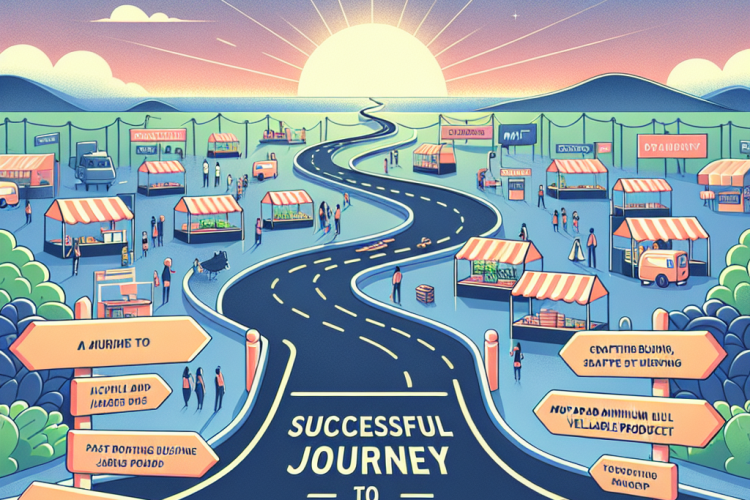
The concept of a Minimum Viable Product (MVP) revolves around launching a product with the least amount of features necessary to satisfy early adopters and validate product-market fit. The core idea is to test a product hypothesis with minimum resources to gather user feedback that can guide subsequent development. An MVP allows startups and product teams to reduce risks and costs associated with launching a new product.
The Importance of Crafting an MVP
Creating an MVP streamlines the feedback loop between the product team and its target customers. There are several critical reasons why focusing on an MVP is essential:
- Resource Efficiency: By limiting initial development to only essential features, teams can allocate resources more effectively.
- Faster Time to Market: An MVP can be developed and released much quicker than a fully-featured product.
- User-Centric Development: Gathering user feedback early helps ensure the product evolves according to real user needs.
- Reduced Risk: Validating the product idea with real users before a full-scale launch minimizes the risk of failure.
Identifying Your Target Audience
Before diving into product development, it’s crucial to identify and understand your target audience. Knowing who your potential customers are will inform the features included in your MVP. Conducting market research can reveal insights about user preferences, pain points, and behaviors. Your target audience should be defined through various parameters, such as:
- Demographics: Age, gender, income, employment, and education level.
- Geographics: Geographic location, urban vs. rural, climate considerations.
- Psychographics: Interests, values, lifestyle choices, and purchasing behaviors.
- Behavioral Traits: How users interact with products in your niche, their level of tech-savviness, and brand loyalty.
Conducting Market Research
Market research enables teams to understand their competitors and the current market landscape. Competitor analysis should identify direct and indirect competitors, their offerings, strengths and weaknesses, and pricing strategies. This data will help refine your product’s unique value proposition (UVP).
Methods of Conducting Market Research
There are different methods to collect data for your market research:
- Surveys: Online surveys can yield invaluable quantitative data.
- Interviews: Conduct one-on-one interviews with potential users to gain qualitative insights.
- Focus Groups: Bringing together a small group of target customers can foster rich discussions and ideas.
- Observation: Observe how current solutions are used in real life to identify unmet needs.
Defining the Core Features of Your MVP
After identifying your target audience and conducting thorough market research, it’s time to define what features your MVP will include. Remember, the goal is to create a product with just enough functionality to attract early adopters while allowing you to gather feedback for future iterations.
Creating a Feature Prioritization Matrix
A feature prioritization matrix is a tool used to assess and rank the features needed for your MVP. It typically includes criteria such as:
- Value to Customer: How essential is the feature to the user experience?
- Technical Feasibility: How easy is it to develop this feature in the existing system?
- Market Demand: Is there existing demand for this feature based on your research?
- Cost of Development: What will it cost to implement this feature?
Focusing on Unique Value Proposition (UVP)
Your MVP should clearly convey its unique value proposition, which differentiates it from existing solutions. An effective UVP succinctly addresses the following:
- What you offer: Clearly describe the product or service and its purpose.
- Who it’s for: Specify your target audience.
- What makes you unique: Highlight the specific benefits that set your product apart.
Prototyping Your MVP
Once you’ve defined the core features and UVP, it’s time to create a prototype. This low-fidelity version of your MVP can take various forms, including wireframes, sketches, or digital designs. The aim of the prototype is to visualize and iterate on your concept before diving into development.
Methods for Prototyping
There are many prototyping methods available, each offering unique advantages:
- Paper Prototypes: Simple sketches on paper, useful for initial brainstorming.
- Digital Wireframes: Use of software tools like Sketch or Figma to create wireframe mockups.
- Interactive Prototypes: Design tools can facilitate the creation of interactive prototypes that simulate user experience.
Development Process
After finalizing the prototype, the next step is actual development. Choose a development methodology that suits your team’s workflow:
- Agile: Focuses on iterative development, allowing for regular reassessment of progress.
- Waterfall: A linear approach where each phase must be completed before the next begins.
Engage in continuous testing throughout this process to catch any bugs or usability issues early on.
Launching Your MVP
With your MVP developed, it’s time to launch. A successful launch involves more than just making the product available; it encompasses a strategic marketing plan:
- Building Anticipation: Use social media, email marketing, and content marketing to generate interest before the launch.
- Engaging with Early Users: Encourage early users to provide feedback and share their experiences. Consider offering incentives for early adopters.
- Monitoring Performance: Utilize analytics tools to track engagement, usage patterns, and feedback post-launch.
Gathering Feedback and Iterating
Post-launch, the feedback loop becomes critical. Analyzing user feedback helps you understand what works and what doesn’t. Building on this knowledge allows you to make data-driven decisions for your product’s next iteration.
Implement strategies to collect user feedback systematically:
- Surveys and Questionnaires: Post-launch surveys can yield valuable insights from users.
- User Reviews: Monitor platforms where your product is listed for user reviews and ratings.
- Customer Support Queries: Analyze the common questions or issues raised by users.
- Usage Analytics: Track metrics such as user engagement, retention rates, and feature usage.
Scaling Beyond the MVP
Once you have validated your product with the MVP, it’s time to think about scaling. Focus on enhancing your product based on user feedback, expanding features, and optimizing performance. Consider these strategies for scaling:
- User-Centric Enhancements: Prioritize features that would improve user experience based on feedback.
- Exploring New Markets: Assess opportunities for user acquisition in different demographics or regions.
- Strategic Partnerships: Consider partnerships that can enhance your offerings or reach a broader audience.
Conclusion
Crafting a compelling Minimum Viable Product is a strategic approach that allows businesses to validate their ideas efficiently while minimizing risk. By understanding your target audience, conducting thorough market research, defining core features, developing a prototype, and iterating based on user feedback, you position your product for success. The road to market is often winding and unpredictable, but a well-crafted MVP can serve as the compass leading your team toward effective solutions and sustainable growth. Embrace the journey of learning and iterating, as this is what will ultimately shape a product that meets the needs of users and thrives in a competitive landscape.



0 Comments