
Introduction
Custom web applications play a vital role in today’s digital ecosystem. They are designed to cater to specific business needs, offering unique solutions that off-the-shelf software cannot provide. However, understanding the costs associated with developing a custom web app can be daunting. This article seeks to elucidate the key factors influencing these costs, offering insights to help businesses make informed decisions.
Factors Influencing Web App Development Costs
1. Project Complexity
The complexity of the web app is a primary determinant of its cost. Simple apps with basic functionalities are cheaper to develop than complex ones with numerous features, integrations, and requirements. A highly specialized app might require advanced technology, adding to the cost.
2. Design and User Experience
A polished, user-friendly design significantly affects the development cost. Hiring experienced designers to create an intuitive interface involves expenses. Sophisticated, custom designs are more costly compared to using templates. Prioritizing user experience ensures customer satisfaction but requires additional investment.
3. Development Team
Choosing the right development team is crucial. The cost will vary depending on whether you opt for freelancers, a local development agency, or an offshore team. While freelancers might offer lower rates, agencies bring more experience and resources but at a higher cost. Offshore development can often reduce costs, but requires careful communication and management.
4. Technology Stack
The technology stack chosen for your web app affects both the functionality and cost. Certain technologies are more expensive due to licensing fees or the need for specialized skills. Opting for open-source technologies can save money but might involve hidden costs in terms of integration or modifications.
5. Scope and Scalability
Scope definition at the outset is crucial to control costs. Continuous additions and changes can lead to ‘scope creep,’ escalating expenses. Planning for scalability is essential for future growth, but initial investments will increase proportionally.
6. Time Frame
How soon you need your application can also influence the cost. Fast-tracking the development process demands more resources, possibly involving overtime or hiring additional developers, resulting in higher expenses.
7. Testing and Quality Assurance
A robust testing and QA process ensures the application functions correctly and securely. Testing might include various phases like unit testing, integration testing, and user acceptance testing, each adding to the overall cost.
8. Maintenance and Support
Post-launch maintenance and support are vital for ensuring the app remains functional and up-to-date. Developers typically offer maintenance packages, which can be a significant ongoing cost, covering updates, bug fixes, and enhancements.
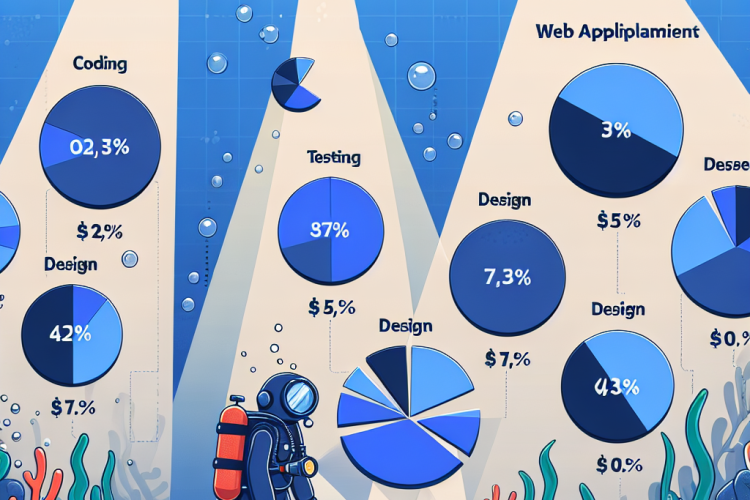
Cost Estimation: Breaking It Down
Phase 1: Planning and Research
This phase involves market analysis, defining the project requirements, and creating a blueprint. It typically constitutes about 10-15% of the total project cost. Engaging stakeholders and understanding user needs are critical components that add to time and effort.
Phase 2: Design
Design costs depend on the complexity and aesthetic requirements of the app. A well-thought-out design can consume 15-20% of the total budget. The design phase includes wireframing, prototyping, and UI/UX design.
Phase 3: Development
Development is the most intensive phase, often taking up 40-60% of the budget. It includes backend and frontend development, API integration, and potentially creating an admin panel. The choice of platform and technology stack significantly impacts costs here.
Phase 4: Testing
The testing phase ensures the application is free from critical bugs and performs as expected. Typical costs vary from 10-15% of the total budget. It includes various types of testing, such as functionality, performance, security, and usability testing.
Phase 5: Deployment and Launch
Deploying the application involves server setup, domain configurations, and other technical aspects. This phase usually accounts for about 5-10% of the total project cost.
Phase 6: Post-Launch Support
After launch, ongoing support and maintenance are essential to keep the web app running smoothly and adapt to technological or business changes. This can mean annual costs amounting to 15-20% of the initial development budget.
Conclusion
Understanding the many components of custom web application development costs involves evaluating each phase and factor comprehensively. By considering project complexity, design, technology stack, and more, businesses can better plan and budget their development projects. Balancing quality, functionality, and cost is a nuanced task requiring strategic planning and collaboration with experienced developers. Ultimately, investing in a custom web app offers significant advantages, allowing businesses to tailor their solutions precisely to their needs and stand out in a competitive market.



0 Comments