
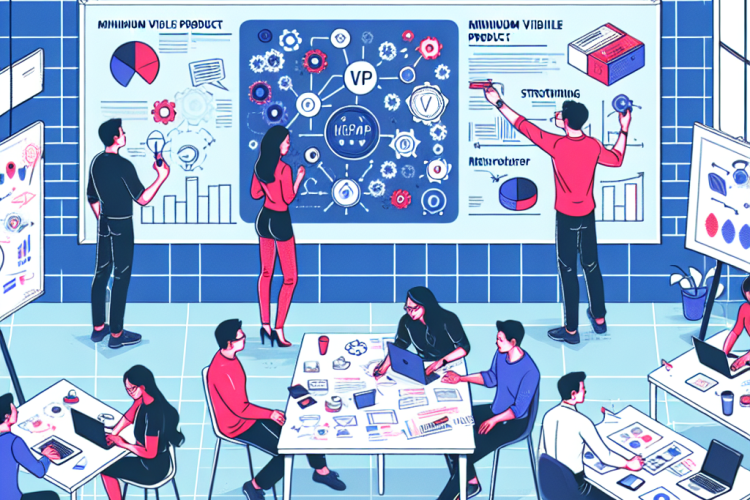
The journey of entrepreneurship is rife with challenges, uncertainties, and opportunities. In a world where innovation is constant, and customer demands shift rapidly, the importance of a well-thought-out initial product strategy cannot be overstated. One effective strategy that entrepreneurs should consider is developing a Minimum Viable Product (MVP). By focusing on creating the most essential features of a product first, entrepreneurs can navigate the complex landscape of startups with greater agility and strategic insight.
Understanding the MVP Concept
The Minimum Viable Product is defined as the most stripped-down version of a product that can still deliver value to its users. It contains just enough features to attract early adopters and provide feedback for future development. This concept allows for validating ideas, testing assumptions, and gathering insights without extensive investment.
The Origins of the MVP Concept
The term “Minimum Viable Product” was popularized by Eric Ries in his book, “The Lean Startup.” The essence of the MVP is rooted in the Lean methodology, which advocates for rapid testing and iteration. By launching a simplified version of a product, entrepreneurs can learn what works and what doesn’t early in the development process.
Benefits of Starting with an MVP
1. Reduces Time to Market
Launching a product to market can often be time-consuming. By starting with an MVP, entrepreneurs can significantly shorten this time frame. Instead of waiting months or even years to develop a fully-featured product, they can launch a basic version in a matter of weeks or months. This allows for quicker feedback loops and adjustments.
2. Cost Efficiency
Developing a full-scale product typically requires substantial investment. In contrast, an MVP allows entrepreneurs to allocate resources more efficiently, minimizing financial risk. By focusing on core functionalities, businesses can avoid unnecessary expenses associated with developing features that may not resonate with customers.
3. Validates Ideas Early
One of the most significant advantages of an MVP is the opportunity for early validation. By launching a product with minimal features, entrepreneurs can test their assumptions and gather insights directly from users. This validation is critical for understanding market fit, customer needs, and potential pitfalls.
4. Enhances Customer Feedback Loops
Feedback is crucial to any product’s success. An MVP allows entrepreneurs to engage with early adopters and gather valuable insights into their experiences and preferences. This iterative feedback process helps refine the product and ensures that future iterations align with customer expectations.
5. Builds a User-Centric Product
With continuous feedback in mind, entrepreneurs can adapt the product based on real user experiences. This focus on customer needs can lead to the development of a truly user-centric product. By prioritizing what users find valuable, entrepreneurs can build features that resonate and foster loyalty.
How to Develop an Effective MVP
1. Identify Core Value Proposition
The first step in developing an MVP is identifying the core value proposition. What problem does the product solve? What unique features can be offered that distinguish the product from competitors? Clarifying these points will guide the development process and help teams focus on what truly matters.
2. Conduct Market Research
Understanding the target audience is essential for creating an MVP that resonates. Conduct surveys, interviews, and competitor analysis to gather insights about potential customers. This research will inform decisions about necessary features and functionalities.
3. Prioritize Features
Once the core value proposition is defined, it’s important to prioritize features that will be included in the MVP. Focus on the must-haves, which deliver the essential value to users. Avoid over-complicating the product with unnecessary features that can lead to delays and increased costs.
4. Build and Test
After defining the essential features, it’s time to build the MVP. Use agile development methodologies to ensure iterative progress. Once the MVP is developed, conduct testing to gather feedback. Early testing will reveal any issues and allow for swift adjustments.
5. Launch and Gather Feedback
With the MVP ready, it’s time for the official launch. Early users should be encouraged to provide feedback on their experiences. Leverage various channels, such as email surveys, interviews, or social media, to collect and analyze user input.
Common Misconceptions About MVPs
1. MVP Equals a Low-Quality Product
One misconception is that an MVP is synonymous with a low-quality product. In reality, an MVP should deliver a functional and engaging user experience—it simply focuses on core features rather than a multitude of options. Quality still matters, as it affects user perceptions and adoption.
2. MVPs Are Only for Tech Startups
While MVPs are widely used in the tech industry, the concept can be applied to various sectors. Entrepreneurs across different industries can benefit from launching MVPs to test new services, products, or business models, ensuring a customer-driven approach to development.
3. MVP Means Final Product
Some entrepreneurs may mistakenly believe that the MVP is the final product. Instead, an MVP serves as a foundation for refinement and iteration. The feedback gathered from the MVP should inform future updates and enhancements, ultimately resulting in a more robust end product.
Case Studies of Successful MVPs
1. Dropbox
Dropbox is often cited as a classic example of a successful MVP. The founders created a simple explainer video demonstrating the product’s value proposition before developing the actual software. This approach validated interest and demand, leading to an extensive list of pre-launch sign-ups.
2. Airbnb
Airbnb started as a basic website allowing users to rent out air mattresses in their living rooms. This MVP helped the founders validate the concept of short-term rentals, derive user feedback, and progressively enhance their offerings into what Airbnb is today.
3. Zappos
Before becoming a major online shoe retailer, Zappos began its journey as an MVP by posting pictures of shoes from local retailers online. When customers placed orders, the founder would purchase the shoes from those retailers and ship them. This MVP facilitated early market validation while minimizing risk.
Conclusion
In the ever-evolving world of entrepreneurship, starting with a Minimum Viable Product (MVP) offers numerous advantages. From reducing time to market and costs to enhancing customer engagement through iterative feedback, an MVP allows entrepreneurs to navigate the uncertainty of new ventures more effectively. By implementing the MVP approach, entrepreneurs can prioritize their resources, validate ideas, and ultimately create more user-centric products.
In conclusion, embracing the MVP strategy is not merely a method for product development; it is a mindset shift that allows entrepreneurs to innovate boldly while remaining aligned with their audiences. In a landscape where customer needs are rapidly changing, the capacity to adapt and pivot based on direct user feedback becomes the cornerstone of building sustainable and successful businesses.



0 Comments