
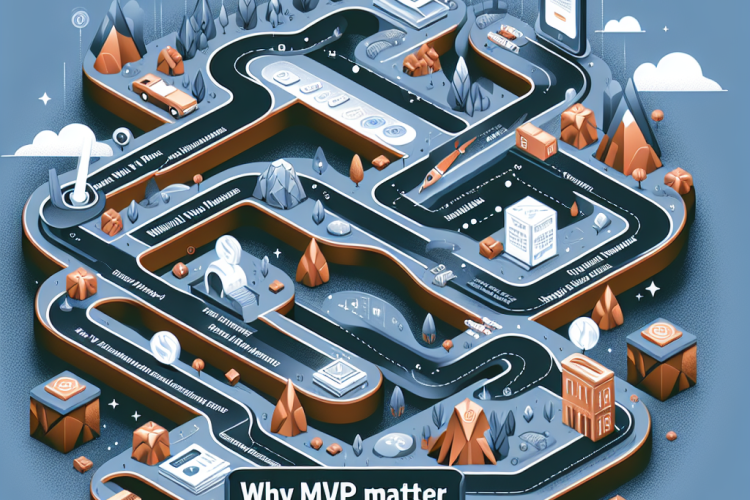
In the fast-paced world of product development, the concept of a Minimum Viable Product (MVP) has gained significant traction. But why do MVPs matter? They serve as a cornerstone for startups and existing businesses alike, allowing teams to validate their ideas, minimize risks, and move closer to successful product launches. This article delves deep into the importance of MVPs, exploring their development journey, benefits, and the common pitfalls to avoid.
The Concept of MVP
At its core, an MVP is a product with just enough features to satisfy early adopters and provide feedback for future development. The MVP method allows businesses to test hypotheses about customer needs with minimal resources and time investment.
Historical Background
The term “Minimum Viable Product” was popularized by Eric Ries in his book “The Lean Startup.” Ries emphasized the importance of iterative development, customer feedback, and adaptive planning in creating viable businesses.
What Makes an MVP?
An effective MVP captures the essence of a product concept and delivers core functionalities to users. Key components often include:
- Core Features: Only the most essential features that solve a specific problem.
- Target Audience: Defined user personas who will provide valuable feedback.
- Feedback Mechanism: Tools or processes to gather user reactions and data.
- Scalability: The potential to add features and scale operations based on user feedback.
The Development Journey of an MVP
The process of creating an MVP involves several stages, from ideation to user feedback collection. Here’s a detailed look at each of these phases:
1. Ideation
The journey begins with identifying a market need or problem. Brainstorming sessions, user interviews, and market research can help crystallize ideas. During this phase, teams should also define their business model, target audience, and value propositions.
2. Definition of Core Features
After identifying the problem, the next step is to outline the core features necessary to address this need. This prioritization often involves creating a product roadmap and user stories that illuminate the user journey.
3. Design and Development
The design phase translates ideas into tangible wireframes and mockups. Once approved, the actual development starts, focusing solely on the minimum functionality needed for the MVP.
4. Launch
With the MVP ready, it’s time for launch. It can be released to a specific audience, beta testers, or even through crowdfunding platforms to gather initial user feedback.
5. Feedback and Iteration
Post-launch, collecting feedback is crucial. This can be done via surveys, analytics tools, and direct user interviews. The data gathered informs subsequent iterations of the product, leading to enhancements based on real customer input.
The Importance of MVPs
Understanding why MVPs matter requires examining their benefits closely:
1. Risk Mitigation
Developing an MVP significantly reduces financial risk. By launching a product with minimal investment, companies can avoid spending large amounts of money on a full-fledged product that might not resonate with users.
2. Fast Time to Market
MVPs facilitate quicker launches, allowing businesses to enter competitive markets sooner. This advantage is crucial in industries where the first-mover advantage can make a significant difference.
3. Customer-Centric Development
By prioritizing user feedback through an MVP, companies can align their product development with actual customer needs, leading to a higher likelihood of success once the full product is launched.
4. Better Resource Allocation
With a singular focus on essential features, resources—both time and money—are used more efficiently. Teams can avoid over-engineering solutions that might not be necessary in the early stages.
5. Evidence-Based Decision Making
Data from user interactions with the MVP provides invaluable insights that can shape the future direction of the product. This evidence-based approach enhances strategic decision-making.
Common Pitfalls to Avoid
While MVPs offer numerous benefits, several common pitfalls can hinder their success:
1. Feature Creep
One of the biggest dangers in MVP development is adding too many features. It’s essential to stick to the core functionalities and avoid the temptation to include every idea that arises.
2. Neglecting User Feedback
Failing to incorporate user feedback can lead to a product that does not meet market needs. Businesses must prioritize gathering and analyzing customer insights throughout the MVP lifecycle.
3. Inadequate Testing
Rushing the MVP launch without thorough testing can lead to poor user experience and frustration. It’s crucial to undertake adequate testing to ensure the MVP is stable and user-friendly.
4. Misunderstanding the Target Audience
Focusing on the wrong audience can lead to misaligned features and ultimately result in MVP failure. Market research and user personas should inform every decision.
5. Ignoring Iteration
Assuming that the initial MVP is perfect can be detrimental. Continuous iteration based on user feedback is key to developing a successful product.
Successful MVP Examples
Many successful companies started with MVPs, showcasing their effectiveness:
1. Dropbox
Dropbox initially launched with a simple video demonstrating its service, allowing them to gauge interest before building the full product. This video served as an effective MVP to attract early users.
2. AirBnB
AirBnB started by renting out air mattresses in their apartment to test the concept of shared accommodations. This simple MVP validated their idea and led to the platform we know today.
3. Instagram
The original version of Instagram (Burbn) incorporated a photo-sharing function that allowed users to share pictures with filters. It focused on this key feature before growing into the comprehensive platform it is today.
The Future of MVPs in Development
As technology evolves, so too does the concept of an MVP. The rise of AI, Machine Learning, and other advanced technologies allows for more sophisticated MVPs that can better predict user behavior and preferences. This means businesses can iterate faster and more effectively, tailoring their products even more closely to market demands.
1. Integrating AI and Machine Learning
AI can enhance user experience by analyzing user data and suggesting improvements to product features based on behavioral patterns and preferences.
2. Enhanced User-Centric Approaches
The shift towards customer-centric methodologies is likely to be amplified. Businesses that leverage customer feedback tools and advanced analytics will better align product revisions with user expectations.
3. Flexible MVP Models
Future MVPs may adopt more flexible frameworks, incorporating hybrid approaches that blend physical and digital product testing. This flexibility may open doors to new industries and product types.
Conclusion
The journey of creating a Minimum Viable Product is critical in today’s fast-paced environment. MVPs matter because they lay the groundwork for successful products by allowing businesses to validate ideas, minimize risk, and focus on customer needs. By understanding the development journey and strategically avoiding common pitfalls, companies can harness the true power of MVPs. As we look to the future, the evolution of MVP strategies, fueled by advancements in technology and an increasing focus on user-centric development, will continue to be pivotal in shaping successful products and, ultimately, thriving businesses.


0 Comments