
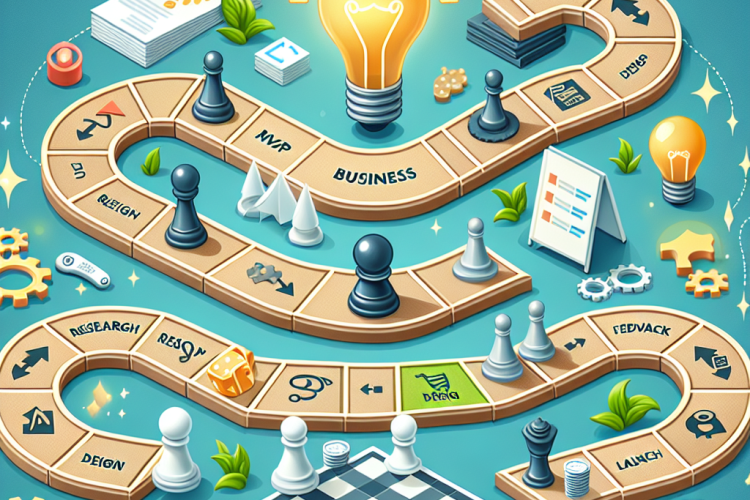
In the realm of startups and product development, the term “Minimum Viable Product,” or MVP, is frequently thrown around. But what does it truly mean? An MVP is not just a point of entry; it’s an approach—a strategy that focuses on the essential features of a product to test a business idea with minimal resources.
Launching an MVP allows entrepreneurs to validate their ideas without investing significant time and funds. By concentrating on critical functionalities, businesses can gather feedback early, iterate on their products, and pivot as necessary. This article will take you through a detailed, step-by-step guide to creating your own MVP, breaking down the components and stages of launch.
Step 1: Identify Your Target Market
Before diving into product development, it’s crucial to understand who your potential users are. Identifying your target market will help clarify your product’s direction and ensure there’s a demand.
- Conduct Market Research: Use surveys, interviews, and focus groups to gather data.
- Analyze Competitors: Understand what problems your competitors are solving and identify gaps in the market.
- Create User Personas: Define who your ideal customers are based on demographics, pain points, and behaviors.
Step 2: Define the Problem
At the core of every successful product is a well-defined problem. Your MVP should aim to solve a specific issue for your target audience.
Consider the following questions:
- What challenge does your target audience face?
- How will your product address this challenge effectively?
- What are the emotional triggers associated with this problem?
Step 3: Ideate Solutions
Once you have a clear understanding of the problem, it’s time to brainstorm potential solutions. In this phase, creativity is key.
Use techniques like:
- Mind Mapping: Visually organize ideas related to your product.
- Brainstorming Sessions: Collaborate with your team to generate a wealth of ideas rapidly.
- Sketching: Draw your ideas to visualize solutions quickly.
Step 4: Prioritize Features
After generating multiple ideas, it’s time to prioritize features. Not everything can be included in your MVP, so focus on the essential functions that directly address the customer’s problem.
Consider the following methods for prioritization:
- Kano Model: Categorize features into “must-haves,” “nice to have,” and “delighters.”
- MoSCoW Method: Distinguish between what must be included vs. what can wait.
Step 5: Build the MVP
With a prioritized list of features, it’s time to start building your MVP. This step demands a blend of development and design.
Key considerations include:
- Choosing the Right Technology: Select a stack that aligns with your MVP goals, whether that’s web, mobile, or both.
- User Experience (UX): A good UX can significantly impact user retention, so make it intuitive.
- Agile Development: Consider adopting an agile approach, allowing for flexibility and rapid iterations.
Step 6: Launch your MVP
Once your MVP is built, it’s time to introduce it to the world. But launching isn’t just about putting it out there; it’s about ensuring that the right audience sees it.
Follow these strategies for a successful MVP launch:
- Build Anticipation: Use social media and content marketing to generate buzz before the launch.
- Select the Right Channels: Depending on your target audience, choose platforms that will reach them effectively.
- Set Clear Goals: Define what you want to achieve with your MVP launch, be it user acquisition or gathering feedback.
Step 7: Gather and Analyze Feedback
After launching your MVP, feedback will be your next most valuable asset. Engage actively with your users to understand their experiences and perspectives.
Methods include:
- Surveys: Use tools to collect quantitative data on user satisfaction.
- User Interviews: Gain qualitative insights into how users interact with your product.
- Analytics: Implement tracking to monitor user behavior within your MVP.
Step 8: Iterate and Improve
Feedback is only as good as your response to it. Use the insights gained to enhance your product continuously. This phase might involve:
- Adding New Features: Based on user demands and pain points.
- Refining Existing Features: Eliminate usability issues that users face.
- Pivoting: In cases of consistent negative feedback, it might be worth reconsidering your entire approach.
Step 9: Prepare for the Next Phase
Once you have iterated your MVP based on user feedback, it’s time to think about scaling. This involves:
- Market Fit: Ensure that your product addresses the market needs effectively.
- Investment: With proof of concept, consider seeking funding to develop the full product.
- Broaden Your Audience: Target additional user segments or markets.
Conclusion
The journey of creating a Minimum Viable Product is one of discovery and adaptation. By following the outlined steps, entrepreneurs can efficiently validate and refine their ideas while minimizing risks and resource expenditure. MVPs not only provide practical insights into customer desires but also lay a strong foundation for future improvements and expansions. In the ever-evolving business landscape, embracing the MVP methodology can be key to success, enabling you to transform a simple concept into a functioning product that meets and exceeds user expectations.


0 Comments