
Introduction
The Software as a Service (SaaS) model has revolutionized the way software is distributed and consumed.
Unlike traditional software delivery methods, SaaS offers flexibility, scalability, and cost-effectiveness.
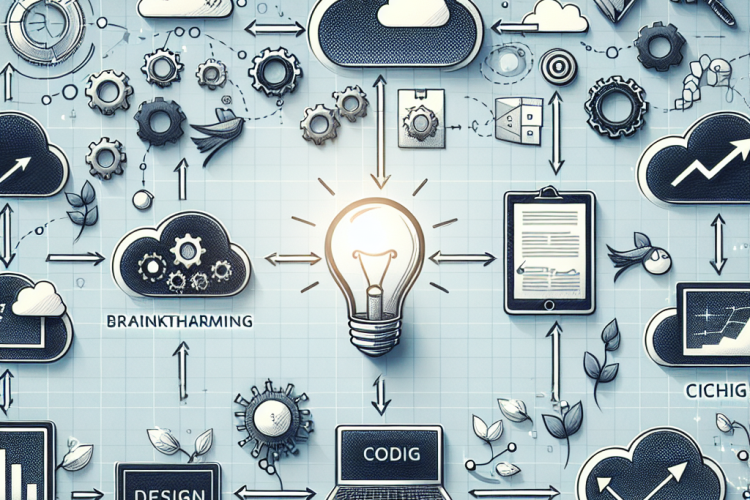
This article explores the SaaS development lifecycle, guiding you from the conceptualization
of a product idea to its launch and beyond.
Phase 1: Ideation and Conceptualization
The first phase in the SaaS development lifecycle is ideation and conceptualization.
This involves brainstorming innovative ideas and selecting one that addresses a specific market need or solves a unique problem.
Market Research
In-depth market research is essential to understand the current landscape, identify competitors, and discover gaps in the market.
Tools such as SWOT analysis can help in assessing strengths, weaknesses, opportunities, and threats.
Defining Project Scope
Clearly defining the project scope involves outlining the software’s core functionalities, target audience, and unique selling proposition (USP).
Phase 2: Planning and Feasibility
The planning and feasibility phase focuses on defining the roadmap for development.
Technical Feasibility Study
A technical feasibility study assesses the technical resources and tools required for development, determining whether the project is technically possible.
Resource Allocation
This involves assembling a team, assigning roles, and ensuring you have the necessary infrastructure and resources.
Budget Estimation
Estimating the budget helps in financial planning and ensures that you have adequate capital to fund the development lifecycle.
Phase 3: Design
Design is a critical phase that lays the groundwork for user experience and interface.
User Experience (UX) Design
UX design focuses on ensuring a seamless and intuitive user experience. This involves creating wireframes and user journeys to visualize the product’s flow.
User Interface (UI) Design
UI design is about making the application visually appealing. It involves selecting colors, typography, and design elements that enhance user interaction.
Phase 4: Development
Development is the phase where the actual coding of the SaaS product begins.
Front-end Development
Front-end development deals with the part of the application that users interact with. Technologies such as HTML, CSS, and JavaScript are typically used.
Back-end Development
The back-end is the server-side part of the application. It involves database management, server scripting, and ensuring secure and efficient data processing.
Integration and APIs
Integration involves combining various parts of the system. APIs are used to enable communication between different software components.
Phase 5: Testing
Testing is crucial to ensure the software operates as expected and is free from errors.
Unit Testing
Unit testing involves testing individual components of the software for proper functionality.
Functional Testing
Functional testing ensures that all features work according to the requirements and specifications.
Performance Testing
Performance testing assesses the software’s responsiveness and stability under various conditions.
Security Testing
Security testing checks for vulnerabilities or any security loopholes that could be exploited.
Phase 6: Deployment
Deployment is the process of delivering the software to the client or end-user.
Deployment Strategies
Deployment strategies can include continuous deployment, rolling out updates incrementally to ensure stability.
Monitoring and Analytics
Post-deployment, it’s crucial to monitor the software’s performance and user interactions through analytics.
Phase 7: Maintenance and Updates
The SaaS development lifecycle doesn’t end at deployment. Continuous maintenance and updates are essential.
Bug Fixes
Regular updates and patches to fix discovered bugs will improve the software’s reliability.
Feature Enhancements
Based on user feedback, new features may be added to improve the user experience and expand functionality.
Conclusion: Continuous Improvement
The SaaS development lifecycle is a complex yet rewarding process that involves taking a product from concept to reality.
Following each of these phases ensures a structured approach that maximizes the chances of success.
However, the process doesn’t end with the launch. Continuous improvement, driven by user feedback and technological advancements, is key to sustaining the product’s relevance and effectiveness in a competitive market.


0 Comments