
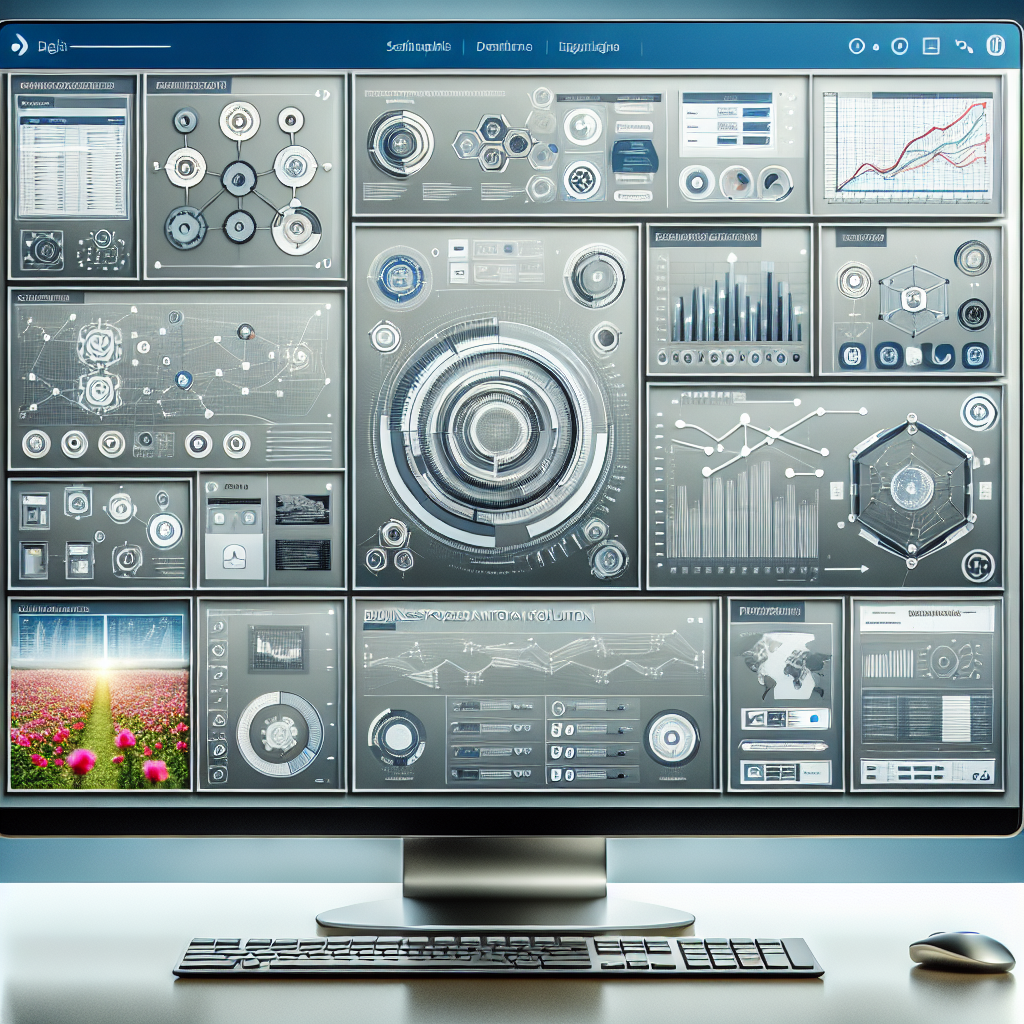
Client Overview
Client Name: OptiMax Solutions
Industry: Logistics and Supply Chain
Business Type: B2B Services
Industry & Business Background
OptiMax Solutions is an innovative player in the logistics and supply chain sector, specializing in optimizing transportation and warehousing processes for mid-sized manufacturers. The company prides itself on streamlining operations and enhancing supply chain efficiency through technology. Established in 2015, OptiMax has rapidly gained a reputation for its customer-centric approach, leveraging data to drive decision-making and operational excellence.
Challenges Faced
Despite its success, OptiMax faced several challenges that hindered its operational capabilities:
- Manual Processes: A significant portion of workflows was still manual, leading to errors and inefficiencies.
- Data Silos: Critical data was dispersed across multiple systems, complicating integration and accessibility.
- Scalability Issues: As the business grew, existing systems struggled to handle increased demand effectively.
- Decision Delays: Slow decision-making processes adversely affected client satisfaction and overall business agility.
- Resource Allocation: Inefficiencies in task delegation reduced employee productivity and increased operational costs.
Project Goals & Objectives
OptiMax set forth a clear set of objectives to overcome these challenges:
- Automate Repetitive Tasks: Implement systems to automate mundane tasks, freeing up staff for higher-value work.
- Enhance Data Integration: Create a cohesive data ecosystem through centralized APIs and orchestration.
- Optimize Workflows: Streamline decision workflows to minimize delays and improve client responsiveness.
- Increase Scalability: Design systems that can easily scale with growing business demands.
- Ensure Security: Implement robust security measures to safeguard data and maintain client trust.
Solution & Strategy
To achieve these objectives, a multi-faceted strategy was developed:
- Assessment: Conduct a thorough assessment of existing workflows and systems.
- Integration: Leverage APIs to create a unified platform for data exchange, eliminating silos.
- Automation: Introduce workflow automation tools to streamline tasks across departments.
- Orchestration: Design a system orchestration strategy that ensures seamless interactions between all software platforms.
- Monitoring Tools: Deploy performance monitoring tools for real-time analytics and security oversight.
AI Automation Design & Implementation Process
The team executed the project in several phases:
- Phase 1: Workflow Mapping – Identify and document existing workflows for automation opportunities.
- Phase 2: Tool Selection – Choose the appropriate automation and data integration tools tailored to business needs.
- Phase 3: Pilot Testing – Implement a pilot program with selected teams to troubleshoot and refine the processes.
- Phase 4: Full Deployment – Roll out the automated systems organization-wide, supported by proper training initiatives.
- Phase 5: Continuous Improvement – Regularly assess system performance for ongoing optimization.
Tools & Technologies Used
The project utilized a range of tools and technologies including:
- Zapier and Integromat: For workflow automation and task integration.
- Microsoft Power BI: For advanced analytics and performance management.
- AWS Lambda: To facilitate scalable serverless computing.
- Apache Kafka: For real-time data streaming and orchestration.
- Okta: For enhanced security and access management.
Key Takeaways
- Automation led to significant improvements in operational efficiency.
- Data integration eliminated silos, fostering better decision-making.
- Scalable solutions prepared the business for future growth.
- Enhanced workflow processes reduced turnaround times.
- Trust and security were prioritized to reinforce client confidence.
The automation tools have dramatically transformed our operations, making us more efficient and responsive to our clients.
Mark Johnson CEO